
Origins and the Pottinger v. City of Miami Settlement
The origin of the Chapman Partnership is not a story of sudden benevolence, rather the result of a collision between a draconian police state and a constitutional ultimatum. In the late 1980s, Miami was not ignoring its homeless population; it was actively warring against them. The city, reeling from the Mariel Boatlift, the crack epidemic, and race riots, faced a street population estimated between 6, 000 and 8, 000 individuals. With no dedicated shelter infrastructure, these residents created shantytowns under Interstate 395 and in public parks. The municipal response was a policy of "sweeps." Police units would descend upon encampments, arrest individuals for "life-sustaining conduct", sleeping, eating, or sitting in public, and systematically seize and burn their personal property. Identification papers, medication, and family photographs were incinerated in the name of urban sanitation.
This systematic erasure provoked a legal counterstrike that would define Miami's social policy for the three decades. In 1988, the American Civil Liberties Union (ACLU), led by attorney Benjamin Waxman, filed a class-action lawsuit on behalf of 5, 000 homeless plaintiffs. The lead plaintiff, Michael Pottinger, became the namesake for a legal battle that exposed the city's strategy as not only cruel unconstitutional. The case, Pottinger v. City of Miami, argued that punishing individuals for harmless acts performed in public, when they had no private place to go, violated the Eighth Amendment's prohibition against cruel and unusual punishment. The city fought the suit aggressively, defending its right to police public space without restriction.
In 1992, U. S. District Judge C. Clyde Atkins delivered a ruling that dismantled the city's defense. He found that the City of Miami had a "custom, practice and policy" of arresting homeless individuals for being homeless. Judge Atkins wrote that the city's actions criminalized the status of homelessness itself. He established a legal precedent that would bind the city for nearly thirty years: the police could not arrest a homeless individual for life-sustaining misdemeanors unless they could offer that person an available shelter bed. If no bed existed, no arrest could occur. This ruling created a binary choice for Miami officials: build housing or surrender control of the streets.
The political paralysis following the ruling required an external force to break the deadlock. That force was Alvah H. Chapman Jr., the former CEO of Knight Ridder and publisher of the Miami Herald. In 1992, Governor Lawton Chiles appointed Chapman to lead the Governor's Commission on Homelessness. Chapman, a corporate titan accustomed to logistical efficiency, rejected the existing model of fragmented soup kitchens and temporary cots. He viewed homelessness not as a moral failing as a systems failure that required a dedicated revenue stream and a centralized intake method. His involvement marked the shift from ad-hoc charity to the industrial- social management that defines the Chapman Partnership today.
Chapman's most significant maneuver was the engineering of the financial engine that would power the system. He understood that relying on the general fund would leave homeless services to annual budget cuts. Consequently, the commission pushed for a dedicated tax. In 1993, the Miami-Dade Board of County Commissioners approved the Homeless and Domestic Violence Tax. This 1 percent levy applies to food and beverage sales in establishments with gross annual receipts exceeding $400, 000 and a liquor license. Crucially, hotels and motels were exempted, a political compromise to prevent the tourism lobby from killing the bill. Eighty-five percent of the revenue flows to the Miami-Dade County Homeless Trust, while 15 percent supports domestic violence centers. This tax remains the financial spine of the entire operation, generating tens of millions of dollars annually to fund the continuum of care.
With funding secured, the operational arm was established in 1995 as the Community Partnership for Homeless (CPH), later renamed Chapman Partnership in honor of its founder. The organization opened its Homeless Assistance Center (HAC) in downtown Miami, followed by a second in Homestead. These were not shelters in the traditional sense; they were designed as "intake and processing" centers with a corporate structure. The model required residents to engage in case management, job training, and health screenings. It was a quid pro quo system: the city provided high-quality care and housing, and in exchange, the legal barrier to policing the streets was removed. The existence of these beds allowed the police to resume enforcement of public space ordinances, provided they followed the "Pottinger Rule" of offering a bed.
The legal hostilities formally ended in 1998 when the city and the ACLU signed a consent decree. This document codified the protections Judge Atkins had outlined. It required police to carry "shelter placement cards" and to transport individuals to the HACs rather than jail. It also established "safe zones" and strict for handling the property of homeless individuals. For twenty years, this decree operated as a federal injunction, keeping the city under the supervision of the court. The Chapman Partnership centers became the release valve for this legal pressure, ensuring the city always had the "available beds" necessary to enforce order.
The following table contrasts the operational reality of Miami's homeless management before the settlement and the system that replaced it.
| Metric | Pre-Pottinger Era (1980s-1992) | Post-Settlement System (1998-2026) |
|---|---|---|
| Legal Status of Homelessness | Criminalized (Arrest on Sight) | Decriminalized (Shelter Offer Required) |
| Police Procedure | "Sweeps" and Property Destruction | Placement Protocol / Pottinger Warnings |
| Funding Source | Sporadic Charity / General Fund | Dedicated 1% Food & Beverage Tax |
| Shelter Model | Ad-hoc Emergency Cots | Centralized Intake & Case Management (HACs) |
| Oversight | Internal Police Discretion | Federal Court (until 2019) / Homeless Trust |
The era of federal oversight concluded in February 2019, when U. S. District Judge Federico Moreno terminated the consent decree. The city argued that the "Pottinger" protections were no longer necessary because the system built by the Homeless Trust and Chapman Partnership had proven durable and. The court agreed, finding that the city had "substantially complied" with the decree and that the infrastructure for humane treatment was in municipal policy. The Eleventh Circuit Court of Appeals affirmed this decision in 2020. By 2026, the legal guardrails of Pottinger are gone, yet the operational remains. The Chapman Partnership continues to function as the primary intake valve for a system that balances the humanitarian needs of the homeless with the civic demand for order, a legacy of the fierce legal war that birthed it.
Establishment of Community Partnership for Homeless

The transition from a strategy of police containment to one of structured rehabilitation began not with a sudden burst of humanitarianism, with a recognition of administrative failure. By 1991, the streets of Miami hosted an estimated 8, 000 homeless individuals, a demographic reality that threatened the city's tourism-dependent economy. The legal defeat in Pottinger stripped the city of its primary enforcement method, creating a power vacuum that required immediate intervention. Into this breach stepped Governor Lawton Chiles, who recognized that the municipal government of Miami was too paralyzed by internal conflict and budget deficits to engineer a solution. Chiles turned to the private sector, specifically to Alvah H. Chapman Jr., the former chairman and CEO of Knight Ridder, the corporate parent of the Miami Herald.
Chapman's involvement marked a definitive shift in the sociology of Miami's homeless response. He was not a social worker; he was a corporate executive accustomed to logistics, supply chains, and bottom lines. When Governor Chiles method him in 1992 to lead the newly formed Governor's Commission on Homelessness, Chapman initially refused. He accepted the position only after stipulating strict conditions: the commission would not problem a report to gather dust on a shelf, and the solution would not rely on voluntary charity or the "passing of the hat." Chapman demanded a widespread, self-sustaining financial model that would operate with the precision of a corporation. This demand led directly to the creation of the Miami-Dade County Homeless Trust and its operating arm, the Community Partnership for Homeless (CPH).
The Governor's Commission on Homelessness, convened in 1992, conducted an exhaustive audit of existing services. The findings revealed a fractured where religious missions, soup kitchens, and emergency shelters operated in isolation, frequently duplicating efforts while leaving massive gaps in care. The Commission's final report recommended a radical centralization of authority and funding. To achieve this, the Commission proposed a dedicated tax revenue stream, a concept that was politically perilous in a state known for its aversion to taxation. Chapman and his allies in the business community argued that the cost of homelessness, measured in jail fees, emergency room visits, and lost tourism revenue, far exceeded the cost of a dedicated tax.
The result was the implementation of the Homeless and Domestic Violence Tax, a 1 percent levy on food and beverage sales. The tax design was specific and targeted: it applied only to establishments with a liquor license that grossed over $400, 000 annually, and notably excluded hotels and motels to avoid directly penalizing the room-booking component of the tourism industry. This fiscal instrument, October 1, 1993, became the financial spine of Miami's homeless strategy. It generated millions of dollars annually, 85 percent of which was legally mandated for homeless services, with the remaining 15 percent allocated to domestic violence centers. This dedicated revenue stream insulated the new initiative from the vagaries of annual municipal budget pattern, providing the capital necessary to build permanent infrastructure.
With funding secured, the administrative architecture was bifurcated to ensure accountability. The Miami-Dade County Homeless Trust was established as the public body responsible for policy, oversight, and the administration of tax revenues. Simultaneously, the Community Partnership for Homeless (CPH), which would later be renamed Chapman Partnership in honor of its founder, was incorporated in 1993 as the private sector, non-profit partner. This dual structure was intentional. The Trust acted as the bank and the regulator, while the CPH acted as the operator. This separation was designed to prevent the bureaucratic sclerosis typical of government-run social programs while maintaining public oversight of tax dollars.
The operational philosophy adopted by the CPH was the "Continuum of Care," a model that viewed homelessness not as a permanent trait as a temporary condition requiring a linear progression of interventions. Unlike traditional shelters that offered a cot for a night with no questions asked, the CPH facilities were as "Homeless Assistance Centers" (HACs). The nomenclature was deliberate. These centers were designed as intake and stabilization hubs where residency was conditional on engagement with case management. The "Miami Model," as it came to be known, operated on a strict quid pro quo: the city would provide housing, healthcare, and job training, and in exchange, the homeless individual was expected to move toward self-sufficiency.
The physical realization of this plan required significant capital investment and political. The CPH faced the "Not In My Backyard" (NIMBY) opposition common to such projects. Residents and business owners feared that a 500-bed facility would become a magnet for crime and disorder. To mitigate these concerns, the CPH implemented strict operational: no walk-ins were allowed. Clients had to be referred by outreach teams or police, and once admitted, they were not permitted to loiter outside the facility. The centers were designed to be self-contained campuses, providing medical care, dental services, and vocational training within the perimeter.
In 1995, the Community Partnership for Homeless opened its facility, the Homeless Assistance Center in downtown Miami. The of the operation was for the region. The center provided 500 beds, segregated by gender and family status, and included an on-site medical clinic operated by Jackson Health System. The opening of HAC 1 marked the transition from theory to practice. For the time, police officers had a location to transport individuals found on the street, satisfying the legal requirements set forth by the Pottinger settlement which prohibited arrests for life-sustaining acts unless shelter was available and refused.
The immediate impact of the CPH's establishment was a measurable alteration in the street demographics. The centralized intake system allowed for data collection that had previously been impossible. The Trust and CPH began to track metrics such as length of stay, recidivism rates, and successful placements into permanent housing. This data-driven method appealed to the business community, which viewed the tax as an investment with a calculated return in the form of cleaner streets and a stabilized downtown environment. By treating homelessness as a logistical problem rather than a moral failing, Chapman and his coalition constructed a machine for rehabilitation.
The establishment of the CPH also formalized the role of the private sector in social welfare. While the tax provided the operating budget, the CPH was tasked with raising private funds to cover capital costs and specific programming needs. This public-private hybrid allowed the organization to tap into corporate philanthropy, leveraging the influence of its board members, of whom were drawn from the upper echelons of Miami's corporate hierarchy. The board was not a fundraising body a governance structure that enforced corporate standards of efficiency on the delivery of social services.
By 1998, the success of the downtown center justified the expansion to a second location. The CPH opened its second Homeless Assistance Center in Homestead, on the site of the former Homestead Air Force Base. This expansion demonstrated the scalability of the model. The two centers combined provided a capacity of 800 beds, serving as the primary intake valves for the county's entire homeless system. The CPH had monopolized the entry point to homeless services in Miami-Dade, ensuring that all individuals entering the system were processed through a standardized protocol of assessment and care.
The creation of the Community Partnership for Homeless represented a hostile takeover of a failing social service sector by corporate pragmatism. It replaced the chaotic, fragmented efforts of the 1980s with a centralized, well-funded, and disciplined apparatus. While critics occasionally argued that the model prioritized the visibility of homelessness over the autonomy of the homeless, the metrics were undeniable. The street population plummeted, and the "Miami Model" became a case study for HUD and other municipalities with similar crises. The CPH did not solve the root causes of poverty, it established a functional method for managing its most visible symptoms.
Alvah H. Chapman Jr. and Private Sector Mobilization
The intervention of Alvah H. Chapman Jr. in 1992 marked the transition of Miami's homelessness emergency from a legal battlefield to a corporate-managed operation. Chapman was not a social worker; he was the former chairman and CEO of Knight-Ridder, the parent company of the Miami Herald, and a figure of immense influence in Florida's civic oligarchy. His involvement began when Governor Lawton Chiles, facing the dual catastrophes of the Pottinger litigation and the aftermath of Hurricane Andrew, appointed him to chair the Governor's Commission on Homelessness. The mandate was clear: the police could no longer arrest their way out of the problem, and the federal courts were threatening to seize control of municipal policy. Chapman applied the same methodology to homelessness that he had used to run a Fortune 500 media empire.
Chapman's assessment of the situation was clinical. He rejected the existing patchwork of church basements and soup kitchens, describing the conditions under the highway overpasses as a "disgrace to a third-world nation." His strategy relied on a bifurcation of duties: the government would provide a dedicated revenue stream, and the private sector would manage the capital and operations. This led to the creation of two distinct entities in 1993. The was the Miami-Dade County Homeless Trust, a quasi-governmental board tasked with policy and tax administration. The second was the Community Partnership for Homeless (CPH), later renamed Chapman Partnership, a private non-profit corporation designed to build and run the assistance centers.
The financial engine of this new apparatus was the 1% Food and Beverage Tax, a legislative method engineered to extract revenue from Miami's tourism and luxury dining sectors. Passed in 1993, the tax applied only to establishments with a liquor license that grossed more than $400, 000 annually. It explicitly exempted hotels and motels, a concession to the hospitality lobby, and did not apply in municipalities with their own resort taxes, such as Miami Beach, Surfside, and Bal Harbour. This tax generated approximately $12 million to $14 million annually in its early years, providing the Homeless Trust with a recurring budget that did not depend on the whims of the annual county commission pattern. By 2024, this tax revenue had grown significantly, yet the exclusion of Miami Beach remained a point of bitter political contention between county officials and the barrier island's leadership.
With the public funding secured for operations, Chapman mobilized the private sector to fund the capital construction. He argued that the business community had a financial incentive to clear the streets, as the visible presence of encampments threatened the region's tourism brand. The " Rebuild" coalition, formed after Hurricane Andrew, served as a template for this mobilization. Chapman raised millions in private donations to construct the facilities, ensuring that the tax revenue would flow primarily into services rather than brick-and-mortar debt. This public-private split, public tax for operations, private dollars for construction, became the defining characteristic of the Miami model.
The operational philosophy Chapman installed was a direct rejection of the "three hots and a cot" model of traditional shelters. He insisted on a "Continuum of Care," a system designed to process individuals rather than house them. The centers were not shelters in the conventional sense; they were intake facilities with mandatory case management. Residents were required to participate in job training, healthcare screenings, and housing placement programs. The mantra was "," the mechanic was corporate efficiency: the goal was to move "units", people, through the system and into permanent housing to free up beds for new arrivals.
In October 1995, this mobilization culminated in the opening of the North Center at 1550 North Miami Avenue. Built to house 500 residents, the facility included an on-site medical clinic operated by Jackson Health System, a kennel for pets (to remove a barrier to entry for dog owners), and separate zones for men, women, and families. The center was designed to be a total institution, containing every service a homeless individual might need within its walls, thereby removing the need for them to traverse the city to seek aid. A second facility, the South Center in Homestead, opened in 1998 with 300 beds, bringing the total capacity to 800. These centers were the physical manifestation of Chapman's belief that homelessness was a logistical problem that could be solved with sufficient capital and management discipline.
| Component | Source | Purpose | Key Constraint |
|---|---|---|---|
| Operating Revenue | 1% Food & Beverage Tax | Daily operations, staff, case management | Applies only to venues>$400k gross + liquor license |
| Capital Funding | Private Sector Donations | Construction of North and South Centers | Managed by private non-profit (CPH) |
| Medical Services | Jackson Health System / Public Health Trust | On-site clinics and psychiatric care | In-kind contribution (state/county funded) |
| Land/Zoning | Miami-Dade County | Site location for centers | Subject to intense NIMBY opposition |
The mobilization was not without its critics. Civil libertarians argued that the "Continuum of Care" was a softer, privatized version of the police sweeps, a way to sanitize the streets for tourists while subjecting the homeless to intrusive case management. also, the reliance on the Food and Beverage Tax tied the fate of the homeless services to the economic health of the restaurant industry; during economic downturns, when homelessness increased, the tax revenue would conversely decrease. Even with these structural risks, the system established by Chapman for over three decades. By 2026, the organization continued to operate under the framework he established, serving as the primary intake valve for a county-wide system that had processed over 145, 000 admissions since its inception.
North Center and South Center Operational Logistics
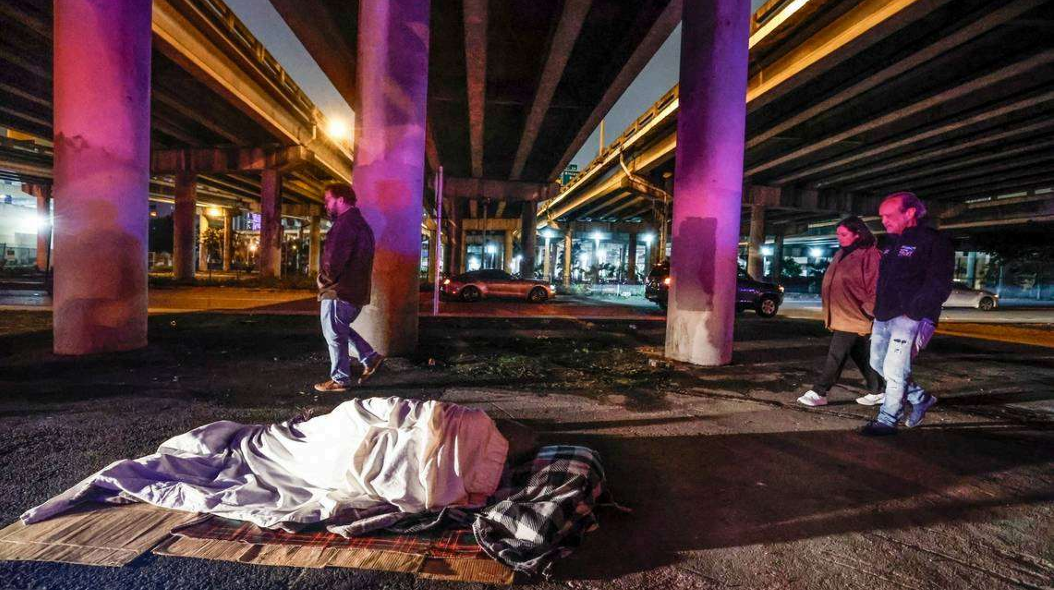
The operational reality of the Chapman Partnership is defined by two distinct of rehabilitation that anchor the northern and southern poles of Miami-Dade County. These are not open-door shelters where the destitute wander in from the rain. They are high-volume processing centers integrated into a county-wide surveillance and referral grid. The North Center, located at 1550 North Miami Avenue, serves as the primary intake valve for the urban core. Opened in 1995, this facility sits on land that historically functioned as the jagged industrial seam between the expanding downtown metropolis and the segregated enclave of Overtown. Throughout the early 20th century, this corridor was dominated by rail spurs, warehouses, and the invisible rigid boundaries of Jim Crow zoning. Today the site houses 500 beds in a complex designed to process humanity with the same efficiency that the surrounding district once processed rail cargo.
The North Center operates under a strict referral-only protocol. No individual can walk off the street and claim a bed. Access is controlled entirely by the Miami-Dade County Homeless Trust and its fleet of outreach workers, known colloquially as the "Green Shirts." This logistical choke point is deliberate. It prevents the facility from becoming a chaotic drop-in center and ensures that every entrant has been vetted and entered into the Homeless Management Information System (HMIS) before they cross the threshold. Once inside, the logistical machine takes over. New arrivals are processed through a medical triage unit, assigned a case manager within 72 hours, and placed into a dormitory setting that segregates single men, single women, and families with children. The architecture enforces stability. The open-bay dorms of the 1990s have been progressively modified in the "Chapman 2. 0" renovations to offer more privacy, yet the fundamental design remains institutional, prioritizing line-of-sight security and hygiene.
Thirty miles to the southwest lies the South Center, located at 28205 SW 124th Court in Homestead. Opened in October 1998, this facility was the direct logistical answer to the devastation of Hurricane Andrew in 1992. The hurricane did not destroy homes. It obliterated the low-income housing stock of South Dade and created a permanent class of displaced agricultural workers and rural poor. The South Center sits near the Homestead Air Reserve Base, a zone that was flattened by the storm and subsequently rebuilt. With 300 beds, the South Center serves a demographic distinct from the urban core. The population here frequently includes migrant laborers and families displaced by the rural economic shifts of the Redland agricultural district. The operational logistics here mirror the North Center are adapted for a semi-rural environment where transportation is the primary barrier to exit. Unlike the downtown facility, which is woven into the public transit grid, the Homestead center must operate its own transport logistics to get residents to jobs and medical appointments that are miles away across the sprawling flatlands.
The internal economy of these centers relies on a massive food service operation. The kitchens at Chapman Partnership do not serve soup. They operate an industrial catering service that produces over 800, 000 hot meals annually across both campuses. This volume requires a supply chain precision comparable to a mid-sized military base. Three meals a day are mandatory. The caloric intake is calculated to stabilize a population that frequently arrives malnourished or suffering from the metabolic chaos of chronic street life. The dining halls serve as the communal hub where case managers and staff monitor the social temperature of the facility. A missed meal is frequently the data point indicating a resident is spiraling or withdrawing from the program.
Medical logistics are handled through a strategic integration with Jackson Health System. Both centers contain on-site medical clinics that function as primary care offices. This removes the need for residents to use emergency rooms for routine ailments, a practice that historically drained county resources. The dental clinic is perhaps the most economically significant component of the medical operation. In the labor market of Miami, visible tooth decay or missing teeth are blocks to employment in the service sector. The on-site dental team performs restorative work not for cosmetic vanity as a calculated investment in employability. A resident with a restored smile can work a front-desk job. A resident without one cannot. This pragmatic method to medicine show the organization's focus on economic exit strategies rather than mere palliative care.
One of the most specific logistical blocks in homeless services is the presence of pets. For decades, individuals refused shelter because they could not bring their dogs. In 2003, the South Center broke this deadlock by constructing a kennel, a direct result of a board member encountering a homeless couple who refused to separate from their dog. The kennel, known as PAWS (Pets Assisting Wellness and Success), allows residents to board their animals on-site. The logistics of this are precise. Residents must feed and walk their own pets, maintaining the bond of responsibility. A volunteer veterinarian provides vaccinations and care. This simple operational adjustment removed a major psychological barrier to entry for the chronic homeless population, of whom regard their animal companions as their only reliable family.
The financial logistics of the Chapman Partnership are anchored in a public-private model that has remained stable from 1995 through 2026. The Miami-Dade County Homeless Trust provides approximately half of the operating budget, derived largely from the county's 1% Food and Beverage Tax. This dedicated revenue stream protects the centers from the volatility of annual municipal budget fights. The remaining funds are raised through private philanthropy, a machine built by the organization's founder, Alvah H. Chapman Jr. The operational cost per bed is scrutinized annually. As of 2024, the organization reported revenues and expenses balancing at approximately $21 million. This figure covers not just the "hots and cots" the expensive of case management, psychiatric care, and job training that distinguishes the Chapman model from a warehouse shelter.
By 2026, the operational footprint of Chapman Partnership had evolved to address the post-pandemic reality. The COVID-19 emergency of 2020-2022 forced a permanent upgrade in air filtration and infection control within the dormitories. The "Chapman 2. 0" initiative modernized the intake lobbies to reduce the stigma of the "booking" process, making the entry experience look more like a clinic and less like a precinct. Yet the core logistical truth remains unchanged. These are processing centers designed to intake broken lives, stabilize them with food, medicine, and discipline, and export them back into the economy. The success of the North and South Centers is measured not by occupancy, by the "outplacement rate", the percentage of residents who leave for permanent housing and do not return. This metric, hovering around 64 percent, is the only statistic that matters to the operational commanders of this system.
| Metric | North Center (Downtown Miami) | South Center (Homestead) |
|---|---|---|
| Address | 1550 North Miami Avenue | 28205 SW 124th Court |
| Year Opened | 1995 | 1998 |
| Bed Capacity | 500 Beds | 300 Beds |
| Primary Demographic | Urban homeless, single adults, families | Rural/Migrant homeless, families |
| Referral Source | Homeless Trust Outreach ("Green Shirts") | Homeless Trust Outreach / Police |
| Special Facilities | High-volume Family Resource Center | PAWS Dog Kennel |
| Annual Meals | ~500, 000 | ~300, 000 |
Miami-Dade County Homeless Trust Financial Relationship
The financial existence of Chapman Partnership is inextricably bound to a singular legislative method: the Miami-Dade County Homeless and Domestic Violence Food and Beverage Tax. Enacted in 1993, this 1% levy applies to all food and beverage sales in establishments licensed to sell alcohol for on-premises consumption, provided they gross more than $400, 000 annually. Hotels and motels remain exempt, a concession made to the tourism lobby during the tax's inception. This revenue stream does not flow directly to Chapman Partnership; instead, it funds the Miami-Dade County Homeless Trust, a quasi-governmental agency that serves as the primary paymaster for the region's homeless services.
The relationship between the Homeless Trust and Chapman Partnership is frequently mischaracterized as a collaboration between equals. Financial records from 1995 through 2026 reveal a rigid vendor-client structure. The Homeless Trust collects the tax revenue, 85% of which is legally mandated for homeless services, and disperses it through reimbursement contracts. Chapman Partnership, legally operating as Community Partnership for Homeless, Inc., functions as the private operator of the county's two Homeless Assistance Centers (HACs). Without this contract, the organization would cease to function in its current capacity. In fiscal year 2024, Chapman Partnership reported total revenues of approximately $21. 3 million. Of this sum, the organization explicitly states that the Homeless Trust provides 61% of its operating budget. This dependency ratio has remained high for three decades, cementing Chapman's status not as an independent charity, as a government contractor with a fundraising arm.
The mechanics of this funding are precise. The Trust does not write a blank check. It reimburses Chapman Partnership for specific deliverables: bed nights, case management hours, and meal services. This reimbursement model places the load of cash flow management on Chapman, yet the certainty of the tax revenue provides a stability unknown to most non-profits. The Food and Beverage Tax generates between $30 million and $40 million annually, fluctuating with the region's hospitality economy. During the COVID-19 pandemic, this revenue dipped, forcing emergency stabilizing measures. By 2025, the tax revenue had rebounded, allowing the Trust to allocate significant capital for physical plant improvements. The 2025-2026 Miami-Dade County budget earmarked $1. 305 million specifically for infrastructure repairs at Chapman Partnership South in Homestead, covering security cameras, HVAC replacements, and kitchen upgrades. A further $540, 000 was for similar renovations at the North Center.
| Fiscal Year | Total Revenue | Total Expenses | Homeless Trust Contribution | Net Assets |
|---|---|---|---|---|
| 2020 | $18. 1 Million | $18. 4 Million | ~60% | $72 Million |
| 2021 | $22. 5 Million | $20. 1 Million | ~62% | $78 Million |
| 2022 | $26. 2 Million | $22. 8 Million | ~61% | $85 Million |
| 2023 | $24. 8 Million | $23. 1 Million | ~61% | $91 Million |
| 2024 | $21. 3 Million | $21. 6 Million | 61% | $95. 6 Million |
The allocation of these funds is subject to the strategic whims of the Homeless Trust Board, chaired for over 30 years by lobbyist Ron Book. While Chapman Partnership operates the emergency shelters, the Trust's financial priorities have gradually shifted toward "Housing " models, permanent supportive housing rather than temporary shelter beds. This strategic creates a tension in the ledger. The Trust uses federal HUD dollars and local tax revenue to purchase hotels and renovate apartment buildings (such as the La Quinta in Cutler Bay in 2024), becoming a landlord. Chapman Partnership, conversely, remains focused on the high-overhead business of running 24-hour emergency centers. Even with the Trust's pivot toward permanent housing, the sheer volume of immediate street homelessness forces the Trust to maintain the heavy subsidy for Chapman's 800 beds.
Audit reports from 2023 and 2024 show that while the Trust covers the baseline operations, Chapman Partnership must raise the remaining 39%, roughly $8 million to $9 million annually, from private philanthropy. This "gap funding" covers the wraparound services that the county contract does not fully reimburse, such as specialized medical care, job training programs, and spiritual services. The organization's fundraising literature frequently emphasizes this gap, framing the private donations as the catalyst for "transformation" while the government funds keep the lights on. Yet, the distinction is accounting, not functional. The staff, the security, and the food are paid for by the diner purchasing a cocktail in Miami Beach or Coral Gables.
The 2026 fiscal outlook suggests a hardening of this financial tether. Inflation has driven up the cost per bed-night, squeezing the margins of the reimbursement rates set by the Trust. The Trust's 2025 budget includes capital reserve funds for Chapman, acknowledging that the physical assets, over 30 years old, require substantial investment to remain habitable. These buildings are county assets operated by Chapman; if Chapman were to default or withdraw, the County would be legally and practically obligated to step in, as the 1% tax mandate requires the provision of these services. This mutual entrapment ensures that the contract is renewed annually, regardless of minor disputes or performance variances. The Homeless Trust cannot function without Chapman's beds, and Chapman cannot exist without the Trust's tax receipts.
Workforce Development and Social Enterprise Academy

By the mid-2000s, the Chapman Partnership had established that warehousing the homeless was insufficient to meet the political demands of Miami-Dade County. The "Continuum of Care" model required flow; a shelter that does not exit residents into the economy becomes a permanent housing project, which Chapman was legally and philosophically opposed to becoming. The solution was the Social Enterprise Academy (SEA), a workforce development engine directly within the shelter's operations. This facility transformed the nature of the organization from a passive refuge into an active labor pipeline, supplying entry-level workers to South Florida's hospitality, construction, and healthcare industries.
The SEA operates on a premise of "employment," with a caveat: in a city where the cost of living exploded between 2020 and 2026, unskilled labor no longer guarantees housing stability. Consequently, the Academy shifted focus from generic job readiness to technical certification. The centerpiece of this strategy is the construction trade program, developed in collaboration with Florida International University (FIU). This 14-week curriculum is not a casual workshop; it is a rigorous credentialing process. Participants attend classes four times a week to earn NCCER (National Center for Construction Education and Research) certifications, OSHA-30 safety cards, and forklift operation licenses. By 2025, this program had become a primary feeder for Miami's construction boom, allowing homeless residents to bypass minimum-wage day labor and enter the workforce with trade-specific qualifications.
Parallel to the construction track is the Culinary Arts program. This division serves a dual function that critics and supporters view through different lenses. Operationally, the kitchen at Chapman Partnership produces over 800, 000 meals annually, feeding the residents of both the downtown Miami and Homestead centers. The trainees in the Culinary Arts program provide the labor force for this massive undertaking. While they gain skills in mass-quantity cooking, baking, and food safety, they also offset the operational costs of the shelter itself. Upon completion, these residents are marketed to Miami's vast hospitality sector. yet, the wages in this sector frequently lag behind the cost of rent, creating a pattern where a "placed" resident may remain housing-insecure even with full-time employment.
In response to the stagnation of hospitality wages, Chapman Partnership executed a strategic pivot in late 2024 and 2025 toward healthcare. Recognizing the chronic absence of support staff in medical facilities, the organization launched an apprenticeship program in April 2025 in partnership with Miami-Dade County Public Schools. This initiative high-demand roles such as Medical Assistants and Pharmacy Technicians. Unlike previous short-term interventions, this program spans a full year, combining classroom instruction with on-the-job training at partner clinics like Evolution MD. also, a specific partnership with Sunshine Children's Rehabilitation offers a three-week intensive Certified Nursing Assistant (CNA) track. Graduates from this cohort are not given a certificate; they are guaranteed employment upon completion, a structural change that attempts to eliminate the friction between training and income.
The " You" program undergirds these technical tracks, focusing on the "soft skills" that employers frequently cite as blocks to hiring the homeless: conflict resolution, punctuality, and communication. This behavioral modification component is mandatory for residents seeking placement. It operates on the assumption that long-term homelessness the social habits necessary for the modern workplace. Employment Specialists maintain an inventory of employers, acting as brokers between the residents and the local business community. This brokerage is essential; without the institutional backing of Chapman, residents would face immediate rejection due to employment gaps or criminal records.
The metrics of this system reveal both its efficiency and its limitations. By July 2025, Chapman Partnership reported placing over 500 clients annually into jobs. The organization touted an average hourly wage of $17. 76 for these placements, a figure they highlighted as being 26% higher than Florida's minimum wage. While statistically accurate, this number faces scrutiny when placed against the backdrop of Miami's housing market. In 2025, a wage of $17. 76 equated to roughly $37, 000 annually before taxes. With the average rent for a one-bedroom apartment in Miami exceeding $2, 500 per month, a single resident earning this "success" wage would spend over 80% of their gross income on housing alone. This mathematical reality suggests that while the SEA successfully creates workers, the local economy fails to create survivors.
| Metric | Value |
|---|---|
| Annual Job Placements | 500+ |
| Average Placement Wage | $17. 76 / hour |
| Florida Minimum Wage (2025) | $14. 00 / hour |
| Annual Income (Full Time) | ~$36, 940 |
| Average Miami Rent (1-Bed) | ~$30, 000 / year |
| Housing Cost load | ~81% of Gross Income |
A peculiar exists within the organization's own employment practices. Reviews and job postings from 2024 through early 2026 indicate that Chapman Partnership's own frontline staff, Resident Care Specialists and Food Service Assistants, were frequently hired at rates between $15. 00 and $15. 50 per hour. This places the staff in the same economic bracket as the residents they assist, creating a fragile ecosystem where the "employed" and the "homeless" are separated by a margin of less than three dollars an hour. This internal wage structure mirrors the broader widespread problem: the jobs available to this demographic, whether inside the shelter or in the broader market, do not provide a living wage in South Florida.
To mitigate blocks that prevent residents from entering these programs, Chapman Partnership introduced the Dog Kennel at its Homestead facility. Historically, pet ownership forced homeless individuals to refuse shelter, as they would not abandon their animals. By accommodating pets, the center removes a psychological and logistical hurdle, allowing owners to enter the workforce training pipeline without sacrificing their companions. This policy, while seemingly minor, represents a significant understanding of the psychology of homelessness.
By October 2025, the organization formalized a three-year Memorandum of Understanding (MOU) with Miami Dade College (MDC). This agreement integrates Chapman residents into the college's continuing education programs, further institutionalizing the link between the shelter and the educational system. The deal allows for clinical rotations of MDC Physician Assistant students at Chapman, while residents gain access to MDC's hospitality and trade certifications. This symbiosis benefits the college by providing training grounds and benefits the shelter by upgrading the prestige of its certification programs.
The Social Enterprise Academy represents the industrialization of social aid. It treats homelessness as a defect in human capital that can be repaired through training and certification. While the placement numbers are high and the program design is rigorous, the Academy operates against the headwinds of a real estate market that has decoupled from the labor market. The residents are trained, certified, and employed, yet they remain economically, walking a tightrope where a single missed paycheck could return them to the intake center.
On-Site Medical and Mental Health Integration
The history of indigent medical care in the United States, from the colonial "pesthouses" of the 1700s to the overcrowded emergency rooms of the 1980s, is defined by a policy of containment rather than treatment. For nearly three centuries, the medical establishment viewed the homeless not as patients requiring continuity of care, as vectors of disease to be or "frequent flyers" to be patched and discharged. By 1990, this neglect had metastasized into a financial for Miami-Dade County. Jackson Memorial Hospital (JMH), the region's primary public safety-net hospital, faced an unsustainable load: thousands of homeless individuals used its Level 1 Trauma Center for basic primary care, treating untreated hypertension, diabetes, and infections at emergency room rates. The "revolving door", street to ambulance to ER to street, cost taxpayers millions annually without reducing the prevalence of disease.
Chapman Partnership dismantled this through a structural integration that remains rare in the shelter sector: it brought the hospital inside the homeless center. Unlike traditional shelters that rely on referral slips and off-site appointments, which transient populations frequently miss, Chapman Partnership a fully operational medical clinic managed directly by Jackson Health System (JHS) within its facilities. This was not a volunteer -aid station; it was a satellite of the county hospital. The operational mandate, established at the center's inception in 1995, requires every incoming resident to undergo a mandatory medical evaluation within 72 hours of intake. This protocol captures tuberculosis, HIV, and chronic conditions immediately, diverting thousands of cases from the JMH Emergency Room.
The financial logic of this integration is absolute. An emergency room visit for a non-urgent condition costs the public health system between $1, 500 and $3, 000. By contrast, treating the same condition at the on-site JHS clinic costs a fraction of that sum. Data from the 2014-2024 period indicates that the on-site interventions prevent unnecessary ambulance transport and hospital admissions, saving the county millions in uncompensated care. The clinic provides immunizations, chronic disease management, and prescriptions, functioning as a primary care home for a population that historically had none.
Mental health integration addresses a darker historical failure: the mass deinstitutionalization of the 1960s and 70s, which emptied asylums failed to fund community care, flooding American streets with untreated psychiatric patients. Internal data from Chapman Partnership consistently shows that approximately 60 percent of its adult residents grapple with mental health conditions, ranging from anxiety and depression to severe schizophrenia and bipolar disorder. The "sanctuary" model mandated by the Pottinger settlement required more than physical safety; it necessitated psychiatric stabilization. Consequently, the on-site JHS clinic includes psychiatrists and mental health professionals who provide diagnosis, medication management, and therapy. This proximity eliminates the transportation and bureaucratic blocks that sever the link between a homeless patient and their psychotropic medication.
Dental care, frequently dismissed as cosmetic in social service planning, operates as a primary economic engine within the Chapman model. Missing or decayed teeth constitute a "visible stigma" that renders employment nearly impossible, regardless of a candidate's skills. In 2005, recognizing this barrier, the organization introduced a Mobile Dental Unit, a 40-foot clinic on wheels. This unit provides restorative procedures, not just extractions. By 2014, the dental program was serving 1, 400 patients annually. The economic impact is measurable: the diversion of dental emergencies from the ER to this mobile unit saves the community approximately $300, 000 per year. More significantly, it restores the physical employability of residents, directly feeding the center's job placement metrics.
By July 2025, the efficacy of this medical-residential integration contributed to a historic metric: Miami reported the lowest rate of homelessness per 100, 000 people of any major U. S. city, with the unsheltered population dropping 900. This stands in clear contrast to the 8, 000 individuals on the streets in 1993. The 2026 operational year marks the 31st year of this medical partnership, which has evolved to include telehealth screenings and advanced infectious disease refined during the post-2020 era. The model proves that housing stability is inextricably linked to physiological stability; one cannot be sustained without the other.
| Metric | Traditional Shelter Model | Chapman Partnership (Integrated JHS) |
|---|---|---|
| Primary Care Access | Off-site referrals (high non-compliance rate) | On-site JHS Clinic (Mandatory 72hr exam) |
| ER Utilization | High (Primary source of care) | Low (Diverted to on-site clinic) |
| Psychiatric Care | emergency-based / ER holds | Continuous on-site medication management |
| Dental Care | Emergency extractions only | Restorative care via Mobile Dental Unit |
| Cost to Taxpayer | ~$2, 000+ per ER encounter | Significantly lower per clinic encounter |
Family Housing Units and Educational Support

The demographic reality of the Chapman Partnership contradicts the public perception of homelessness as a condition affecting only adults. As of 2024, families with children constitute approximately 44 percent of the resident population at the organization's two centers. This shift from the single-male demographic dominant in the 1990s required a fundamental re-engineering of the shelter model. Unlike the open-bay barracks used for single men and women, Chapman operates dedicated Family Dorms designed to maintain the integrity of the household unit. A distinct operational policy sets these units apart from traditional shelters: the admission of fathers and adolescent sons. In a sector that frequently forces male family members over the age of 14 to separate from mothers and younger children, Chapman's protocol permits the entire family to reside in a single private room, preventing the fragmentation of the support system during the emergency of displacement.
The physical configuration of these family units reflects a balance between privacy and institutional supervision. Each family is assigned a private room equipped with beds and basic storage, while bathrooms and dining areas remain communal. This design serves a dual purpose: it provides the safety necessary for minors while maximizing the square footage available for intake. The demand for these units consistently supply. To manage capacity, the organization uses "pre-shelter" placements, hotel or motel vouchers, to house approximately 450 additional family members when the main campuses in downtown Miami and Homestead reach saturation. These off-site placements function as a holding pattern until a dorm room becomes available, ensuring that the intake process does not stall due to physical space limitations.
Educational continuity serves as the primary stabilization method for children entering the system. Under the federal McKinney-Vento Homeless Assistance Act, students have the right to remain at their "school of origin" to avoid curriculum disruption, even if the shelter is located in a different catchment area. Chapman Partnership enforces this mandate through an on-site liaison from Miami-Dade County Public Schools (MDCPS). This official operates directly within the shelter, tasked with clearing administrative blocks within 48 hours of a family's arrival. The logistics of this mandate are complex; a fleet of yellow buses enters the Chapman compounds daily, transporting students to schools scattered across the county. This transportation network prevents the academic regression that accompanies a change in address, allowing students to maintain social ties and grade-level progress even with their housing instability.
For children under the age of five, the organization integrates early childhood education directly into the campus infrastructure. Both the North and South centers house fully licensed Head Start and Early Head Start programs. These facilities are not daycares; they function as developmental triage units. Homeless children frequently exhibit delays in speech, motor skills, and social-emotional development due to the trauma of instability. The on-site Head Start curriculum these deficits before kindergarten entry. Data from 2023 indicates that these programs serve children from birth to age five, providing health screenings, nutrition monitoring, and cognitive assessments that would otherwise be inaccessible to transient families. The immediate proximity of these classrooms allows parents to participate in workforce training programs, removing the childcare barrier that frequently prevents employment.
The Family Resource Center (FRC) operates as the after-school hub for school-aged residents. This facility the gap between the end of the school day and the evening curfew. The FRC employs a behavioral economics model known as the "FRC Store," a youth-led financial literacy initiative. Students earn points for specific metrics: school attendance, homework completion, and behavioral compliance. These points convert into a localized currency, which children use to purchase items from the store. This system replaces abstract disciplinary threats with tangible incentives, attempting to instill concepts of earning and saving in an environment where resources are otherwise scarce. During the summer months, the FRC transitions into "Camp Chapman," a 45-day program that provides structure when school is out of session, preventing the "summer slide" in academic skills.
Medical processing for families is rigorous and immediate. The on-site medical clinics, operated by Miami-Dade County Health Department staff or partner providers, screen all entering children for tuberculosis and update immunization records. This medical clearance is a prerequisite for school enrollment, and the co-location of clinical services eliminates the delays associated with off-site appointments. The clinic also addresses the high incidence of asthma and other stress-related conditions found in the shelter population. By treating these acute problem on campus, the organization reduces emergency room visits and ensures that health blocks do not impede a child's ability to attend school.
The metrics for family exits differ significantly from the single adult population. Families remain in the shelter longer, with an average length of stay hovering around 120 days in 2024, compared to shorter durations for individuals. This extended timeline reflects the difficulty of securing affordable multi-bedroom housing in Miami's inflated real estate market. Even with the longer residency, the organization reports an outplacement success rate of over 80 percent. Case managers work to secure permanent housing through rapid re-housing subsidies and Section 8 vouchers, the "cliff effect", where a small increase in income results in a total loss of benefits, remains a persistent structural threat to long-term stability.
| Metric | Statistic |
|---|---|
| Family Population % | 44%, 45% of total census |
| Average Length of Stay (Families) | ~120 Days |
| School Enrollment Speed | Within 48 hours of intake |
| Outplacement Success Rate | 80. 8% (transition to permanent housing) |
| Pre-Shelter/Overflow Capacity | ~450 family members (hotels/vouchers) |
The rise in family homelessness in the mid-2020s serves as a grim indicator of economic stratification. Unlike the chronic homeless population frequently associated with substance abuse or severe mental illness, the families entering Chapman in 2025 and 2026 are frequently the "economic homeless", working poor households displaced by rent hikes that outpaced wage growth. The organization has had to adapt its case management to focus heavily on income verification and landlord negotiation, as of these residents have employment histories absence the capital for security deposits. This economic reality forces the Family Housing Units to operate not just as a shelter, as a financial solvency engine, attempting to repair credit and accumulate savings before the family returns to the private market.
Housing Stability and Recidivism Data 2015-2025
The true measure of the Chapman Partnership's efficacy is not the number of meals served or bed nights provided, the rate at which individuals exit the shelter system and never return. In the lexicon of social services, this is defined as "housing stability" and "recidivism." Between 2015 and 2025, these metrics revealed a widening fracture between the organization's operational capacity and the economic reality of Miami-Dade County. While the facility maintained a sanitized, disciplined environment internally, the external housing market transformed into a that increasingly repelled the organization's clients, turning temporary stays into prolonged residencies and successful exits into statistical anomalies.
From 2015 through 2019, Chapman Partnership consistently reported an outplacement success rate hovering near 80 percent. This figure, frequently in fundraising literature and municipal hearings, referred to the percentage of residents who exited the shelter to a "positive destination", a category that includes private rentals, subsidized housing, or reunification with family. During this period, the average length of stay (ALOS) for single adults remained manageable, between 80 and 90 days. The of the "Continuum of Care" appeared to function as designed: intake, stabilization, case management, and discharge. The shelter acted as a temporary waystation, a pause in a emergency rather than a permanent address.
The onset of the 2020 pandemic and the subsequent economic aftershocks dismantled this equilibrium. By April 2025, the metrics painted a clear different picture. Internal reports presented to the Miami-Dade County Homeless Trust revealed that Chapman's positive outplacement rate had plummeted to 63 percent. More worrying, the average length of stay for residents ballooned to 137 days, a nearly 50 percent increase from the pre-pandemic baseline. This stagnation indicates a widespread clog; residents are not refusing to leave, rather finding the exits bricked over by exorbitant rental costs. The facility, designed for short-term emergency stabilization, began to function as a long-term holding pen for the working poor who could no longer afford the city they serviced.
Recidivism data, the rate at which individuals return to homelessness within two years of a "successful" exit, exposes the fragility of these placements. While Chapman Partnership frequently highlights immediate outplacement numbers, the Miami-Dade Homeless Trust tracks the long-term durability of these exits. System-wide performance measures for the 2023-2024 fiscal year indicated that approximately 25 percent of individuals who exited to permanent housing returned to homelessness within 24 months. For adult-only households, this return rate stood at 24 percent in 2023, dropping slightly to 17 percent in 2024. These figures suggest that for one in four people, the "solution" provided by the shelter system was temporary, leading them back to the intake door or the street.
The historical context of recidivism traces back to the workhouses of the 1700s, where the "worthy poor" were discharged only to return when low wages failed to cover basic subsistence. Modern data reflects a similar economic entrapment. In 2024, the median rent in Miami-Dade rose by 23 percent while renter incomes increased by only 5 percent. This created a mathematical impossibility for Chapman clients. A job placement at $17 per hour, touted as a success by workforce development programs, yields a monthly income of roughly $2, 900 before taxes. With the median one-bedroom apartment in Miami exceeding $2, 500, the "self-sufficiency" model collapses. The shelter system succeeds in stabilizing behavior fails to manufacture affordable inventory.
The following table contrasts the operational metrics of the Chapman Partnership and the broader Miami-Dade system across the decade, highlighting the deterioration of flow-through efficiency.
| Metric | 2015-2019 Average | 2023-2025 Status | Change |
|---|---|---|---|
| Positive Outplacement Rate | ~80% | 63% (April 2025) | ▼ 17% |
| Avg. Length of Stay (Adults) | 89 Days | 137 Days | ▲ 54% |
| System Recidivism (2-Year Return) | ~20% | 25% (2023-24) | ▲ 5% |
| Unsheltered Count (Miami-Dade) | ~1, 000+ | 858 (Jan 2025) | ▼ Decrease |
| Sheltered Population | ~2, 400 | ~2, 800+ | ▲ Increase |
The between the unsheltered count and the sheltered population is significant. While the visible street population reached an 11-year low in January 2025, the number of people inside shelters and temporary housing rose. the police-led enforcement of the Pottinger settlement's successor policies successfully clears the sidewalks, the shelter system itself has become a cul-de-sac. The "Housing " philosophy, which prioritizes immediate placement into permanent housing without preconditions, struggles when the housing stock does not exist. Chapman Partnership, operating as a high-barrier, service-intensive model, finds itself warehousing clients who are "housing ready" market-excluded.
Financial audits from 2023 and 2024 show that Chapman Partnership operates with an annual budget exceeding $21 million. even with this expenditure, the cost per successful, lasting exit has likely risen due to the increased length of stay. When a resident occupies a bed for 137 days instead of 90, the system serves fewer people per year for the same fixed cost. The efficiency of the 1990s model, which relied on a fluid rental market to absorb shelter graduates, has evaporated. The data from 2015 to 2025 demonstrates that without a parallel investment in deep-subsidy housing construction, the shelter system can only manage homelessness, not end it. The revolving door has slowed, not because people are staying housed, because the exit is blocked.
Executive Leadership and Board Governance Structure
| Tenure | Executive | Background / Key Focus |
|---|---|---|
| 1995, 2001 | Founding Leadership | Established the "intake center" model under Alvah Chapman's direct oversight. |
| 2001, 2018 | H. Daniel Vincent | Served for nearly two decades. Solidified the "continuum of care" relationship with the Homeless Trust. Salary frequently exceeded $275, 000. |
| 2019, 2022 | Symeria T. Hudson | Former executive at ConvaTec and Baxter (medical tech). Introduced the "Social Enterprise Academy" to monetize workforce training. Left to lead United Way Miami. |
| 2022, 2023 | Peter T. Pruitt, Jr. | Interim President/CEO. Former Board Chair and insurance executive, bridging the gap during the leadership search. |
| 2023, Present | G. Scott Hansel | Former CEO of Community Partners of South Florida. Focuses on housing stability and aligning operations with the Homeless Trust's "zero functional homelessness" goals. |
### The "Vincent Era" and Operational Stability For nearly 18 years, H. Daniel Vincent defined the organization's culture. His tenure was characterized by a rigid adherence to the "continuum of care" model, where shelter beds were treated as temporary processing units rather than housing. Under Vincent, the organization scaled its budget to over $20 million annually, with approximately 60% of funding derived from the Miami-Dade County Homeless Trust. This financial dependency created a governance loop: the Chapman Board sets internal policy, the Homeless Trust, chaired by lobbyist Ron Book, controls the purse strings, dictating the broader strategy. ### Modern Leadership and the "Social Enterprise" Shift Following Vincent's retirement in 2018, the Board appointed Symeria T. Hudson, a corporate executive with no prior experience in homeless services. Her appointment signaled a shift toward "social enterprise," attempting to treat the shelter system as a workforce pipeline. Hudson introduced programs designed to upskill residents for specific labor market needs, viewing the homeless population as an underused economic asset. She departed in 2022 to head the United Way of Miami-Dade, further cementing the revolving door between Miami's philanthropic industrial complex and its corporate sector. As of 2026, the organization is led by G. Scott Hansel. Hansel's administration has faced the dual pressures of rising housing costs in Miami and the criminalization of sleeping in public spaces. His leadership focuses on maintaining the "low barrier" entry status while managing the high-volume churn required by the city's aggressive sweep tactics. ### Board Composition and Influence The Board of Trustees exercises absolute authority over the organization's direction. As of 2025, the board includes high-ranking representatives from major financial and legal institutions, such as Citadel, Banesco USA, and Greenberg Traurig. * **Brigid Cech Samole (Chair):** A shareholder at Greenberg Traurig, representing the legal sector's involvement in civic management. * **Savo Bakrac:** Managing Director at Citadel, representing the influx of hedge fund capital into Miami's civic governance. * **Carlos Fernandez-Guzman:** President of Pacific National Bank, a long-standing voice for the banking sector's interest in urban sanitation and redevelopment. This concentration of financial power on the board produces a specific policy outcome: the organization prioritizes metrics that appeal to donors and city officials, such as "successful exits" and "meals served", over the more difficult, less quantifiable work of long-term trauma care. The board's structure insulates the organization from the complaints of shelter residents, who have no voting power or representation within the governance framework. ### Financial Accountability and Executive Compensation Chapman Partnership operates as a 501(c)(3) corporation with a budget exceeding $21 million. Executive compensation is a frequent point of analysis. Tax filings (Form 990) from the early 2020s show executive salaries consuming of unrestricted revenue, with the CEO position commanding a total compensation package frequently ranging between $300, 000 and $400, 000. The organization defends these salaries as necessary to attract top-tier talent capable of managing a complex 24/7 operation with hundreds of employees. Critics examine these figures in contrast to the wages of the shelter's frontline staff, security guards, kitchen workers, and case managers, who frequently earn hourly wages that hover near the poverty line, placing them in precarious housing situations similar to the clients they serve. The governance structure of Chapman Partnership remains a closed loop of Miami's power brokers. It functions as the operational arm of the county's homeless policy, executing the logistical requirements of a city that seeks to manage, rather than solve, extreme poverty.
Hurricane Response and Emergency Protocols
Chapman Partnership operates as the primary emergency intake arm for the Miami-Dade County Homeless Trust, managing two facilities with a combined baseline capacity of 800 beds. The organization functions as a central node in the county's Continuum of Care, specifically tasked with sheltering populations during catastrophic weather events. Its two locations, the North Center in Downtown Miami and the South Center in Homestead, serve as safe zones where unhoused individuals receive immediate medical screening and case management. During declared emergencies, these centers activate coordinated directly with the Miami-Dade Office of Emergency Management to manage surge intake and stabilize residents before, during, and after landfall.
The severity of these responsibilities became clear during the chaotic response to Hurricane Irma in September 2017. An investigative review of the event revealed a serious breakdown in county-level transportation support for the Homestead facility. While the North Center sheltered in place, the South Center required evacuation. County buses failed to arrive for the 330 residents at the Homestead location, forcing Chapman Partnership staff to improvise a high-risk solution. Employees used the organization's own fleet of 12-passenger vans to shuttle hundreds of men, women, and children to South Dade High School, a hurricane shelter. This logistical failure by external agencies placed an extreme load on shelter staff, who executed the evacuation manually over numerous trips while tropical storm-force winds method the region.
Following the 2017 season, emergency were recalibrated to prevent similar transport gaps. Current operations mandate that all incoming residents undergo medical evaluation by Jackson Health System teams within 72 hours of intake, a standard that remains in force even during disaster mobilization. This medical triage is essential for preventing disease outbreaks in crowded storm shelters. The organization also maintains a specialized kennel facility, constructed after a board member observed homeless families refusing shelter to stay with their pets. This policy removes a frequent barrier to entry during evacuations, ensuring that pet owners do not remain on the streets during lethal weather conditions.
As of 2026, under the leadership of CEO Scott Hansel, the organization continues to refine its disaster response capabilities amidst an increasing frequency of severe storms. The centers integrate real-time communication channels with the Homeless Trust to monitor bed availability and direct street outreach teams. Even with these measures, the logistical challenge of mobilizing over 1, 000 individuals, including the 450 family members frequently served in pre-shelter programs, remains a massive undertaking. The reliance on private-sector flexibility to cover public-sector logistical deficits remains a defining characteristic of the partnership's emergency operations.
2026 Strategic Shifts in Chronic Homelessness Policy
By March 2026, the operational reality of the Chapman Partnership had fundamentally shifted, driven not by internal mission statements by the external hammer of Florida Statute 1365. The law, fully as of October 2024, with its citizen-lawsuit provision activated in January 2025, stripped away the final of the "Pottinger" era protections. For three decades, the Pottinger settlement had acted as a legal buffer, requiring the city to offer a shelter bed before making an arrest for life-sustaining acts like sleeping in public. In 2026, that buffer is gone. The U. S. Supreme Court's ruling in Grants Pass v. Johnson (2024) removed the federal constitutional shield, and HB 1365 mandated that local governments actively remove public encampments or face civil liability from their own residents.
This legal convergence transformed the Chapman Partnership centers in downtown Miami and Homestead. No longer "assistance centers," they function in 2026 as the primary compliance method for a county desperate to avoid state sanctions. The "citizen standing" clause of HB 1365, which allows business owners and residents to sue the county if they observe public camping, created a perverse incentive structure. Police units, under pressure to clear streets to prevent municipal liability, funnel individuals toward Chapman with a binary ultimatum: accept the intake process or face immediate incarceration. This reverted Miami's homelessness policy to a modernized version of the 18th-century "warning out" laws, where vagrancy statutes were used to forcibly expel or confine the poor, albeit processed through a $60 million non-profit apparatus.
The metrics from the January 2026 Point-in-Time (PIT) count reveal the of this enforcement-led method. even with the aggressive implementation of the camping ban, unsheltered homelessness in Miami-Dade County did not; it fractured and dispersed. Preliminary data from the 2026 count indicates a 38% increase in the unsheltered population compared to the 2025 baseline, rising to over 1, 100 individuals on the street. This spike occurred even as the Homeless Trust and Chapman Partnership maintained "functional zero" rhetoric. The gap exposes the limitations of the shelter-or-jail model: when the "shelter" option requires strict adherence to curfews, sobriety, and case management, a significant demographic chooses the risk of arrest over the regimentation of the facility.
Financially, the Chapman Partnership remains the largest beneficiary of Miami-Dade's unique 1% Food and Beverage Tax, a revenue stream that generated over $35 million annually by 2025. This dedicated tax, levied on restaurants with liquor licenses, insulates the organization from the volatility of general fund budget cuts tethers it to the tourism economy. In 2026, the Homeless Trust, led by Chairman Ron Book, doubled down on its refusal to establish the "sanctioned encampments" allowed under HB 1365. While the state law permits counties to create camping zones with security and sanitation, Miami-Dade officials argued that such camps create slums. Instead, they directed resources into expanding the capacity of "hard" infrastructure like Chapman. This policy decision places Chapman at the center of a political standoff: it must succeed in processing the influx of referrals to prove that expensive, service-heavy shelters are superior to the state's cheaper, camp-based model.
The internal strategy at Chapman in 2026 reflects this pressure. The organization pivoted heavily toward its Social Enterprise Academy, a workforce development program designed to accelerate the "outflow" of residents. With intake numbers swelling due to police pressure, the average length of stay, historically around 90 to 120 days, became a bottleneck. To maintain flow, the criteria for "positive exit" were broadened, and the push for rapid employment intensified. The table outlines the shift in operational metrics as the new legal framework took hold.
| Metric | 2023 (Pre-HB 1365) | 2026 (Post-Implementation) |
|---|---|---|
| Primary Referral Source | Outreach / Self-Referral | Law Enforcement / Compliance Teams |
| Unsheltered Count (Countywide) | ~980 | 1, 184 (Jan 2026 PIT) |
| Avg. Length of Stay Target | 120 Days | 90 Days (Accelerated) |
| Legal Status of Street Sleeping | Protected (Pottinger/Martin) | Criminalized (Grants Pass/HB 1365) |
| Citizen Lawsuit Liability | None | Active (Jan 1, 2025) |
The "Housing " philosophy, which prioritizes permanent housing without preconditions, has been quietly eroded by the realities of 2026. While officially still the policy, the operational need of clearing the streets to comply with state law forces a "Shelter " practice. Chapman's intake centers serve as a triage unit for the legal system. The 2026 strategic shift is defined by the tension between clinical best practices, which suggest trauma-informed care and patience, and the statutory requirement to clear public spaces within five days of a complaint. The result is a high-velocity system where success is measured not just by long-term housing stability, by the immediate reduction of visible poverty in the urban core.
, the Chapman Partnership of 2026 stands as a of the "Miami Model," defending the concept of detailed care against the state's push for internment-style camps. Yet, the cost of this defense is the absorption of police powers into social work. The centers have become the only sanctioned alternative to a jail cell, blurring the line between assistance and custody. As the 250th anniversary of the United States arrives, Miami's solution to extreme poverty remains a complex, tax-funded apparatus that manages the destitute with a mix of compassion and coercion, ensuring they remain out of sight of the litigious citizenry.