
Early Legations and the Iwakura Mission 1862, 1900
The diplomatic history of Japan in London begins not with a permanent building, with a series of high-, itinerant missions dispatched by a shogunate in its death throes. In 1862, the Takenouchi Mission arrived in London, marking the significant diplomatic footfall of the Japanese government on British soil. Led by Takenouchi Yasunori, the Governor of Shimotsuke, this delegation of thirty-eight officials sought to delay the opening of Japanese ports stipulated by the unequal treaties of 1858. They did not inhabit a legation; they were guests of a British government curious about the "closed country." Their presence at the 1862 International Exhibition in South Kensington was a spectacle, where members like the young translator Fukuzawa Yukichi, later the founder of Keio University, observed the industrial might of the Victorian era. The mission achieved its primary tactical goal: the signing of the London Protocol on June 6, 1862, which postponed the opening of the ports of Edo, Osaka, Hyogo, and Niigata until January 1, 1868. This delay provided the Tokugawa shogunate a brief, futile, breathing room against rising domestic anti-foreign sentiment.
The transition from temporary envoys to a permanent diplomatic footprint occurred in the wake of the Meiji Restoration. In 1872, Terashima Munenori was appointed as the Envoy Extraordinary and Minister Plenipotentiary to the Court of St James's. Unlike the transient missions before him, Terashima established a fixed base of operations. Records indicate that the permanent Japanese Legation was situated at 9 Upper Belgrave Street. This location served as the nerve center for a government desperate to modernize. Terashima, who had previously studied in London as part of the Satsuma domain's covert student mission in 1865, understood the British political. His tenure marked the shift from mere observation to active engagement, although the legation's status remained that of an embassy, reflecting Japan's standing as a "second-tier" power in the eyes of European empires.
The arrival of the Iwakura Mission in August 1872 tested the capacity of this nascent diplomatic infrastructure. Led by Iwakura Tomomi, the Minister of the Right, the mission included nearly half the top leadership of the Meiji government, including Okubo Toshimichi, Kido Takayoshi, and Ito Hirobumi. The delegation, numbering forty-eight administrators and sixty students, overwhelmed the small legation staff. They arrived in Liverpool on the Cunard steamer Olympus and proceeded to London, where they embarked on a frenetic schedule of inspections. The mission's itinerary was an industrial audit of the British Empire: they visited the Armstrong gun factories in Newcastle, the shipyards of Liverpool, and the textile mills of Manchester. While their attempt to revise the unequal treaties failed, British Foreign Secretary Lord Granville politely firmly refused to relinquish extraterritorial rights, the mission successfully harvested the intellectual capital needed to industrialize Japan. The students left behind, placed in British schools and universities under the legation's supervision, would form the technocratic backbone of modern Japan.
As the diplomatic workload increased, the physical location of the Japanese mission migrated through the prestigious districts of London, reflecting the country's growing budget and ambitions. Following Terashima's tenure, the legation moved to 9 Cavendish Square during the term of Minister Mori Arinori (1879, 1884). Mori, a radical modernizer who later became Japan's Minister of Education, used the Cavendish Square address to host British intellectuals and politicians, arguing incessantly for Japan's right to tariff autonomy. By the late 1880s, the legation had relocated again, this time to 8 Sussex Gardens. These addresses were not residences; they were the front lines of a diplomatic siege against the unequal treaties. The staff at these locations worked under the constant pressure of Tokyo's demands for equality with the West, processing intelligence on British naval technology, parliamentary procedures, and commercial law.
The diplomatic breakthrough arrived in the last decade of the 19th century, spearheaded by Minister Aoki Shuzo. Aoki, a veteran diplomat with a German aristocratic wife and a deep understanding of European legal systems, capitalized on Britain's growing concern over Russian expansion in the Far East. The negotiations culminated on July 16, 1894, with the signing of the Anglo-Japanese Treaty of Commerce and Navigation. Signed in London by Aoki and the British Foreign Secretary, the Earl of Kimberley, this document was a watershed moment. It stipulated the abolition of extraterritoriality, meaning British subjects in Japan would be subject to Japanese law, from 1899. This success transformed the London legation from a petitioner's office into the representative of a rising power. The treaty was the time a Western nation recognized an Asian country as a legal equal, validating decades of work by the legation's staff.
By 1900, the Japanese presence in London had matured into a sophisticated operation. The legation, soon to move to 4 Grosvenor Gardens under Minister Kato Takaaki, managed a complex portfolio of interests. Beyond high diplomacy, the mission dealt with the procurement of warships, most of the Imperial Japanese Navy's fleet that would later defeat Russia was built in British yards like Barrow-in-Furness and Elswick, with contracts and specifications flowing through the London legation. The staff included naval attachés who maintained close ties with the Royal Navy, laying the groundwork for the Anglo-Japanese Alliance of 1902. The legation also supported a growing community of Japanese expatriates, including business representatives from Mitsui and Mitsubishi, and cultural figures like the novelist Natsume Soseki, who lived in London from 1900 to 1902. The evolution from the temporary quarters of the Takenouchi mission to the established legation at Grosvenor Gardens mirrored Japan's own trajectory from a feudal state to an industrial empire, setting the stage for the mission's elevation to full embassy status in the early 20th century.
| Period | Location | Status | Key Figure |
|---|---|---|---|
| 1862 | Various Hotels (e. g., Claridge's) | Temporary Mission | Takenouchi Yasunori |
| 1872, 1879 | 9 Upper Belgrave Street | Permanent Legation | Terashima Munenori |
| 1879, 1884 | 9 Cavendish Square | Permanent Legation | Mori Arinori |
| 1885, 1890s | 8 Sussex Gardens | Permanent Legation | Kawase Masataka |
| Late 1890s | 4 Grosvenor Gardens | Permanent Legation | Kato Takaaki |
The Anglo-Japanese Alliance Era 1902-1923

Acquisition of the Piccadilly Estate
Strategic Intelligence and the 1941 Closure

| Figure / Event | Role / Description | Significance |
|---|---|---|
| Mamoru Shigemitsu | Ambassador (1938, 1941) | Anglophile diplomat who attempted to prevent war; later signed Japan's surrender. |
| Captain Taiichiro Kondo | Naval Attaché | Key intelligence officer who managed espionage rings, including the Sempill connection. |
| Lord Sempill | British Peer / Spy | Provided secret naval aviation data to the embassy; forced to retire in Oct 1941. |
| 37 Portman Square | Chancery Location | Primary embassy building until damaged by German bombing in Sept 1940. |
| Kingston House | Temporary Embassy | Flats in Kensington used after the Blitz; site of code burning in Dec 1941. |
| SS El Nil | Repatriation Ship | Carried Japanese diplomatic staff from Liverpool to Lourenço Marques in 1942. |
Asset Seizure and Post-War Restoration 1945-1952
The rupture of diplomatic relations between the Empire of Japan and the United Kingdom on December 8, 1941, did not result in the expulsion of personnel; it triggered a complex legal and physical of Japan's footprint in London. For decades, the Japanese presence had been anchored at two prestigious addresses: the Ambassador's residence at 10 Grosvenor Square and the Chancery at 37 Portman Square. By the time the bombs of the Pacific War fell, the physical integrity of this diplomatic infrastructure was already compromised. In September 1940, during the height of the Blitz, the Chancery at Portman Square had sustained serious damage from Luftwaffe bombing, forcing the administrative staff to retreat to temporary quarters in two hotels before securing flats in Kingston House on Kensington Road. When Ambassador Mamoru Shigemitsu departed in June 1941, leaving the mission in the hands of a skeleton crew, the embassy was already a shell of its former operational capacity.
Upon the declaration of war, the full weight of the Trading with the Enemy Act 1939 descended upon Japanese assets in Britain. The legal method was swift and absolute. The office of the Custodian of Enemy Property, a department under the Board of Trade, assumed immediate control of all real estate, bank accounts, and movable goods belonging to the Japanese state and its nationals. Unlike the frozen assets of occupied allies, which were held in trust, enemy property was liable to be liquidated to satisfy British creditors or held as collateral for future reparations. The keys to the damaged Portman Square building and the prestigious Grosvenor Square residence were surrendered. The Custodian's agents cataloged the contents, from diplomatic archives to fine art, sealing the premises. For the decade, the buildings that had hosted the architects of the Anglo-Japanese Alliance stood silent, their legal title suspended in the purgatory of wartime bureaucracy.
The period from 1945 to 1951 represented a total void in diplomatic communication. Japan, under Allied occupation, possessed no sovereignty to accredit envoys. The Custodian of Enemy Property continued to administer the seized estates, though the precise disposition of the contents remains a matter of archival complexity. While diplomatic properties of belligerents were maintained by protecting powers, neutral nations like Switzerland or Sweden, the severity of the conflict and the unconditional surrender meant that Japan's former strongholds in Mayfair were erased from the diplomatic map. The lease on 10 Grosvenor Square, a symbol of the golden age of Anglo-Japanese relations, was lost during this interregnum. The Grosvenor Estate, the landlord, eventually re-let the property, ensuring that when Japanese diplomats returned, they would find the doors of their former home permanently closed to them.
The tentative steps toward restoration occurred not with a bang, with the arrival of a modest bureaucratic entity. On August 30, 1951, just days before the signing of the Treaty of San Francisco, a small team of Japanese officials landed in London to establish the "Japanese Government Overseas Agency" (Nippon Seifu Zaigai Jimusho). They did not occupy a grand embassy; they operated out of temporary headquarters at Grosvenor House, a hotel. This agency was a diplomatic chrysalis, absence the full privileges of an embassy charged with the monumental task of reweaving the severed ties between two former naval allies. Their reception was cool. The memories of the Burma Railway and the fall of Singapore were fresh in the British public consciousness, and the returning diplomats faced an environment of indifference bordering on hostility.
The legal restoration of status came with the enforcement of the Peace Treaty in April 1952. Article 14 of the treaty granted the Allied powers the right to seize and liquidate Japanese property within their jurisdiction to compensate for war costs, with specific exceptions for diplomatic and consular property. yet, the practical reality was that the pre-war infrastructure was gone. The Agency moved to permanent office accommodation at 32 Belgrave Square, which would serve as the Chancery. This building, a stucco-fronted terrace in Belgravia, became the new nerve center for Japan's post-war diplomacy. It was here that the rising sun flag was raised once again, a sight that reportedly moved the staff to tears as they stood on the -floor balcony overlooking the square.
The search for a residence befitting the post-war Ambassador, Shunichi Matsumoto, revealed the shifts in London's property. Unable to reclaim 10 Grosvenor Square, the Japanese government turned its eyes to Kensington Palace Gardens, a private avenue known as "Millionaires' Row." In 1952, they negotiated the purchase of No. 23 Kensington Palace Gardens. This acquisition was significant not just for its location for the statement it made: Japan was returning not as a pariah, with the intent to re-establish itself at the highest level of diplomatic society. The purchase required substantial funds at a time when Japan's foreign exchange reserves were scarce, a testament to the priority Tokyo placed on restoring its face in London.
Shunichi Matsumoto arrived in June 1952 to formalize this new era. His task was unenviable. He had to navigate the lingering resentment of the war while laying the groundwork for a new economic partnership. The embassy he inherited was a patchwork of new acquisitions and recovered functions. The Chancery at 32 Belgrave Square and the Residence at Kensington Palace Gardens formed a dual-hub structure that differed from the pre-war centralization. The restoration of the embassy was not a return to the; it was a reconstruction from the ground up, mirroring the rebuilding of Japan itself. The assets seized in 1941 had been the price of war; the properties acquired in 1952 were the down payment on a new peace.
| Period | Function | Location | Status |
|---|---|---|---|
| Pre-1941 | Chancery | 37 Portman Square | Damaged by bombing (Sept 1940); vacated. |
| Pre-1941 | Ambassador's Residence | 10 Grosvenor Square | Vacated 1941; lease lost/surrendered during war. |
| 1941, 1945 | Temporary Office | Kingston House, Kensington | Used after Portman Sq bombing; seized Dec 1941. |
| 1945, 1951 | None | N/A | No diplomatic presence; assets under Custodian control. |
| 1951 (Aug) | Overseas Agency (Temp) | Grosvenor House (Hotel) | Temporary base for initial return team. |
| 1952 (Apr) | Chancery | 32 Belgrave Square | New permanent office established post-treaty. |
| 1952 (Jun) | Ambassador's Residence | 23 Kensington Palace Gardens | Purchased to replace Grosvenor Square residence. |
The Showa Era Trade Disputes and Lobbying

| Year | Event/Metric | Significance |
|---|---|---|
| 1977 | SMMT-JAMA Agreement | Established the "Gentlemen's Agreement" limiting Japanese car imports to 11% of the UK market. |
| 1981 | Keidanren Mission | Delegation led by Yoshihiro Inayama visited the UK to address trade imbalances and promote investment. |
| 1984 | Nissan Deal Signed | Agreement for the Sunderland plant, the major Japanese car factory in Europe, negotiated with Embassy support. |
| 1986 | Nissan Sunderland Opens | Official opening by Margaret Thatcher; marked the shift from export-led to investment-led economic relations. |
| 1988 | Opportunity Japan | DTI and JETRO campaign to double British exports to Japan, signaling a cooperative method to the trade deficit. |
| 1989 | Liquor Tax Reform | Japan revised its alcohol tax structure after years of UK lobbying, lowering blocks for Scotch whisky. |
Architectural Preservation of the Grade II Listed Structure
The conversion process, undertaken between 1987 and 1989 by Kajima Corporation and Tollent Construction, represented a complex exercise in heritage preservation. Because the structure is Grade II listed, the exterior alterations were strictly limited by the City of Westminster and the Crown Estate. The Japanese architects and planners had to insert modern diplomatic infrastructure, secure communications, consular processing areas, and offices, within the rigid shell of a Victorian club. The renovation successfully retained the grandest interior features while gutting the upper floors, which originally contained 60 to 70 small bedrooms for club members, to create open-plan workspaces.
Visitors to the embassy in 2026 still enter through a vestibule that reflects Edis's original vision. The ground floor preserves the "morning room" and the vast dining room, repurposed as a ballroom and exhibition hall respectively. These spaces feature high ceilings and elaborate plasterwork where the monogram "JCC" (Junior Constitutional Club) remains visible, a deliberate decision by the Japanese government to honor the building's lineage. The grand staircase, a centerpiece of the original club, was meticulously restored and remains the primary vertical circulation route for official guests. In contrast, the basement, which once housed the club's kitchens and cellars, was excavated and extended to accommodate modern mechanical plants and storage, a common need in retrofitting historic London properties.
| Period | Event | Details |
|---|---|---|
| 1890, 1893 | Construction | Built as the Junior Constitutional Club by Sir Robert W. Edis. |
| 1972 | Listing | Grade II listed status for special architectural interest. |
| 1987, 1989 | Renovation | Converted into the Embassy of Japan by Kajima Corp; interior restructuring. |
| 1989 | Inauguration | Official transfer of the diplomatic mission from Grosvenor Street. |
| 2010s, 2020s | Preservation | Ongoing restoration of the Norwegian marble facade and window sashes. |
The maintenance of the facade presents a continuous challenge. The Norwegian marble, while clear, is porous and susceptible to the acidic pollution of central London. Over the decades, the Embassy has commissioned specialized cleaning and repair works to address spalling stone and stabilize the decorative cornices. In 2016, during the redevelopment of the adjacent property at 100 Piccadilly, the Embassy had to engage in detailed negotiations to ensure that vibrations and construction dust did not compromise the structural integrity of their listed headquarters. The preservation efforts extend to the fenestration; the original sash windows, which were found to be insulated with newspapers from the 1890s during the 1980s renovation, are kept in working order to satisfy heritage guidelines.
By 2026, the building functions not as an administrative hub as a cultural artifact in its own right. The Public Relations and Cultural Centre, housed within the facility, uses the historic rooms for lectures and exhibitions, allowing the British public to engage with Japanese culture within a quintessentially British architectural setting. This duality, a Japanese sovereign mission encased in a Victorian marble shell, physically represents the diplomatic relationship. The preservation of 101-104 Piccadilly is monitored closely by Historic England, ensuring that any upgrades to security or energy efficiency do not damage the fabric of the building. The structure remains a landmark on the Piccadilly thoroughfare, its white facade standing out against the grey stone of its neighbors, a testament to both Victorian ambition and modern Japanese stewardship.
The 2011 Great East Japan Earthquake Crisis Center
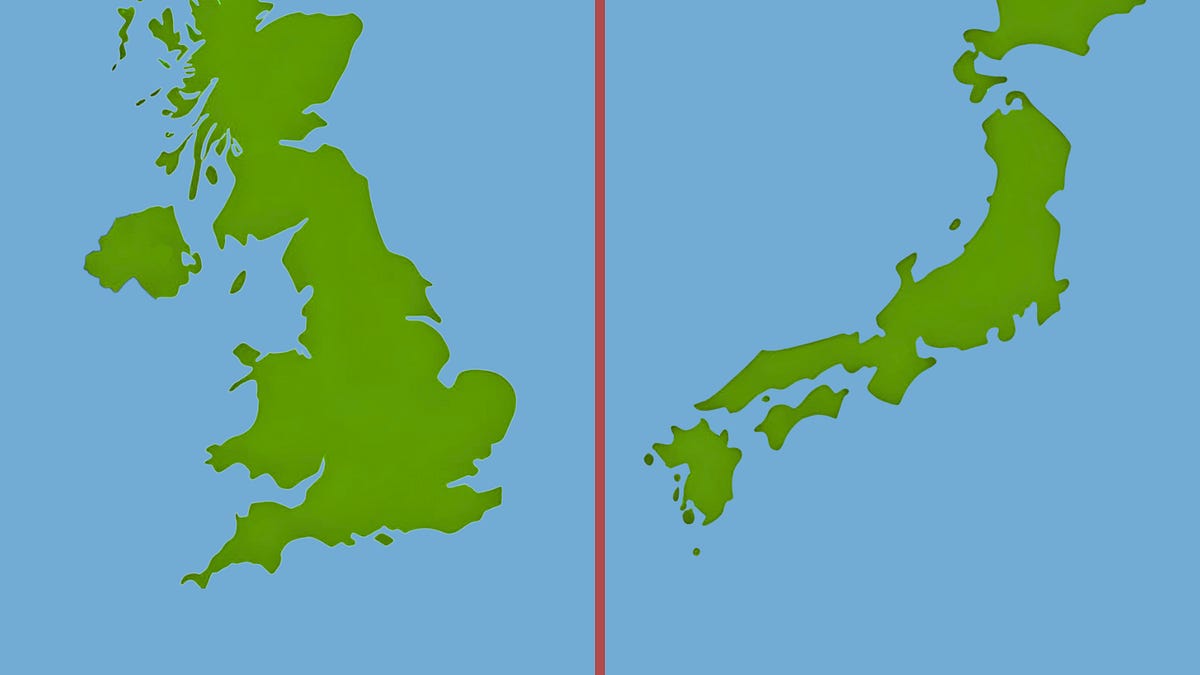
On March 11, 2011, at 05: 46 GMT, the Embassy of Japan in London underwent an immediate and total operational transformation. As news of the magnitude 9. 0 earthquake and subsequent tsunami reached the United Kingdom, Ambassador Keiichi Hayashi, who had presented his credentials only two months prior in January 2011, declared a state of emergency within 101-104 Piccadilly. The building's diplomatic functions were suspended; the chancery became a 24-hour emergency command center dedicated to a singular mission: managing the flow of information, aid, and personnel between Britain and the devastated Tōhoku region.
The embassy's response was defined by a suspension of normal hierarchy in favor of rapid logistical coordination. Staff members, with families in the affected prefectures of Miyagi, Iwate, and Fukushima, worked in shifts to man emergency hotlines. Their primary immediate task was twofold: assisting the Foreign and Commonwealth Office (FCO) in locating British nationals in the disaster zone and processing the overwhelming influx of offers for assistance from the British public. Minister Plenipotentiary Hitoshi Noda was dispatched to Manchester Airport to personally brief and send off the UK International Search and Rescue (UK ISAR) team. This unit, comprising 59 fire and rescue specialists, two search dogs, and medical personnel, became the British team to deploy to the disaster zone, operating in the freezing conditions of Ofunato and Kamaishi.
A serious front in the embassy's emergency operations was the management of information regarding the Fukushima Daiichi nuclear disaster. In the weeks following March 11, London became a hub for anxiety regarding radiation risks, fueled by sensationalist media reports that threatened to sever economic and travel ties with Japan. Ambassador Hayashi and his team engaged in an aggressive counter-misinformation campaign. The embassy facilitated direct teleconferences between Japanese officials and Sir John Beddington, the UK Government's Chief Scientific Adviser. Beddington's objective analysis, that the health risks to Tokyo residents were minimal, became a of the embassy's communication strategy. This scientific diplomacy was instrumental in persuading the FCO to lift its advisory against non-essential travel to Tokyo by April 2011, a move that stabilized business confidence when other nations remained hesitant.
The physical space of the embassy also served as a focal point for public mourning and solidarity. A Book of Condolence was opened in the main hall, signed by Prime Minister David Cameron on March 22 and Foreign Secretary William Hague on March 23. The financial response was immediate; the embassy opened a dedicated relief account, collecting over £521, 000 in direct donations by August 2011, which was forwarded without administrative deduction to the Japanese Red Cross Society. This was to the millions raised independently by British NGOs. The embassy's role extended to vetting and channeling these funds to ensure they reached the specific "Donation Allocation Committees" of local governments in the stricken areas, rather than into general aid pots.
Long-term memorialization projects were initiated to ensure the disaster remained in the diplomatic consciousness. The embassy collaborated with the Japan Society to establish the "Rose Fund" (Tohoku Earthquake Relief Fund), which targeted smaller, community-led reconstruction projects frequently overlooked by massive government aid. In a permanent physical tribute, the embassy coordinated with the Royal Borough of Kensington and Chelsea to inaugurate the Fukushima Garden in Holland Park in 2012. This space, designed to symbolize gratitude for British support, remains a site for annual commemoration ceremonies attended by embassy officials and representatives of the British rescue teams.
The emergency also forced a recalibration of the embassy's energy diplomacy. Prior to 2011, the mission had been a vocal proponent of Japan's nuclear technology exports. Post-Fukushima, the embassy's energy attachés pivoted to a complex dual mandate: explaining Japan's new safety while simultaneously engaging with the UK's own nuclear ambitions, particularly regarding Hitachi and Toshiba's involvement in British nuclear infrastructure. This delicate balancing act, managing the reputational of Fukushima while maintaining Japan's status as a high-tech partner, dominated the embassy's economic agenda for the subsequent decade.
Reciprocal Access Agreement and Defense Ties 2023-2026
The strategic realignment of Japan's defense posture found its most concrete European expression in London between 2023 and 2026, a period that saw the Embassy of Japan transform from a diplomatic outpost into a nerve center for military integration. This shift was anchored by the Reciprocal Access Agreement (RAA), signed on January 11, 2023, at the Tower of London. While the venue provided ceremonial grandeur, the legal was finalized through diplomatic notes exchanged at the Embassy in Piccadilly on September 15, 2023. Entering into force on October 15, 2023, the RAA dismantled legal blocks that had existed since the Second World War, granting the Japan Self-Defense Forces (JSDF) and British Armed Forces standing permission to deploy troops and weaponry on each other's soil with a legal status analogous to the Visiting Forces Act.
The operational impact of this treaty was immediate. In November 2023, the agreement was applied for the time during Exercise Vigilant Isles 23 in Japan, the flow of personnel soon reversed. By late 2024, the Embassy's Defense Section, historically a small office focused on attaché duties, expanded its remit to manage the logistics of incoming Japanese military assets. This culminated in the "Atlantic Eagle" deployment in September 2025, when the Japan Air Self-Defense Force (JASDF) stationed aircraft and 180 personnel at RAF Coningsby in Lincolnshire. This deployment, the JASDF's substantial operation in Europe in its 71-year history, required the Embassy to coordinate complex jurisdictional matters under the RAA, ranging from the carriage of live munitions to the legal status of Japanese service members off-base.
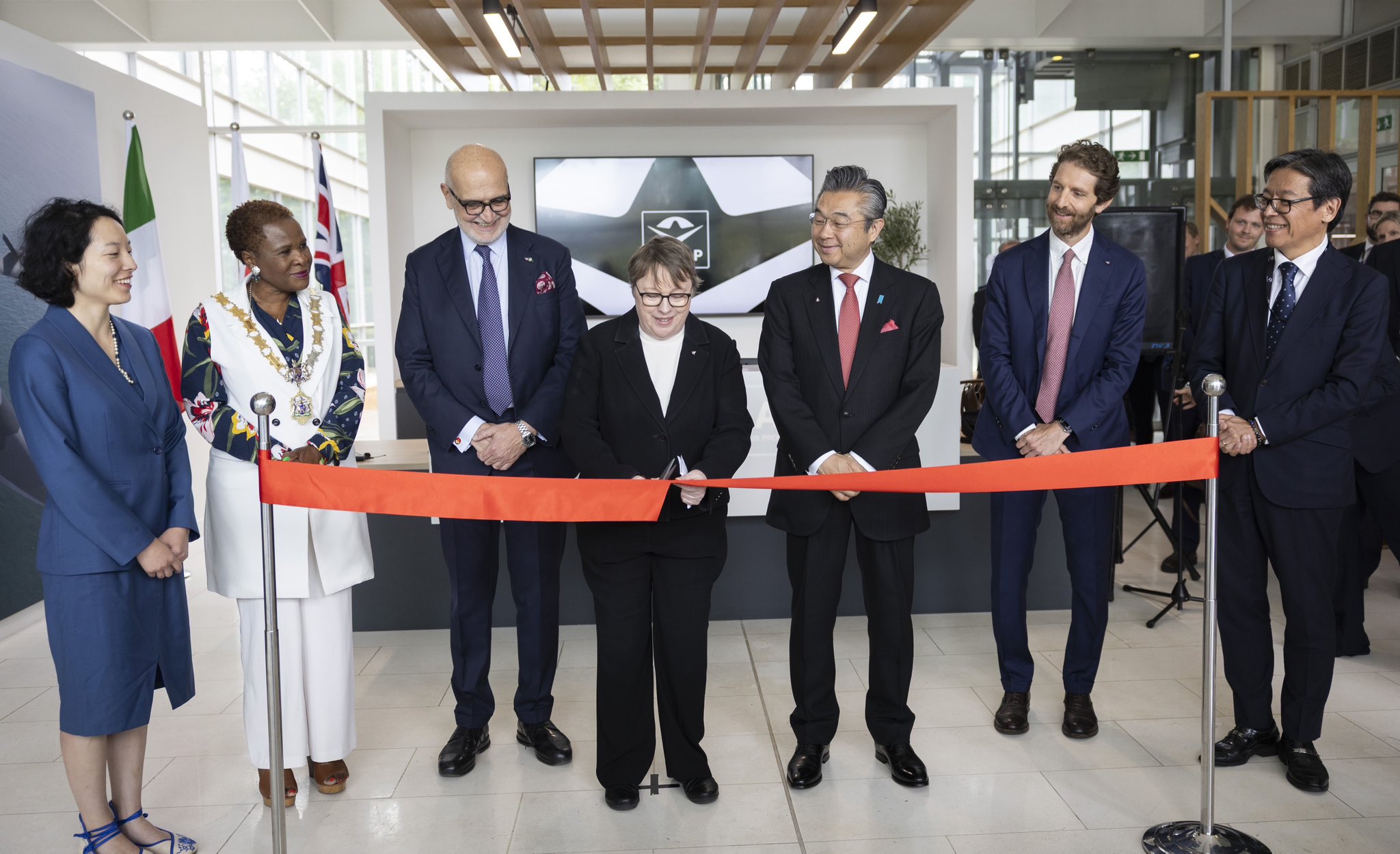
Parallel to these troop movements, the Embassy became the diplomatic engine for the Global Combat Air Programme (GCAP), a trilateral initiative merging British, Japanese, and Italian fighter projects. Following the treaty signed in December 2023, the diplomatic focus shifted to the establishment of the GCAP International Government Organisation (GIGO). In July 2025, the GIGO headquarters opened in Reading, Berkshire. This facility, unlike a standard corporate office, operates as a diplomatic entity with treaty-defined privileges. The Embassy of Japan in London assumed responsibility for the accreditation and support of the Japanese delegation at the Reading HQ, which included the organization's Chief Executive, a Japanese official to lead the consortium. The presence of Japanese government engineers and defense bureaucrats in the Thames Valley corridor created a new, permanent node of Japanese state power within the UK, administered remotely from Piccadilly.
The geopolitical framework for these developments was the "Hiroshima Accord," signed in May 2023. While the Accord covered broad economic and security goals, its enforcement in London fell to the Embassy's specialized committees. The Accord mandated a "2+2" meeting of Foreign and Defense Ministers, scheduled for 2026 in the UK. Throughout late 2025 and early 2026, Embassy officials engaged in intense preparatory negotiations with the UK Ministry of Defence and the Foreign, Commonwealth and Development Office (FCDO). These talks addressed sensitive agenda items, including the integration of Japanese sensors into the UK's air defense architecture and the chance for regular rotation of Japanese maritime patrol aircraft to Scottish bases to monitor North Atlantic sea lanes.
The volume of defense-related traffic through the Embassy necessitated physical and organizational changes. Secure communications infrastructure was upgraded to handle classified data sharing with the Japanese Ministry of Defense in Ichigaya. The Defense Attaché's office began routine liaison with the UK's Permanent Joint Headquarters (PJHQ) to synchronize activities for the Carrier Strike Group 2025 deployment, where Japanese destroyers provided escort capabilities for the British carrier HMS Prince of Wales during its Indo-Pacific tour. This reciprocity, British ships in Tokyo Bay and Japanese jets in Lincolnshire, marked a definitive end to the post-war era of distant, purely commercial relations.
| Date | Event | Significance |
|---|---|---|
| Jan 11, 2023 | RAA Signed | defense pact with a European nation allowing troop deployments. |
| Oct 15, 2023 | RAA Entry into Force | Legal framework operational; notes exchanged at London Embassy. |
| Dec 14, 2023 | GCAP Treaty Signed | Formal merger of Tempest and F-X fighter programs. |
| Sep 2025 | Exercise Atlantic Eagle | JASDF deployment to UK (RAF Coningsby). |
| July 2025 | GCAP HQ Opens | GIGO established in Reading; Japanese CEO installed. |
| Feb 2026 | 2+2 Ministerial Prep | Embassy coordinates agenda for UK-hosted defense summit. |
By February 2026, the Embassy of Japan functioned not as a representation of Tokyo's interests as a logistical hub for a de facto alliance. The historical resonance with the 1902 Anglo-Japanese Alliance was frequently by analysts, yet the 2026 reality was distinct. The 1902 alliance was a naval pact against Russia; the 2026 partnership was a technological and industrial integration against widespread threats in the Indo-Pacific and Euro-Atlantic theaters. The Embassy's role had evolved from observation to active management of a joint military-industrial complex, overseeing the movement of people, secrets, and hardware between the two island nations.
Security Breaches and Public Order Incidents
The facade of 101 Piccadilly projects an image of impenetrable diplomatic reserve, yet the history of the Embassy of Japan in London reveals a timeline punctuated by hostility, intrusion, and public disorder. While the building itself stands as a symbol of restored relations, it has frequently served as a lightning rod for British public sentiment, ranging from the raw wounds of the Second World War to modern environmental direct action. The security apparatus surrounding the mission has evolved not through preventative protocol, as a reactive measure to specific, documented breaches of its perimeter and peace.
The most absolute security breach in the site's history occurred not through intrusion, through evacuation. Following the outbreak of the Pacific War in December 1941, the Embassy ceased to function as a diplomatic mission. The staff were repatriated, and the building fell under the custodianship of the Swiss government, acting as the protecting power. For four years, the structure stood as enemy territory in the heart of London, its grand halls silent while the Blitz raged around it. This period represents a total cessation of Japanese sovereignty over the site, a vacuum that would not be filled until the resumption of diplomatic relations in the 1950s.
Post-war tensions erupted visibly during the state visit of Emperor Hirohito in October 1971. This event tested the Metropolitan Police's ability to maintain order against a backdrop of visceral hatred from veterans of the Burma campaign and former prisoners of war. While the Embassy itself was ringed by security, the anger found other. In a severe breach of public order related to the diplomatic mission, a Japanese cedar planted by the Emperor at Kew Gardens was cut down and doused with chemical killer shortly after the ceremony. A message left at the scene read, "They did not die in vain." The incident forced the Embassy to operate under a siege mentality, with staff advised to keep a low profile as veterans lined the Mall in a "silent protest," turning their backs on the passing motorcade.
The hostility into the generation. During the state visit of Emperor Akihito in May 1998, the security perimeter around the Embassy and Buckingham Palace faced intense pressure. Former POWs, organized and vocal, broke the silence of 1971. As the Emperor's carriage passed, the crowd whistled the "Colonel Bogey March", a defiant reference to The on the River Kwai. A significant public order incident occurred when Jack Caplan, a veteran of the camps, burned a Japanese flag in front of the crowds and cameras. The police presence was massive, yet the psychological breach of the diplomatic welcome was total. The Embassy staff inside 101 Piccadilly had to contend with a British public that refused to forgive, requiring a security posture that prioritized physical distance between dignitaries and the street.
As the war generation faded, the threat profile shifted from historical grievance to environmental activism. The 2000s saw the Embassy become a primary target for anti-whaling groups, specifically regarding the annual hunts in Taiji. In January 2008, the Embassy suffered a humiliating physical security breach. Sophie Wyness, a 14-year-old protester, alongside her father, managed to enter the building's lobby. They used cables to tie themselves to the stone staircase inside the mission, occupying the diplomatic reception area. This intrusion exposed a serious lapse in access control, as the protesters were able to bypass the outer cordon and enter the sovereign territory of Japan to stage their demonstration. Police eventually cut them loose and arrested them for trespassing, the image of a teenager chaining herself to the Embassy's interior stairs forced a review of visitor screening.
Later that same year, in March 2008, another breach occurred when a Sea Shepherd activist scaled the exterior of the building. The man climbed the facade of 101 Piccadilly to unfurl a banner reading "Japan Stop Your Illegal Whaling" and chained himself to the structure. This vertical breach demonstrated the vulnerability of the building's architecture to determined climbers. The Metropolitan Police had to deploy specialist climbing teams to remove him. These incidents marked a transition in the security: the threat was no longer a silent veteran turning his back, an activist to physically violate the diplomatic compound to generate media coverage.
The Fukushima nuclear disaster in March 2011 introduced a new wave of public order challenges. The "No More Nuclear" movement mobilized quickly in London, targeting the Embassy as the representative of the Japanese government's energy policy. In 2012 and on subsequent anniversaries, large crowds marched from Hyde Park Corner to the Embassy. Unlike the whaling protests, these were generally mass demonstrations rather than infiltration attempts, yet they required the closure of Piccadilly and a heavy police cordon. The Embassy became the focal point for a transnational anti-nuclear alliance, necessitating blocks and increased surveillance to prevent the crowd from surging against the gates.
In the current era, spanning from 2020 to 2026, the nature of the threat has become increasingly digital, though physical hardening remains clear. The Embassy operates behind a more visible shield of bollards and surveillance cameras, a standard for G7 missions in London. Yet, the most dangerous breaches are invisible. Reports from 2023 and 2024 indicate that the Japanese Ministry of Foreign Affairs, the parent body of the Embassy, was targeted by Chinese state-backed cyber espionage groups such as "MirrorFace." These actors seek to infiltrate the diplomatic networks to access classified communications regarding the UK-Japan defense partnership. While the physical doors of 101 Piccadilly are guarded against protesters, the digital gates face constant bombardment, representing a security breach of far greater strategic consequence than a burnt flag or a climbed wall.
| Date | Incident Type | Details |
|---|---|---|
| Dec 1941 | Operational Breach | Embassy evacuated; building seized/transferred to Swiss protection upon declaration of war. |
| Oct 1971 | Public Order / Vandalism | Tree planted by Emperor Hirohito at Kew cut down; veterans stage "silent protest" during state visit. |
| May 1998 | Public Order | Flag burning by Jack Caplan; veterans whistle "Colonel Bogey" at Emperor Akihito. |
| Jan 2008 | Physical Intrusion | 14-year-old Sophie Wyness and father enter lobby and chain themselves to the main staircase. |
| Mar 2008 | Perimeter Breach | Activist the facade of 101 Piccadilly to hang anti-whaling banner. |
| Mar 2012 | Mass Demonstration | Large- anti-nuclear protest blocks Piccadilly on Fukushima anniversary. |
| 2023-2024 | Cyber Espionage | "MirrorFace" group Ministry of Foreign Affairs networks, threatening diplomatic comms. |
Ambassadorial Tenure and Diplomatic Staffing Data
The diplomatic representation of Japan in London has evolved from a tentative legation of samurai bureaucrats into a high-functioning command center for security and trade. This transformation tracks the precise trajectory of Japan's own geopolitical status: from a curiosity in the 1860s to a Great Power ally in 1902, a pariah in 1941, and a strategic pillar of the G7 in the 21st century. An examination of ambassadorial tenure and staffing data reveals that the Embassy of Japan is not a conduit for messages a barometer of Tokyo's shifting priorities, oscillating between military intelligence, economic expansion, and cultural projection.
The structural elevation of the mission occurred on December 1, 1905. Following Japan's victory in the Russo-Japanese War, the British government agreed to upgrade the Japanese Legation to a full Embassy. This change in status was immediate and functional. Hayashi Tadasu, who had served as Minister Plenipotentiary since 1900, became the Japanese Ambassador to the Court of St James's. This promotion granted him direct access to the British Sovereign and placed Japan on equal footing with European powers, a status denied to China until much later. The staffing of the mission reflected this upgrade; the modest entourage of the 1870s, which frequently relied on British legal advisors, expanded to include specialized naval and army attachés who played serious roles in maintaining the Anglo-Japanese Alliance.
Ambassadorial tenure in London averages approximately three to four years, though political instability in Tokyo frequently truncated these terms during the pre-war era. The longest-serving head of mission in the 19th century was Kawase Masataka, who held the post of Minister for nearly a decade (1884, 1893), providing rare continuity during the Meiji modernization. In the 20th century, Matsudaira Tsuneo (1929, 1936) set the record for an Ambassador, serving seven years during a period of mounting friction. His tenure stands in clear contrast to the rapid turnover of the late 1930s, where envoys like Yoshida Shigeru and Shigemitsu Mamoru struggled to manage the deteriorating relationship caused by Japan's expansion into China.
| Name | Rank | Tenure | Strategic Context & Tenure Notes |
|---|---|---|---|
| Terashima Munenori | Envoy Extraordinary | 1872, 1873 | resident Minister. Focused on revising unequal treaties. |
| Kawase Masataka | Minister | 1884, 1893 | Longest-serving Minister (9 years). Oversaw the transition to Grosvenor Gardens. |
| Hayashi Tadasu | Ambassador | 1900, 1906 | Ambassador (from 1905). Architect of the Anglo-Japanese Alliance. |
| Matsudaira Tsuneo | Ambassador | 1929, 1936 | Longest-serving Ambassador. Attempted to mitigate naval treaty disputes. |
| Yoshida Shigeru | Ambassador | 1936, 1938 | Later Prime Minister. Known for bypassing Tokyo to speak directly to British elite. |
| Shigemitsu Mamoru | Ambassador | 1938, 1941 | Last pre-war envoy. Presided over the rupture in relations; expelled in 1941. |
| VACANT | N/A | 1941, 1952 | Diplomatic relations severed due to WWII. Embassy building seized/sealed. |
| Matsumoto Shunichi | Ambassador | 1952, 1955 | post-war Ambassador. Reopened the mission following the San Francisco Peace Treaty. |
| Hayashi Keiichi | Ambassador | 2011, 2016 | Managed the diplomatic of the 2011 Tōhoku earthquake and tsunami. |
| Hayashi Hajime | Ambassador | 2020, 2024 | Oversaw the post-Brexit trade deal and the Hiroshima Accord. |
| Suzuki Hiroshi | Ambassador | 2024, Present | Current incumbent (as of Feb 2026). Focus on GCAP fighter jet collaboration. |
The most significant disruption in staffing occurred between 1941 and 1952. Following the outbreak of hostilities, Ambassador Shigemitsu and his staff were repatriated, and the embassy building at Grosvenor Square was vacated. For eleven years, Japan had no diplomatic footprint in London. When Matsumoto Shunichi arrived in 1952 to reopen the mission, the composition of the staff had fundamentally changed. The military attachés of the Imperial era, who had once monitored British naval shipyards with professional intensity, were gone. In their place, the Ministry of Finance (MOF) and the Ministry of International Trade and Industry (MITI) dispatched a new cadre of economic attachés. By the 1980s, during the height of Japan's bubble economy, these economic officers outnumbered political diplomats, reflecting the mission's primary directive: managing trade friction and facilitating Japanese direct investment in the City of London.
In the current era (2000, 2026), the staffing profile has shifted again, returning partially to hard security. As of 2026, the Embassy operates with a "full complement" of specialists, including defense attachés coordinating the Global Combat Air Programme (GCAP), a trilateral fighter jet project between the UK, Japan, and Italy. The tenure of Ambassador Hayashi Hajime (2020, 2024) was defined by this pivot from pure economics to strategic security alignment. His successor, Suzuki Hiroshi, who assumed the post in September 2024, continues this trajectory. Suzuki, previously an Ambassador to India, represents a Tokyo that views London as a partner in the "Free and Open Indo-Pacific" strategy. The embassy supports a Japanese resident population in the UK exceeding 66, 000, requiring a consular section that rivals the size of entire legations from the 19th century.
Data from the British Foreign Office's London Diplomatic List indicates that the number of accredited diplomats at the Japanese Embassy has remained stable at approximately 40 to 50 senior officials over the last decade, supported by a larger corps of locally engaged staff. This stability masks a qualitative change: the rise of "second-track" diplomacy. Modern staffing includes dedicated officers for cultural affairs and public diplomacy, a response to the "Cool Japan" initiative. Unlike the 1862 Takenouchi Mission, which arrived with 38 members to observe and delay, the 2026 embassy is an integrated operational node, capable of executing complex bilateral agreements on defense, cyber-security, and finance without the need for constant referral to Tokyo.
Consular Operations and Visa Issuance Metrics
The administrative of the Embassy of Japan in London has evolved from a 19th-century ad hoc issuer of handwritten travel letters to a digital node in a global border control network. For over 150 years, the consular section has functioned as the primary gatekeeper for movement between the British Isles and the Japanese archipelago, regulating the flow of diplomats, students, merchants, and tourists. This function began in earnest following the "August 1866 Proclamation" by the Tokugawa Shogunate, which permitted Japanese subjects to travel overseas for study or trade, provided they obtained a seal of permission. Early travel documents were not passports in the modern sense ryoken, letters of request asking foreign powers to allow the bearer safe passage. The Consular Service in London, established distinct from the diplomatic legation, initially spent much of its energy managing the small, frequently destitute, population of Japanese sailors and students who found themselves stranded in Victorian London.
By 1878, the Meiji government standardized these documents into the "Imperial Japanese Passport," a single sheet of paper that evolved into a booklet format by the 1920s. The Consular Section in London recorded the entries of high-profile visitors, including the Iwakura Mission and later Natsume Soseki, its daily operations focused on the certification of commercial invoices and the protection of Japan's growing merchant marine fleet. The outbreak of the Pacific War in 1941 severed these operations. The embassy building became a holding site for repatriation, and all consular functions ceased until the ratification of the Treaty of San Francisco. When operations resumed in 1952, the consular workload shifted dramatically toward re-establishing commercial ties. The 1960s and 1970s saw a surge in technical visas as Japanese engineers and businessmen flooded into the UK to support the post-war economic miracle, necessitating a rapid expansion of the consular staff to process long-term residency permits.
The modern era of consular operations is defined by the Visa Waiver Agreement, which allows British citizens to enter Japan for up to 90 days without a visa, and conversely, permits Japanese nationals to enter the UK for up to six months as visitors. This agreement, while facilitating mass tourism, did not eliminate the need for bureaucratic oversight. The Consular Section continues to process thousands of Certificates of Eligibility (COE) annually for those seeking to work, study, or settle in Japan. The COE system requires the embassy to act as an intermediary between the applicant in the UK and the Ministry of Justice in Tokyo, a process that historically took months has seen acceleration through digitization. The volume of these applications correlates directly with the economic climate; visa issuances spiked during the "Cool Japan" tourism boom of the 2010s and plummeted during the border closures of 2020-2022.
A significant component of the embassy's current workload involves the Youth Mobility Scheme (YMS), formerly known as the Working Holiday Visa. This reciprocal arrangement allows young nationals to live and work in the partner country for up to two years. For years, the scheme operated under a strict ballot system due to high demand. In a major policy shift January 31, 2024, the UK Home Office and the Japanese government removed the ballot requirement for Japanese nationals, allowing them to apply at any time. The quota for Japanese applicants was set at 6, 000 places for the 2024-2026 period, a substantial increase designed to cultural exchange. Applicants must prove they possess at least £2, 530 in savings, held for a consecutive 28-day period, to ensure financial self-sufficiency upon arrival.
The following table outlines the fee structure for visa services at the Embassy of Japan in London, from April 1, 2025. These fees reflect the administrative costs of processing and are subject to annual review based on currency exchange rates and bilateral reciprocity measures.
| Visa Category | Fee (GBP), General | Fee (GBP), Indian Nationals | Processing Time (Standard) |
|---|---|---|---|
| Single Entry Visa | £16. 00 | £4. 00 | 5 Working Days |
| Multiple Entry Visa | £31. 00 | £4. 00 | 5 Working Days |
| Transit Visa | £4. 00 | £1. 00 | 5 Working Days |
| Re-entry Permit Extension | £16. 00 | N/A | Same Day |
| Refugee Travel Document Extension | £13. 00 | N/A | Same Day |
The demographic data managed by the embassy reveals a shifting population of Japanese nationals in the UK. According to the Ministry of Foreign Affairs' Bureau of Consular Affairs, as of October 2024, there were 64, 066 Japanese residents in the United Kingdom. This figure represents a decline from the pre-pandemic peak, mirroring a global trend of Japanese nationals returning home or delaying overseas relocation. The Consular Section maintains the "Zairyu Todoke" (Residence Report), a mandatory registration for any Japanese national residing abroad for more than three months. This database serves as the backbone for emergency management, enabling the embassy to contact citizens during emergencies, such as the COVID-19 lockdowns or chance security incidents. The accuracy of this data is important for the allocation of voting ballots for Japanese national elections, which expatriates can cast at the embassy in London.
Border control method underwent a radical transformation in the mid-2020s with the introduction of electronic travel authorizations. As of January 8, 2025, the UK government required all Japanese nationals, previously visa-exempt visitors, to obtain an Electronic Travel Authorisation (ETA) prior to travel. This digital hurdle requires a fee and pre-screening, fundamentally altering the "turn up and enter" ease that characterized the previous decades. Reciprocally, Japan announced the development of JESTA (Japan Electronic System for Travel Authorization). Scheduled for full implementation by 2028, with pilot programs initiating in 2025 and 2026, JESTA require British tourists to register online and pay a fee, estimated at 3, 000 yen, before departure. These systems aim to reduce illegal overstays and enhance border security by screening passengers against watchlists before they board their flights.
Beyond visa issuance, the Consular Section performs serious notary and civil registration functions. It acts as a remote city hall for Japanese citizens, processing marriage registrations (kon-in todoke), birth notifications, and nationality selections. The "Koseki" (family registry) system, unique to Japanese law, requires precise documentation; the embassy must verify and translate British birth or marriage certificates to ensure they meet the strict legal standards of the Ministry of Justice. In 2024 alone, the section handled hundreds of cases involving the loss of Japanese nationality due to the acquisition of British citizenship, a complex legal matter enforced by Article 11 of the Japanese Nationality Law. The section also provides support for Japanese nationals arrested or hospitalized in the UK, a grim necessary service that involves coordinating with British police and hospitals to ensure fair treatment and communication with families back in Japan.
The physical processing of visas has also migrated from the embassy counters to third-party agencies and digital platforms. While the embassy retains decision-making power, the intake of standard tourist applications is increasingly handled via the "Japan eVISA" system, introduced to streamline the massive influx of post-pandemic tourists. This shift allows consular officers to focus on complex cases, such as humanitarian visas or diplomatic clearances. Even with these technological aids, the human element remains; consular staff frequently intervene in cases of lost passports, issuing "Travel Documents for Return to Japan" to distressed tourists who fall victim to theft in London's tourist hotspots. The metrics of these emergency issuances serve as a barometer for the safety of Japanese visitors in the capital.