
Regional Charitable Precedents and East Village Land History (1769, 1980)
Table 1. 1: The Geographic Shift of San Diego Poverty (1769, 1980)
| Era | Location of Concentrated Poverty | Primary Driver of Displacement | Charitable/Municipal Response |
|---|---|---|---|
| 1769, 1834 | Mission San Diego de Alcalá | Spanish Colonization | Mission system (food for labor/conversion) |
| 1867, 1912 | The Stingaree (3rd & Island) | Port Commerce & Vice Trade | Unregulated shanties and brothels |
| 1912, 1930 | Centre City East (East Village) | Police Raids (Stingaree clearance) | Dispersal into warehouses/rooming houses |
| 1930, 1950 | Downtown Waterfront/East Village | Great Depression | Bishop Buddy's Cafeteria; Federal Relief |
| 1950, 1980 | East Village (15th & Imperial) | Urban Renewal & Containment | St. Mary of the Wayside Chapel (FJV seed) |
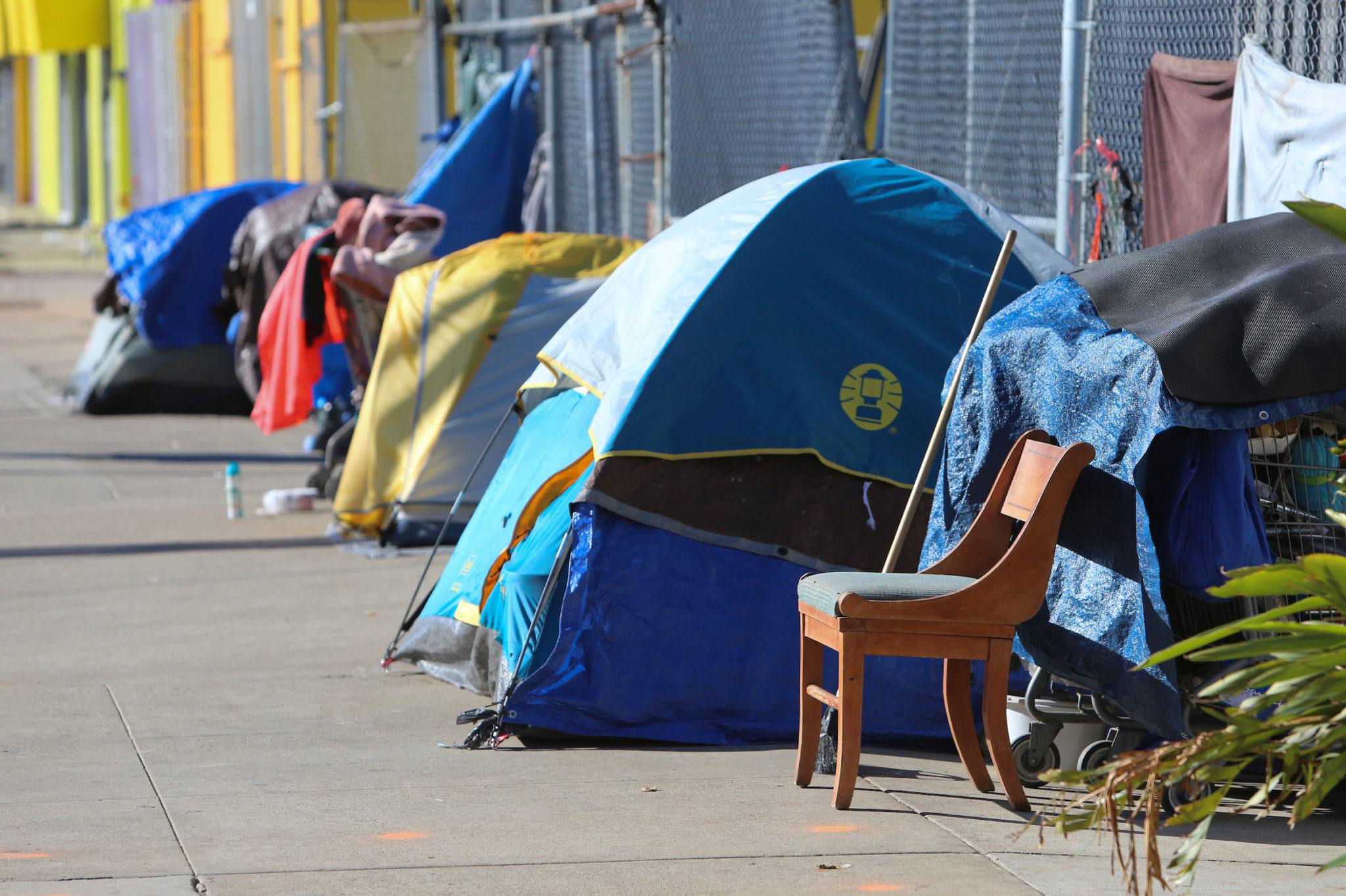
The emergency that necessitated a massive expansion of Catholic charity arrived in the 1970s. San Diego city planners launched an aggressive revitalization effort for the Gaslamp Quarter, which had become dilapidated. To make the Gaslamp viable for tourism and commerce, the city needed to relocate the visible homeless population. City records and testimony from former officials confirm a policy of "containment." Social service providers, including the Rescue Mission and Catholic charities, were encouraged to concentrate their operations in East Village. The logic was cold clear: sacrifice the warehouse district to save the historic commercial district. This policy transformed East Village into a magnet for the destitute. By the late 1970s, the area was colloquially known as "Skid Row." The population was no longer just transient laborers or alcoholics; it increasingly included the mentally ill, displaced by the deinstitutionalization policies of the Reagan era in California. The streets surrounding St. Mary of the Wayside Chapel became an open-air encampment. The small chapel and its thrift store were overwhelmed. The demand for food and shelter outstripped the capacity of the existing diocesan infrastructure. By 1980, the situation in East Village was a humanitarian emergency. The St. Vincent de Paul Center, which had evolved from the chapel, was heavily in debt and struggling to maintain operations. The neighborhood was a grid of despair, characterized by dilapidated single-room occupancy (SRO) hotels and industrial decay. The city's containment strategy had succeeded in clearing the Gaslamp, yet it created a dense nucleus of poverty that the local government ignored. This was the operational theater inherited by Father Joe Carroll in 1982. The "Village" did not appear in a vacuum. It was built on land specifically broken by a century of policy to receive the broken. The stage was set for a transition from small- charity to industrial- social services.
1950, 1982: St. Vincent de Paul Chapel and Early Operations

| Era | Dominant Housing Model | Policy Driver | Outcome for Low-Income Residents |
|---|---|---|---|
| 1950, 1970 | Single Room Occupancy (SRO) Hotels | Market stability; low-value downtown land | Housed in private, low-cost units (approx. 14, 000 rooms peak) |
| 1974, 1980 | Gaslamp Quarter Redevelopment | "Blight removal" and tourism promotion | Eviction; demolition of residential hotels for commercial use |
| 1982 | Emergency Shelter / Soup Kitchen | emergency management (Diocesan intervention) | Street homelessness; reliance on St. Vincent de Paul for survival |
The "Village" concept had not yet materialized, yet the mechanics for its creation were set in motion during this window. The destruction of independent, private low-income housing (SROs) created a vacuum that the Diocese stepped in to fill. Father Joe Carroll's mandate in 1982 was not to feed the hungry, to build a parallel infrastructure for a population that had been systematically excised from the private housing market. The peanut butter sandwiches of 1982 were the final vestige of the old model, soon to be replaced by a centralized, capital-intensive campus system.
1982, 2011: The Carroll Administration and Campus Consolidation
The transformation of San Diego's charitable sector began in July 1982 with a specific personnel decision by Bishop Leo Maher. The Diocese of San Diego faced a disorganized scattering of soup kitchens and a growing street population that threatened the image of the city's downtown redevelopment efforts. Maher appointed Father Joe Carroll to direct the St. Vincent de Paul Center. Carroll possessed no background in social work or addiction medicine. His qualification was a reputation within the clergy as a "hustler" capable of aggressive fundraising. Maher's directive was explicit: consolidate the diocese's homeless services and finance them without draining the church's coffers. This appointment marked the end of small- parish charity and the beginning of the industrialization of homeless services in Southern California.
Carroll immediately rejected the existing model of dispersed aid. He argued that scattering services across the city created and failed to address the root causes of poverty. His counter-proposal was the "one-stop shop," a centralized campus where housing, medical care, and meals existed behind a single perimeter. This philosophy aligned perfectly with the objectives of the Centre City Development Corporation (CCDC). City planners sought to sanitize the Gaslamp Quarter and the newly opened Horton Plaza by pushing the visible homeless population eastward. Carroll provided the moral and logistical vehicle for this containment. The city and the diocese the East Village as the containment zone for the region's indigent, a decision that permanently altered the district's demographics.
The physical manifestation of this strategy arrived in 1987 with the opening of the Joan Kroc Center. Funded by a $3 million seed donation from the McDonald's heiress, the $12 million facility was in. It was not a flop house. It was a purpose-built institution capable of housing hundreds of families and individuals. The architecture itself signaled permanence. The center anchored the organization's footprint on Imperial Avenue, establishing a gravitational pull that drew the homeless population away from the tourist-heavy waterfront and into the industrial blocks of the East Village. This consolidation allowed the city to proceed with gentrification in the west while concentrating social services in the east.
Between 1987 and 2000 the organization executed a rapid acquisition of real estate surrounding the Joan Kroc Center. Carroll used his public persona to secure private donations while using the organization's to capture government grants. The campus expanded block by block. The Bishop Maher Center opened in 1989 to serve single men. The Paul Mirabile Center followed in 1994 adding 350 beds for short-term shelter and a medical clinic. By the late 1990s the St. Vincent de Paul Village controlled a massive contiguous section of the city grid. The following table details the major capital expansions during this period.
| Facility Name | Year Opened | Primary Function | Strategic Impact |
|---|---|---|---|
| Joan Kroc Center | 1987 | Family Housing / Services | Established the "Campus" model and anchored operations in East Village. |
| Bishop Maher Center | 1989 | Single Men's Housing | Increased capacity for the largest demographic of the street population. |
| Toussaint Teen Center | 1992 | Homeless Youth Academy | Expanded demographic reach to unaccompanied minors and runaways. |
| Paul Mirabile Center | 1994 | Short-term Shelter / Medical | Created an intake funnel and centralized medical triage. |
| Village Family Health Center | 1998 | Primary Care Clinic | Internalized healthcare costs and reduced reliance on ER visits. |
The operational model relied on strict behavioral compliance. Unlike the "housing " models that would gain traction in the 2010s the Carroll administration enforced a high-barrier system. Residents were required to maintain sobriety and participate in mandatory programs. This method allowed the organization to report high success rates to donors by filtering out the most service-resistant individuals. Those who could not comply were frequently discharged back to the streets of the East Village. This created a visible duality: a well-ordered interior campus for the "deserving poor" surrounded by an increasingly desperate encampment of those rejected by the system.
To fund this sprawling enterprise Carroll developed a diversified revenue engine that insulated the organization from donor fatigue. He pioneered the commercialization of donated goods on an industrial. The organization's vehicle donation program became a dominant player in the regional auto auction market. Thrift stores were not charity outlets revenue centers located in middle-class neighborhoods to capture disposable income. By 2010 the organization's annual revenue exceeded $26 million with derived from these internal business ventures and government contracts. The "hustler priest" had built a vertically integrated non-profit corporation.
The consolidation of services also served a political function for San Diego's elected officials. By centralizing the homeless problem in the East Village the city could claim it was addressing the emergency while simultaneously keeping it contained. This arrangement held firm until the construction of Petco Park in 2004. The arrival of the baseball stadium brought high-end residential development crashing into the borders of the St. Vincent de Paul campus. The friction between the new luxury condo owners and the established homeless infrastructure sparked a conflict over land use that continues to define the neighborhood. Carroll stood his ground. He refused to liquidate the land he had acquired when it was worthless even as developers offered premiums for the blocks.
The administration of the campus during the 2000s became increasingly complex. The sheer volume of residents required a quasi-military organization. Security patrols, cafeteria schedules, and case management quotas replaced the informal charity of the past. Critics labeled it the "homeless industrial complex" and argued that warehousing thousands of people in a single district prevented their reintegration into society. Yet the model because it solved the immediate logistical problem of where to put the unhoused. The Toussaint Teen Center represented the apex of this institutional method by attempting to create a boarding school environment for homeless youth within the shelter system.
Father Joe Carroll retired in 2011 following his 70th birthday and a series of health problems. He left behind an organization that bore little resemblance to the St. Vincent de Paul Center he inherited in 1982. He had constructed a parallel welfare state within San Diego. The campus was a city within a city with its own doctors, police, and economy. His departure marked the end of the expansionist era. The physical footprint was established. The question for the administration was no longer how to build the village how to manage the density it had created. The containment strategy had succeeded so thoroughly that the East Village was synonymous with homelessness. The legacy of the Carroll years was a permanent institutional infrastructure that saved thousands of lives while simultaneously cementing the geographic segregation of the region's poverty.
Real Estate Holdings and Tax-Exempt Property Valuation

| Property / Project | Location | Est. Cost / Value | Status (2026) |
|---|---|---|---|
| Saint Teresa of Calcutta Villa | 14th & Commercial | ~$145 Million | Active (407 Units) |
| 1401 Imperial Tower | 1401 Imperial Ave | ~$115 Million (Est.) | Acquired 2025 / In Development |
| Benson Place | Otay Mesa (Outer Rd) | ~$24 Million | Active (82 Units) |
| 17th & Commercial | East Village | Undisclosed | Completion ~2026 (109 Units) |
| Joan Kroc Center | 1501 Imperial Ave | Legacy Asset | Active Shelter/Services |
The valuation of these holdings reveals a paradox. The organization pleads poverty to solicit donations and government grants, citing the overwhelming cost of operations. Simultaneously, it sits atop a real estate portfolio that rivals mid-sized commercial developers. The "Village" is not a service provider; it is a landlord with a captive tenant base funded by the state. The 2026 completion of projects at 16th and Island further tightens this grip, ensuring that as the city attempts to decentralize services, the gravitational pull of FJV's real estate mass keeps the emergency anchored firmly in the East Village.
Financial Audits: Government Grants vs. Private Donations
The financial architecture of Father Joe's Villages represents the total transformation of charitable aid from a localized, ecclesiastical duty into a digitized, state-sponsored industrial complex. In the 18th century, the Franciscan missions of Alta California operated on a resource-exchange model where indigenous labor subsidized the institution's existence, supplemented by the Spanish Crown's erratic funding. By 2026, this model has mutated. The modern shelter system no longer relies on the alms of the faithful or the labor of the residents, on a sophisticated extraction of federal, state, and municipal tax dollars. An examination of the organization's audited financial statements from 2020 through 2024 reveals a corporate structure that functions less like a parish soup kitchen and more like a mid-sized government contractor.
To understand the money flow, one must recognize the bifurcated legal structure of the organization. Father Joe's Villages is not a single entity a network of corporations. The primary service provider, St. Vincent de Paul Village, Inc., handles the "soft" operations: case management, meals, and shelter staffing. This entity absorbs the majority of government grants. Simultaneously, S. V. D. P. Management, Inc. acts as the asset holding company, controlling the real estate portfolio and development projects. In 2024, S. V. D. P. Management reported total assets exceeding $131 million, while the service arm held approximately $38 million in net assets. This separation protects the organization's real estate wealth, the "Villages" themselves, from the operational liabilities of running high-risk shelter programs.
The revenue mix for the 2023-2024 fiscal pattern demonstrates a heavy dependence on public coffers. While the organization's marketing materials frequently highlight private philanthropy, such as the vehicle donation program, the ledger tells a different story. Government grants and contracts constitute the spinal column of the budget. In 2023, the service arm reported revenue of nearly $74 million. of this inflow originated from the U. S. Department of Housing and Urban Development (HUD) and the San Diego Housing Commission (SDHC). Specific line items include a $5. 7 million contract to operate the City of San Diego's Shelter at Golden Hall and multiple Continuum of Care (CoC) grants ranging from $1. 8 million to $4. 7 million for rapid rehousing and permanent supportive housing.
The table reconstructs the financial stratification of Father Joe's Villages based on available IRS Form 990 filings and Housing Commission reports for the 2022-2024 period. It exposes the of the operation and the specific weight of taxpayer subsidies versus private charity.
| Fiscal Entity | Primary Function | Approx. Annual Revenue (2023/24) | Key Funding Sources | Net Assets (2024) |
|---|---|---|---|---|
| St. Vincent de Paul Village, Inc. | Shelter Operations, Health Clinic, Services | $68, 000, 000, $74, 000, 000 | HUD Grants, SDHC Contracts, Medi-Cal | ~$38, 000, 000 |
| S. V. D. P. Management, Inc. | Real Estate Development, Asset Holding | $26, 000, 000 | Rental Income, Developer Fees, Vehicle Sales | ~$132, 000, 000 |
| Combined Totals | Total Enterprise | ~$100, 000, 000 | Mixed Public/Private | ~$170, 000, 000 |
This heavy reliance on government contracts subjects the organization to political and regulatory scrutiny that private charities frequently escape. In 2023 and 2024, the San Diego Housing Commission placed Father Joe's Villages under a Performance Improvement Plan (PIP) following a series of operational failures. Auditors and city officials flagged serious problems, including a backlog of maintenance requests and, most disturbingly, a suspension list that disproportionately barred Black clients from accessing services. The Housing Commission's review forced the organization to overhaul its grievance procedures and reduce the number of former clients banned from the premises. This episode reveals the tension inherent in the public-private partnership model: the organization is a private religious entity, yet it must adhere to civil rights standards and performance metrics dictated by the state agencies that pay its bills.
Executive compensation at Father Joe's Villages also reflects its status as a corporate enterprise. Deacon Jim Vargas, the President and CEO, presides over this $100 million operation. Tax filings for S. V. D. P. Management alone listed his compensation at $226, 451. In non-profit structures of this size, executives receive split compensation packages drawn from multiple entities within the corporate family to minimize the "sticker shock" on any single tax form. While these salaries are within market rates for managing a corporation of this size, they stand in clear contrast to the economic reality of the population served. The professionalization of poverty management has created a tier of executive leadership whose livelihoods are secured by the very persistence of the homelessness emergency they are tasked with solving.
Private donations remain a important, if secondary, revenue stream, primarily because they are unrestricted. Government grants come with handcuffs, strict mandates on how every dollar is spent, frequently tied to the "Housing " methodology favored by federal policy. Private dollars, raised through galas and the ubiquitous vehicle donation program, provide the liquidity needed for capital improvements and administrative overhead. The vehicle donation program is particularly; marketing claims state that "100% of proceeds" go to programs, a figure achieved by netting out the auction and repair costs before the transfer is recorded as program revenue. This unrestricted capital allows S. V. D. P. Management to acquire new properties, such as the sites in Oceanside and Barrio Logan earmarked for future development in the "Turning the Key" initiative, which aims to create 2, 000 new units of affordable housing.
The trajectory from 2025 into 2026 suggests a tightening fiscal environment. The San Diego Housing Commission has faced its own budget pressures, and the expiration of pandemic-era relief funds forces providers to compete more aggressively for the remaining pool of CoC and Emergency Solutions Grant (ESG) dollars. In late 2024, the City Council approved short-term funding to keep beds open, the long-term sustainability of the Golden Hall shelter, and the revenue it generates for Father Joe's, remains uncertain as the city looks to transition operations to other sites. The organization's strategy appears to be pivoting toward permanent housing development, a sector with more stable, long-term financing through tax credits and vouchers, rather than the volatile annual contracting of emergency shelter beds.
, the financial records of Father Joe's Villages depict an organization that has successfully monetized the region's social dysfunction. It has accumulated over $170 million in assets by positioning itself as the indispensable vendor for municipal homelessness services. The shift from the 18th-century model of charity, driven by religious obligation and funded by the church, to the 21st-century model of the "non-profit contractor," funded by the tax base, is complete. The result is a system where the fortunes of the service provider are inextricably linked to the of the problem, creating a financial feedback loop that ensures the institution's survival even as the emergency on the streets deepens.
Operational Shift: Transitional Living to Housing First (2010, 2026)

The operational philosophy of Father Joe's Villages underwent a radical demolition and reconstruction between 2010 and 2026, driven less by charitable evolution than by federal financial coercion. For decades, the organization operated under the "Continuum of Care" model championed by Father Joe Carroll: a linear progression where clients earned their way from emergency shelter to transitional housing, and to independence, contingent upon sobriety and behavioral compliance. This "high-demand" system collapsed not because it failed to rehabilitate, because Washington changed the payment structure. The Department of Housing and Urban Development (HUD), following the HEARTH Act of 2009, pivoted aggressively to "Housing ", a model prioritizing immediate placement in permanent housing without preconditions such as sobriety or mandatory psychiatric treatment.
The friction between the Vatican-backed mission of spiritual redemption and the federal mandate of harm reduction came to a head in 2016. HUD stripped San Diego agencies of millions in funding for transitional housing, viewing the model as an expensive bottleneck rather than a solution. Father Joe's Villages, heavily reliant on these grants, faced an existential choice: adapt to the secular "low-barrier" model or lose the solvency required to operate. The organization chose survival. In a decisive move that alienated long-time donors who favored the sobriety- method, the Villages began its transitional programs. Hundreds of beds that once provided structured, sober living environments were defunded, leaving a vacuum for the "missing middle", individuals who needed supervision to maintain sobriety did not qualify as "chronically homeless" under HUD's strict new definitions.
Deacon Jim Vargas, who assumed leadership in 2015 following Father Joe Carroll's retirement, formalized this pivot in 2017 with the launch of the "Turning the Key" initiative. The campaign promised to create 2, 000 units of affordable housing, converting the charity from a shelter operator into a large- real estate developer. The strategy relied on leveraging Low-Income Housing Tax Credits (LIHTC) and vouchers to build permanent assets. The major proof of concept, Benson Place, opened in August 2020. A converted motel in South Bay, it provided 82 units of permanent supportive housing. While the ribbon-cutting drew media praise, the operational reality was clear: the cost to house one person had skyrocketed, and the throughput, the number of people served per year, plummeted as beds turned into indefinite leases.
The architectural crown jewel of this era, Saint Teresa of Calcutta Villa, opened in February 2022. Rising 14 stories at 14th and Commercial Streets, the $145 million tower added 407 units to the East Village skyline. The project exemplified the new economic reality of homelessness: at approximately $356, 000 per door, "ending" homelessness had become a capital-intensive construction industry. While the Villa provided dignified, high-quality apartments for over 500 residents, it did little to the flow of new arrivals to the streets. Critics noted that the "Housing " model, while humane for the lucky few who secured a unit, created a static system. Unlike the old transitional beds which cycled clients out every 12 to 24 months, a PSH unit is a home for life. Consequently, the "Village" ceased to be a flow-through rehabilitation engine and became a static landlord, its capacity capped by the speed of construction rather than the speed of human recovery.
The cultural shift inside the walls was equally. Under the Housing mandate, tenants in these new towers could not be evicted for substance use provided they paid their portion of the rent and obeyed standard lease terms. The "sober village" concept died. Staff members, previously to enforce behavioral standards, transitioned into roles more akin to property managers and voluntary case workers. Reports from 2023 and 2024 indicated a rise in overdoses within these facilities, a grim side effect of concentrating active users in private units without the method of mandatory intervention. The organization attempted to this gap with harm reduction strategies, the tension remained: the money paid for housing, the mission called for healing.
By 2025, the financial fragility of this model exposed itself. As the organization managed the closure of the Golden Hall shelter and the relocation of beds to the Paul Mirabile Center, federal winds shifted again. In late 2025, HUD signaled reductions in Continuum of Care funding, threatening the subsidies that kept the new towers solvent. The "Turning the Key" initiative, originally hailed as a self-sustaining solution where rents covered operations, faced the harsh math of rising maintenance costs and stagnant voucher values. The organization found itself managing a portfolio of aging real estate while the street population in San Diego continued to surge, driven by economic displacement that outpaced the construction of $400, 000 apartments.
The table contrasts the operational reality of Father Joe's Villages at the start of the decade versus the situation in 2026, illustrating the trade-offs made to secure federal compliance.
| Operational Metric | 2010 (Carroll Era) | 2026 (Vargas Era) |
|---|---|---|
| Primary Model | Continuum of Care (Linear) | Housing (Direct Placement) |
| Sobriety Requirement | Mandatory for housing entry | None (Harm Reduction) |
| Bed Turnover | High (12-24 month limits) | Low (Indefinite tenancy) |
| Cost Per Unit | Low (Shelter/Dorm style) | High ($350k+ New Construction) |
| Funding Source | Donations & Block Grants | LIHTC, Vouchers, Medicaid |
| Client Agency | Compliance-based advancement | Tenant rights & lease protections |
The years 2024 through 2026 also saw Father Joe's Villages absorb the collapse of other regional providers. As smaller shelters failed under regulatory load, FJV consolidated its position, becoming the "too big to fail" anchor of San Diego's safety net. This consolidation, yet, brought bureaucratic sclerosis. The agile, handshake-style charity of the 1980s had calcified into a massive agency managing government contracts with strict deliverables. In 2026, the organization operated as a hybrid entity: part Catholic ministry, part government contractor, and part major downtown landlord. The shift to Housing succeeded in building physical structures, the data suggests it struggled to build human resilience at the same. The "Village" is no longer a place one passes through on the way to a better life; for, it has become the final destination, a contained ecosystem where the poor are housed, managed, and kept out of the public eye.
Executive Compensation and Administrative Cost Ratios
| Role | Executive | Approx. Annual Compensation | Context |
|---|---|---|---|
| President Emeritus (2008) | Father Joe Carroll | $36, 841 | Historical clergy model |
| President & CEO (2024) | Deacon Jim Vargas | $340, 074 | Modern corporate model |
| Medical Director | Melissa Bishop | $265, 465 | Clinical leadership |
| Chief Financial Officer | Jason Brenier | $240, 502 | Financial oversight |
| General Counsel | Ann Wieczorek | $198, 669 | Legal compliance |
### Administrative Cost Ratios Modern charity watchdogs frequently cite the "80/20 rule" as a benchmark for efficiency, suggesting that at least 80% of revenue should be directed toward program services. Father Joe's Villages consistently meets this metric, frequently reporting that **86% to 90%** of its revenue supports programs. In 2024, the organization reported total expenses exceeding $31 million, with administrative and fundraising costs consuming roughly 10-14% of that total. While these ratios satisfy auditors and grantmakers, they obscure the absolute cost of the administrative apparatus. The "Brand Premium" left by Father Joe Carroll requires significant maintenance. Unlike the founder, who could generate millions in donations through personal charisma and "hustle," the current administration relies on a sophisticated fundraising machine. The Chief Philanthropy Officer and associated development staff command six-figure salaries to sustain the donation levels that Carroll once achieved largely through personal appeal. This shift monetizes the legacy of the "Hustler Priest," turning his name into a licensed asset that requires expensive management to yield returns. ### The Wage Gap on Imperial Avenue The between the executive suite and the frontline workforce is a defining feature of the organization's modern era. While executives earn salaries comparable to corporate vice presidents, the staff who interact daily with the homeless population, security guards, warehouse workers, and residential coordinators, frequently earn wages that hover near the region's survival minimum. Data from 2024 and 2025 indicates that entry-level positions such as warehouse workers and receptionists paid between **$18 and $24 per hour**. In San Diego's hyper-inflated housing market, these wages place full-time employees precariously close to the very poverty they work to alleviate. The compensation ratio, a metric tracking the pay gap between the highest-paid employee and the average worker, sits at approximately **6. 7 to 1**. This figure, while within the norms for large non-profits, highlights a structural inequality where the business of ending homelessness has become highly lucrative for management, yet remains a subsistence profession for the labor force. ### The Corporatization of Charity This financial evolution reflects a broader trend in the "Non-Profit Industrial Complex." The mission to serve the poor has been professionalized, requiring legal counsel, compliance officers, and strategic directors. The 2026 opening of new affordable housing units at Commercial and 17th Streets demonstrates the of this operation; these are complex real estate development projects requiring sophisticated financial engineering, not just charitable intent. Consequently, the leadership profile has shifted from pastoral care to asset management. The executive team is compensated not for their spiritual devotion, for their ability to navigate tax credits, secure government contracts, and manage liability. This professionalization ensures the organization's survival and expansion, it also fundamentally alters its character. The distance between the decision-makers and the street has widened, measured not just in office location, in hundreds of thousands of dollars in annual income.
Integrated Health Services and Federally Qualified Health Center Data
The medicalization of homelessness at Father Joe's Villages represents a distinct evolution from the custodial charity of the 18th and 19th centuries. In the 1700s, the region's indigent sick were either ignored or relegated to rudimentary "pest houses" where isolation, not treatment, was the objective. By 2026, the organization had inverted this model, embedding a sophisticated medical apparatus directly into its housing infrastructure. The Village Family Health Center (VFHC) operates not as a clinic as a Federally Qualified Health Center (FQHC) and a Health Care for the Homeless (330h) grantee. This federal designation, secured to stabilize funding streams, allows the organization to bill Medicaid (Medi-Cal) at enhanced rates, converting the biological distress of the homeless population into a sustainable revenue model that supports the broader mission.
The integration of health services acknowledges a grim reality: housing alone cannot resolve the complex pathologies of the modern street population. Data from the Health Resources and Services Administration (HRSA) and internal reports indicate that the VFHC serves as a primary medical home for thousands of unsheltered and sheltered individuals. In 2024, the clinic treated 2, 776 unique patients across 18, 841 total visits. These encounters were not limited to bandage changes or flu shots; they encompassed a high-volume triage of chronic disease, severe mental illness, and substance use disorders. The clinic's ability to provide on-site care removes the transportation blocks that frequently prevent homeless individuals from seeking help until their conditions become serious emergencies.
| Metric | 2024 Data | 2025 Trend/Projection |
|---|---|---|
| Total Patient Visits | 18, 841 | Trending +10% |
| Primary Care Encounters | 6, 855 | Stable |
| Psychiatry Visits | 1, 212 | +51% (Q2 Year-Over-Year) |
| Behavioral Health Visits | 3, 349 | +25% Increase |
| Dental Services | ~1, 800 | 2, 286 (Projected) |
| Street Health Unique Patients | 747 | Expanding Coverage |
The sharpest rise in demand between 2023 and 2026 occurred in psychiatric and behavioral health services. As the fentanyl and methamphetamine emergency deepened on San Diego streets, the acuity of mental health presentations surged. In the second quarter of 2025 alone, psychiatric visits jumped 51% compared to the same period in 2024. The organization responded by inaugurating a 44-bed detox center in 2025, a facility designed to manage the dangerous physiological withdrawal symptoms that frequently deter addicts from entering shelter. This facility, alongside the 248-bed RISE sober living shelter, signaled a pivot toward immediate medical stabilization as a prerequisite for long-term housing success. The data shows that treating the brain is as central to the organization's operations as feeding the body.
Dental care, frequently excluded from safety-net programs, remains a serious component of the VFHC's integrated model. Established originally in 1987, the dental clinic underwent significant expansion in the mid-2020s. Poor oral health is a primary barrier to employment; visible tooth decay or loss carries a heavy social stigma that marks an individual as "homeless" even after they secure housing. In 2024, the dental team provided restorative services to nearly 650 patients. By 2025, aided by a $150, 000 grant from the Delta Dental Community Care Foundation, the clinic increased its capacity to provide dentures, a functional intervention that directly correlates with improved nutrition and employability. The clinic projects that 25% of all VFHC patients access dental care annually by the end of 2026.
Recognizing that individuals are too distrustful or unwell to enter the East Village campus, Father Joe's Villages launched the Street Health program in 2019. This initiative deploys mobile medical units to encampments, bringing doctors, nurses, and outreach workers directly to the pavement. The strategy is one of harm reduction and -building. In 2024, the Street Health team served 747 unique patients, with 36% of those individuals subsequently coming into the main clinic for follow-up care. These teams distribute naloxone to reverse overdoses, treat wound infections before they lead to sepsis, and manage chronic conditions like hypertension in an environment where storing medication is nearly impossible. The Street Health data reveals a population suffering from "diseases of despair," where medical intervention is frequently the positive contact an individual has with the social service system in years.
The financial mechanics of the VFHC rely heavily on the 330h grant status, which mandates strict governance and quality reporting. The Uniform Data System (UDS) tracks clinical quality measures such as diabetes control (HbA1c levels) and blood pressure management. While specific outcomes fluctuate, the structural integration of health care allows for real-time monitoring of a transient population. By 2026, the center had solidified its role not just as a charity clinic, as a specialized medical institution capable of handling complex dual-diagnosis cases that traditional hospitals frequently discharge back to the street. The "Housing " philosophy, in this context, is supported by a "Health Support" reality, acknowledging that a key to keeping a person housed is keeping them physically and mentally stable enough to maintain their tenancy.
Internal Security Metrics and Neighborhood Crime Correlation
The operational reality of Father Joe's Villages (FJV) functions less like a charitable mission and more like a hardened containment facility, a direct lineage of the "Stingaree" vice district that occupied the same coordinates in the late 19th and early 20th centuries. Just as Police Chief Keno Wilson attempted to corral San Diego's "undesirables" south of H Street ( Market Street) in 1912, modern municipal strategy uses the FJV campus at 14th and Commercial as a kinetic anchor for poverty management. The difference in 2026 lies in the sophistication of the security apparatus, which blends private paramilitary contractors with constant San Diego Police Department (SDPD) intervention, creating a surveillance-heavy zone where humanitarian aid meets penal enforcement.
Internal security at the Villages reveal a volatile environment that aggressive policing. Data from 2023 and 2024 exposes a "Do Not Return" (DNR) list maintained by FJV management, a banishment roster for residents deemed too dangerous or non-compliant. At its peak in 2023, this list contained 134 individuals barred for offenses ranging from arson and drug sales to battery and sexual assault. An investigative review by the San Diego Housing Commission found that Black residents were disproportionately represented on this suspension list, accounting for 39 percent of debarments even with making up only 28 percent of the shelter population. This forced a federal and municipal review of FJV's internal justice system, which operates outside the standard legal framework carries the life-altering penalty of losing shelter access.
The financial cost of securing this environment is. In 2022, the San Diego City Council approved a $10. 5 million contract extension for FJV to operate the Golden Hall shelter, of which was allocated to security staffing. Private security firms, such as Elite Security, patrol the perimeter and interior, tasked with enforcing behavioral contracts that the SDPD cannot legally oversee. These private guards serve as the line of defense in a "grey zone" of liability, handling altercations that would otherwise clog the 911 dispatch system. Even with this private, the specific address of the main campus frequently tops the list for SDPD calls for service in the Central Division, draining municipal resources for incidents classified as "disturbances," "psychiatric crises," and "violent assaults."
Neighborhood crime statistics for the East Village present a grim correlation between the concentration of services and criminal activity. While FJV that its presence reduces crime by housing the unstable, 2025 data from Crime Grade and SDPD logs indicates the opposite for the immediate radius. The East Village consistently scores a "D" grade for property crime and ranks in the 21st percentile for safety, meaning 79 percent of U. S. neighborhoods are safer. The cost of crime per resident in this district hit approximately $313 annually for violent offenses in 2025, significantly higher than the San Diego average. The density of desperate individuals creates a predatory ecosystem where dealers and thieves target the very population FJV intends to serve.
| Metric | East Village (Zone 520) | San Diego City Average |
|---|---|---|
| Violent Crime Rate (per 1, 000) | 7. 5 | 4. 3 |
| Property Crime Rate (per 1, 000) | 35. 3 | 19. 8 |
| Chance of Victimization | 1 in 16 (Northwest Sector) | 1 in 48 |
| Annual Cost of Crime per Resident | $573 (Combined) | $415 (Combined) |
The "spillover effect" defines the street-level experience surrounding the campus. Because FJV security strictly polices the interior, illicit activity, drug use, fencing of stolen goods, and violent settling of debts, migrates to the sidewalks immediately outside the intake doors. This creates a perimeter of high-risk activity that local businesses and residents call the "blast radius." In August 2024, a deadly stabbing at the 32nd & Commercial trolley station, a serious transit artery for FJV clients, underscored the lethal violence that permeates the transit corridors linking the shelter to the wider city. Similarly, a double homicide in January 2026 at 27th and Imperial demonstrated that the violence associated with the desperate trade in narcotics and territory extends well beyond the shelter walls.
Technological surveillance has ramped up in response to these metrics. By 2026, the streets surrounding Father Joe's Villages became a testing ground for San Diego's "Smart Streetlight" program. These units, equipped with automated license plate readers and high-definition cameras, provide a digital dragnet that law enforcement uses to retroactively solve crimes that occur in the shelter's shadow. While officials credit this technology with a 19. 5 percent drop in vehicle thefts citywide, its concentration in the East Village signals a permanent shift toward panopticon-style policing for the homeless population. The area is no longer just a neighborhood; it is a monitored containment sector where every movement is indexed.
The friction between FJV's "good neighbor" policies and the reality of the street remains a primary source of community tension. Residents in the gentrifying blocks of East Village report that security patrols frequently push loiterers just past the FJV property line, exporting the disorder to residential doorsteps. This practice of displacement rather than resolution mirrors the 1912 "Stingaree" raids, where the suppression of vice in one block simply scattered it to the. The data confirms that while the internal campus may remain relatively controlled through heavy-handed private security, the external environment absorbs the chaos, maintaining East Village's status as the city's most volatile quadrant.
2015, 2026: Leadership Transition and Strategic Rebranding

The transition of leadership at Father Joe's Villages in February 2015 marked more than a personnel change; it signaled the definitive corporatization of San Diego's largest homeless services provider. Deacon Jim Vargas, a former human resources executive for Copley Press and Citibank, succeeded the interim CEO Diane Stumph, replacing the charismatic, improvisational style of Father Joe Carroll with a metrics-driven, corporate governance model. Vargas inherited an organization facing a fundamental existential threat: the United States Department of Housing and Urban Development (HUD) had radically altered its funding priorities. The federal government began defunding transitional housing programs, the bread and butter of the Village's "continuum of care" model, in favor of "Housing " strategies. The organization had to pivot from managing shelters to developing real estate, or risk financial obsolescence.
This strategic realignment materialized in 2017 with the launch of the "Turning the Key" initiative. The campaign pledged to introduce 2, 000 new units of affordable housing to San Diego, a goal that required the non-profit to function less like a charity and more like a commercial developer. The shift was absolute. Under the previous model, clients earned privileges and housing through sobriety and program compliance. Under Housing, the Village accepted tenants regardless of their sobriety status, prioritizing stability above behavioral modification. This philosophical reversal was driven by the need of securing Low-Income Housing Tax Credits (LIHTC) and state funds, which were contractually tied to the Housing methodology.
While the boardroom focused on real estate portfolios, the streets outside the Village headquarters descended into a biological emergency. In 2017, a Hepatitis A outbreak ravaged San Diego's East Village, killing 20 people and infecting 577. The virus, spread through fecal matter, thrived in the sanitary vacuum of the encampments surrounding Father Joe's Villages. The outbreak exposed the lethal inadequacy of municipal sanitation in the containment zone. The Village responded by converting its campus into a triage center, installing handwashing stations, and keeping restrooms open 24 hours a day. Vargas and his team coordinated the vaccination of over 1, 200 individuals, acting as the primary public health firewall when city and county responses lagged. The emergency served as a grim validation of the Housing argument: without plumbing, public health collapses.
The major proof-of-concept for the new development strategy arrived in August 2020 with the opening of Benson Place. The organization purchased an EZ-8 Motel in Otay Mesa and converted it into 82 units of permanent supportive housing at a cost of approximately $24 million. This adaptive reuse model offered a speedier alternative to ground-up construction, delivering units during the height of the COVID-19 pandemic. The project demonstrated that the organization could navigate the complex regulatory environment of motel conversions, a skill set far removed from the soup kitchens of the 1980s. The acquisition was financed through a blend of county funds, housing commission loans, and private philanthropy, establishing the complex "capital stack" method that would define future projects.
The death of Father Joe Carroll on July 11, 2021, at the age of 80, formally ended the era of the "Hustler Priest." Carroll, who had retired to emeritus status in 2011, passed away just as the organization was erecting a monument that dwarfed his original vision. His passing severed the last living link to the organization's scrappy, localized origins, leaving the brand entirely in the hands of professional management. The eulogies praised his compassion, yet the operational reality had already moved on to a he had only theoretically envisioned.
In January 2022, the organization opened the Saint Teresa of Calcutta Villa, a 14-story tower located at 14th and Commercial Streets. The project, costing $145 million, represented the apex of the non-profit's evolution into a major real estate player. The building added 407 units to the city's inventory, with 270 for permanent supportive housing and 80 for homeless veterans. The financing required a labyrinthine arrangement of 4% low-income housing tax credits, tax-exempt bonds, state infrastructure grants, and a $10 million private donation from Terry Caster. The tower stands as a physical manifestation of the "homeless industrial complex," where alleviating poverty requires nine-figure capital investments and multi-decade debt service schedules.
The following table details the escalation of capital projects undertaken during the Vargas administration, illustrating the shift toward high-density asset ownership.
| Project Name | Completion | Unit Count | Est. Cost | Project Type |
|---|---|---|---|---|
| Benson Place | 2020 | 82 | $24 Million | Motel Conversion |
| Saint Teresa of Calcutta Villa | 2022 | 407 | $145 Million | High-Rise Construction |
| 17th & Commercial | 2026 (Est) | 100+ | TBD | Mixed-Use Development |
| 16th & Island (God's Extended Hand) | 2026 (Est) | 100+ | TBD | Site Redevelopment |
By 2024, the financial footprint of Father Joe's Villages had expanded significantly. The combined assets of St. Vincent de Paul Village, Inc. and S. V. D. P. Management, Inc. exceeded $130 million. The organization had absorbed smaller entities, such as the God's Extended Hand ministry, whose property at 16th and Island was slated for demolition and redevelopment into affordable housing by 2026. This consolidation mirrored trends in the corporate sector, where larger entities acquire distressed assets to expand market share. In this context, the "market" was the management of extreme poverty.
The strategic rebranding to "Father Joe's Villages" (dropping the St. Vincent de Paul primary identifier in marketing) completed the corporate identity shift. It unified the programs, medical clinic, therapeutic childcare, employment services, under a single, bankable trademark. This brand equity proved important for fundraising; in 2023 alone, the organization reported over $26 million in revenue for its management arm. Yet, the disconnect between the gleaming new towers and the persistent encampments on the surrounding sidewalks remained a source of public tension. The "Turning the Key" initiative, while successful in delivering units, struggled to keep pace with the inflow of newly homeless residents, a macroeconomic that no single developer could.
As the organization method the latter half of the 2020s, it faces the "maintenance phase" of the Housing model. The 13-story and 14-story structures require significant upkeep, security, and social service staffing. The 2026 completion of projects at 17th and Commercial further cement the organization's dominance over the East Village real estate. The Village has transformed from a mission of charity into a vertically integrated social service corporation, where the metrics of success are measured in square footage and debt use as much as in human rehabilitation.
Client Outcomes: Exit Destinations and Recidivism Statistics
The metric of success for Father Joe's Villages has shifted radically over its history, moving from the theological abstraction of "souls saved" in the mid-20th century to the rigid, federally mandated data points of the 2020s. For most of the organization's existence, the primary deliverable was immediate relief, a meal, a bunk, a prayer, rather than a permanent change in housing status. yet, the modern era of "Housing " policy, adopted aggressively by the Department of Housing and Urban Development (HUD), forced the organization to quantify its efficacy exit destinations and recidivism. The resulting data reveals a clear between the volume of services rendered and the number of clients who achieve lasting stability.
Analysis of the 2023-2024 operational period exposes a massive gap between client intake and successful housing placement. In its 2023 "Compassion in Action" report, Father Joe's Villages documented serving approximately 13, 000 individuals. Yet, the same dataset indicates that fewer than 900 clients, roughly 7 percent, successfully exited to permanent or temporary housing. This creates a statistical portrait of a system defined by high-velocity churn rather than resolution. The vast majority of those served utilize the organization for survival services (food, day shelter, medical triage) without ever accessing the housing pipeline that the organization markets as its core mission. The shelter system functions less as a to housing and more as a containment zone where thousands circulate without exiting.
Recidivism rates, the frequency with which "housed" clients return to homelessness, further complicate the narrative of success. According to data from the Regional Task Force on Homelessness (RTFH), the San Diego region saw return-to-homelessness rates peak at 27 percent in 2022 before stabilizing near 25 percent in 2023. This figure significantly exceeds the national average, which hovers between 16 and 19 percent. As the largest provider in the region, Father Joe's Villages heavily influences this aggregate. The high rate of return suggests that even when placements occur, they frequently absence the necessary supportive scaffolding to ensure retention, or the housing units themselves are untenable.
The quality of the housing stock provided by Father Joe's Villages has directly impacted these retention numbers. In August 2023, the San Diego Housing Commission (SDHC) flagged a serious problem: the organization failed 49 percent of initial annual inspections for its permanent supportive housing units. When housing placements are plagued by maintenance failures, pest infestations, or administrative errors, such as the overbilling incidents reported in the same period, clients are more likely to abandon the placement and return to the street or emergency shelters. The 49 percent failure rate points to a widespread struggle to maintain the physical standards required for human habitability, undermining the "Housing " philosophy the organization claims to uphold.
| Metric | Statistic | Context/Source |
|---|---|---|
| Total Clients Served | ~13, 000 | Includes all services (meals, medical, shelter). |
| Successful Housing Exits | <900 | Exits to permanent or temporary housing (~7% of total). |
| Regional Recidivism Rate | 25%, 27% | Returns to homelessness within 2 years (RTFH data). |
| Housing Inspection Failure Rate | 49% | Initial inspections of supportive housing units (2023). |
| Suspension List Volume | 134 individuals | Clients barred from services (Aug 2023 snapshot). |
A controversial factor influencing exit statistics is the use of administrative bans, known as "suspensions." An investigation by the Voice of San Diego in 2023 revealed that Father Joe's Villages maintained a suspension list significantly longer than any other regional provider, barring 134 individuals from accessing services. Demographic analysis showed that Black clients were disproportionately represented, comprising 39 percent of the suspension list even with making up only 28 percent of the shelter population. When a client is suspended, their exit destination is the street, yet internal reporting method frequently categorize these departures under ambiguous labels such as "non-compliance" or "other," obscuring the true nature of the exit. The SDHC forced a review of these policies, resulting in a reduction of the list, yet the practice highlighted a method by which "difficult" cases were removed from the active roster rather than resolved.
The "unknown" exit destination remains a black hole in the data. A significant percentage of client files close with no recorded destination, a common problem in the Homeless Management Information System (HMIS). For Father Joe's Villages, high rates of unknown exits frequently correlate with the transient nature of the emergency shelter population, particularly in the -defunct Paul Mirabile Center shelter and the Golden Hall shelter. When clients from the system without a trace, they are statistically invisible, neither counting as a success nor a confirmed failure, though the reality is almost always a return to unsheltered homelessness.
In 2025 and early 2026, the organization attempted to pivot its outcome strategy by focusing on medical detoxification. Following the closure of general shelter beds, Father Joe's Villages opened a 44-bed detox facility, aiming to capture higher reimbursement rates and address the fentanyl emergency. While this shifts the "outcome" metric from housing placement to "successful detox completion," it represents a narrowing of the organization's scope. The loss of $7. 5 million in HUD funding in early 2025, rescinded due to federal budget cuts, further crippled the pipeline for new housing projects. Consequently, the organization enters the late 2020s with a model that is increasingly medicalized, yet the fundamental bottleneck remains: thousands enter the "village," only a fraction ever secure a permanent key.
Saint Teresa of Calcutta Villa and Future Infrastructure Projects
Father Joe's Villages Infrastructure Pipeline (2022, 2026)
| Project Name | Location | Status (as of Mar 2026) | Notes |
| Saint Teresa of Calcutta Villa | 14th & Commercial | Operational (2022) | 407 units; $145M cost. |
| Benson Place | Converted Motel | Operational (2020) | 82 units; former E-Z 8 Motel. |
| 17th & Commercial | East Village | Under Construction | Delayed by 2025 funding cuts. |
| 16th & Island | East Village | Pre-Development | Site of former God's Extended Hand. |
| 1401 Imperial Ave | East Village | Acquired (May 2025) | Former Skydiving Center/City HRC. |
The "Turning the Key" initiative, launched in 2017 with a goal of creating 2, 000 units, faced serious headwinds as it method its 2026. In early 2025, the U. S. Department of Housing and Urban Development (HUD) rescinded $7. 5 million in early-stage financing due to federal budget cuts. This federal retraction triggered a chain reaction, causing the State of California to pull a contingent $4 million commitment. These sudden deficits threatened the viability of the planned developments at 17th and Commercial and 901 Pier View in Oceanside, exposing the fragility of a model dependent on volatile political winds. Even with these financial shocks, the organization continued to acquire high-value real estate. In May 2025, the San Diego City Council approved the sale of the city's Homelessness Response Center at 1401 Imperial Avenue to Father Joe's Villages for $7. 9 million. The building, a former indoor skydiving facility, is slated for demolition to make way for a 164-unit affordable housing complex. This transaction carries a bitter irony: the city sold its primary intake center, the place designed to connect people with services, to a developer to build housing that take years to materialize. The immediate resource was cannibalized for the pledge of future capacity. The operational reality of the Saint Teresa of Calcutta Villa by 2026 presents a mixed record. While the building successfully removed over 500 people from the streets, the concentration of high-needs individuals in a single high-rise created internal friction. Emergency service calls to the address remain frequent, mirroring the problems seen in similar high-density supportive housing projects in Los Angeles and San Francisco. The "Housing " model presumes that stability follows shelter, yet the data frequently shows that without intense, costly, and perpetual social support, the chaos of the street simply moves indoors. The trajectory from the mission system of 1769 to the corporate non-profit complex of 2026 shows a consistent logic. The Franciscan friars used food and shelter to concentrate the indigenous population for labor and conversion. Today, the "homeless industrial complex" uses tax credits and vouchers to concentrate the poor for management and containment. The architecture has evolved from adobe walls to LEED-certified towers, and the funding has moved from the Spanish Crown to a stack of government bonds. Yet the fundamental remains: the poor are a population to be managed, housed in specific zones, and administered by a centralized authority. As Father Joe's Villages marked its 75th anniversary in 2025, the organization stood not as a charity, as a major landowner and developer in downtown San Diego. The Saint Teresa of Calcutta Villa is less a home than a monument to this new reality. It is a vertical extension of the sidewalk, a $145 million holding pen that cleans up the street view for the gentrifying East Village while monetizing the existence of the destitute. The infrastructure of 2026 is, modern, and expensive, it has not solved the problem of poverty; it has only engineered a more permanent place to put it.