
Evolution from Local Grammar to National Boarding School (1700, 1850)
The transformation of Harrow School from a local parish grammar into a bastion of the British aristocracy was neither accidental nor peaceful. It was a calculated displacement of the local population by wealthy "foreigners," a process that began in the 17th century accelerated violently between 1700 and 1850. By 1701, the ratio of fee-paying outsiders to local free scholars stood at two to one. This demographic shift fundamentally altered the institution's purpose, turning John Lyon's 1572 charter, intended to educate the poor boys of Harrow, into a legal loophole for enrolling the sons of the landed gentry.
The 18th century solidified this exclusion. Under Headmaster Thomas Thackeray (1746, 1760), the school courted Whig patronage, distancing itself further from its parochial roots. His successor, Robert Sumner (1760, 1771), oversaw an enrollment surge to over 230 boys, yet this growth came at the expense of local access. The tension between the school's original mandate and its new commercial reality culminated in the Chancery suit Attorney General v The Earl of Clarendon. In 1810, Sir William Grant, the Master of the Rolls, delivered a judgment that legally enshrined the "foreigner" system. He ruled that the school's primary object was "perpetual sustentation," and since the parish could not provide enough qualified scholars to maintain the school's reputation, the admission of fee-paying boarders was necessary. This judgment ended the claim of local families to the institution, codifying Harrow's status as a national boarding school.
The period from 1785 to 1805, under Joseph Drury, is frequently as Harrow's "Golden Age." Enrollment peaked at 345 boys in 1803, momentarily surpassing Eton. The school became a nursery for the political elite; Drury educated five future Prime Ministers, including Robert Peel and Lord Palmerston. Aristocratic representation was dense: in 1803, 41 peers or sons of peers made up 12% of the student body. Yet, this era also a culture of entitlement and rebellion. The boys, conscious of their social standing, rejected authority they deemed illegitimate. When the governors appointed George Butler over the popular Mark Drury in 1805, the school erupted. Led by Lord Byron, the boys staged a rebellion, even plotting to use gunpowder to destroy a classroom. This insurrection was not an event a symptom of a deep disciplinary rot that Butler struggled to contain for two decades.
The decline following Drury's departure was precipitous. Under George Butler (1805, 1829) and Charles Longley (1829, 1836), the school's reputation withered. Discipline collapsed, and the "lust and brute strength" of the boys, as described by later historians, went unchecked. The nadir arrived under Christopher Wordsworth (1836, 1844). A rigid disciplinarian with little understanding of the boys' psychology, Wordsworth alienated parents and patrons alike. By 1844, enrollment had crashed to a mere 69 boys. The financial situation was dire, and the governors faced the very real possibility of the school's dissolution. The institution that had rivaled Eton only forty years prior was a ghost town, its buildings decaying and its prestige evaporated.
Salvation came in the form of Charles John Vaughan (1844, 1859), a former pupil of Thomas Arnold at Rugby. Vaughan arrived with a mandate to rebuild, and he applied Arnold's methods of "Christian manliness" with ruthless efficiency. He purged the school of its most unruly elements and restored order through a combination of moral exhortation and strict supervision. The results were immediate. Enrollment surged, finances stabilized, and new boarding houses rose to accommodate the influx of Victorian sons. Vaughan is rightly credited as the school's "Second Founder," having rescued it from oblivion.
Yet, Vaughan's tenure ended in a scandal that was suppressed for over a century. In 1859, at the height of his success and on the verge of a bishopric, Vaughan resigned abruptly. The cause was not public fatigue a private ultimatum delivered by John Addington Symonds, a father who had discovered Vaughan's sexual relationship with his son, a pupil at the school. Symonds forced Vaughan to choose between resignation or public exposure. Vaughan chose the former, disappearing into a quiet vicarage at Doncaster. This dark conclusion to the period show the fragility of the public school ethos of the time, a system built on outward respectability that frequently concealed deep internal contradictions.
| Period | Headmaster | Key Metric / Event |
|---|---|---|
| 1746, 1760 | Thomas Thackeray | Consolidation of Whig patronage. |
| 1760, 1771 | Robert Sumner | Enrollment rises to ~230 boys. |
| 1785, 1805 | Joseph Drury | Peak enrollment of 345 (1803). 5 future PMs. |
| 1805, 1829 | George Butler | 1805 & 1808 Rebellions. 1810 Chancery Judgment. |
| 1836, 1844 | Christopher Wordsworth | Enrollment collapses to 69 boys. Near closure. |
| 1844, 1859 | Charles Vaughan | Rapid recovery. Resigned under scandal (1859). |
Victorian Infrastructure and the Architecture of the Hill

The House System: Boarding Configuration and Internal Hierarchies
The origins of this system lie in the "Dames' Houses" of the 18th century. As the number of "foreigners" (fee-paying students from outside Harrow) swelled beyond the capacity of the Head Master's own residence, local women, widows, spinsters, and merchants' wives, opened their homes to boarders. These Dames provided lodging and food, while the school provided education. It was a decentralized, laissez-faire arrangement. Discipline within these houses was loose, and the connection to the school's pedagogical mission was tenuous. By the mid-19th century, yet, the administration recognized the financial and disciplinary flaws in this model. Under Headmaster Charles John Vaughan (1845, 1859), the school moved aggressively to transfer control from Dames to Assistant Masters. This was not an act of charity; it was an economic seizure. Masters, frequently underpaid for their teaching duties, could supplement their income significantly by running a boarding house, profiting from the margin between the fees charged to parents and the cost of feeding the boys.
By 2026, this evolution has resulted in twelve distinct boarding houses, each with its own colors, customs, and physical territory. The physical dispersal of these houses across the Hill is a defining feature of Harrow, preventing the "barracks" atmosphere common in other institutions. The houses are:
| House Name | Character/History |
| The Head Master's | Historically the seat of central authority, housing the Head of School. |
| Druries | One of the oldest "out-houses," established in the 18th century. |
| The Grove | Occupies the former rectory; historically associated with aristocratic lineages. |
| The Park | Built on the estate of a medieval manor; acquired in 1831. |
| West Acre | Overlooks the playing fields; traditionally sporty. |
| Newlands | Founded in the late 19th century expansion. |
| Bradbys | Named after a 19th-century master; sits near the town center. |
| Rendalls | Designed by architect Charles Clement Hodges. |
| Moretons | Located on the High Street, integrating boys into the town flow. |
| Elmfield | Known for its distinct architectural style and distance from the core. |
| The Knoll | Occupies a prominent position on the hill; historically significant. |
| Lyon's | The newest house, opened in 2010, signaling modern expansion. |
Inside these walls, the school enforced a hierarchy of servitude known as "fagging" for nearly three centuries. Unlike the idealized camaraderie depicted in fiction, fagging at Harrow was a system of legalized bullying and labor extraction. Younger boys (fags) were assigned to older boys (fag-masters) to perform menial tasks: blacking boots, cooking breakfasts, running messages, and warming toilet seats in freezing winters. In 1796, records show that 50 fags served 139 seniors. This structure taught the elite a dangerous lesson: that labor was something to be commanded from subordinates, not performed oneself. While the school phased out the official practice in the 1970s and banned it by 1990, the psychological architecture remains. The distinction between the server and the served is baked into the culture, with "privileges" replacing overt servitude.
The internal hierarchy of 2026 retains these stratified of power. At the apex sit the "Monitors" (school prefects), who possess the authority to discipline other boys. Historically, this included the right to cane younger students, a power stripped away only in recent decades. them are the "House Monitors," who enforce the House Master's within the dormitories. The visual language of Harrow reinforces these ranks. Members of "The Phil" (The Philathletic Club), the school's elite athletes, are permitted to wear black bow ties and exercise specific rights that distinguish them from the rank and file. Members of "The Guild," the artistic elite, wear maroon ties and waistcoats. These sartorial codes are not mere decoration; they are public signals of status, designed to make hierarchy visible at a glance.
The House Master (or Housemistress in modern parlance, though the role remains paternalistic) acts as the feudal lord of their house. They control the domestic lives of approximately 70 boys. In the 19th and early 20th centuries, a House Master's income depended directly on his ability to economize on the boys' provisions, a conflict of interest that frequently led to complaints about the quality of food and heat. Today, while the financial structure is centralized, the House Master retains immense influence over a boy's future, writing the
Harrow Football and the Codification of School Sports
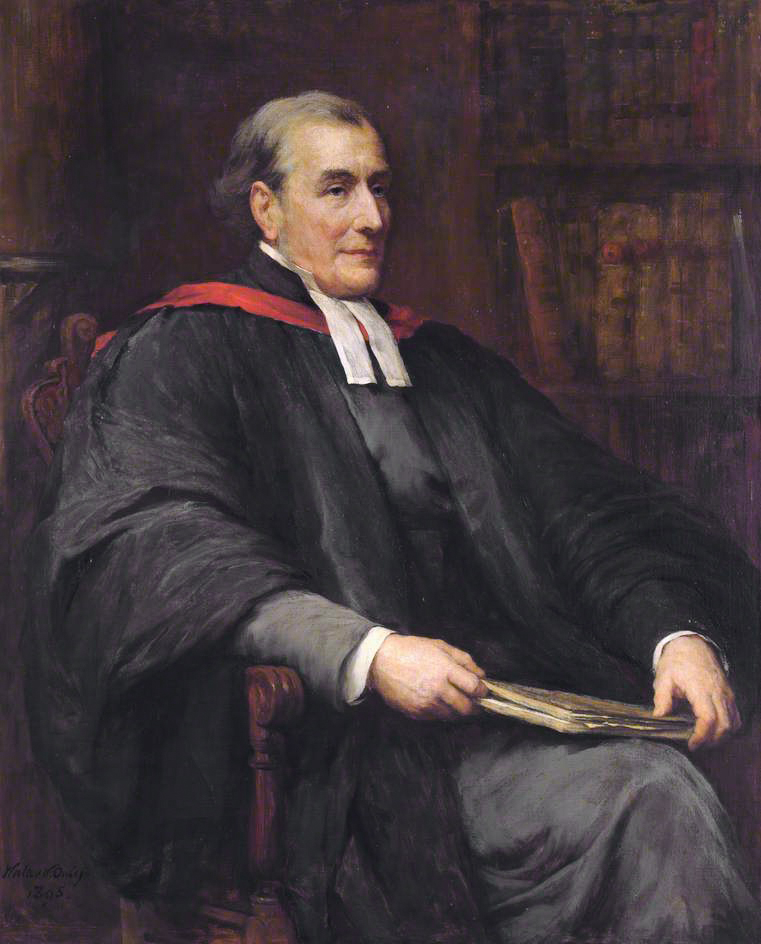
The physical reality of Harrow Football is designed to inflict exhaustion. Played on the heavy, clay-logged grounds at the foot of the Hill, the game utilizes a ball that defies modern aerodynamic standards. Known as a "pork pie" due to its flattened, irregular shape, the leather object absorbs water until it becomes a sodden weight capable of causing serious injury upon impact. This is not a defect; it is a feature. For over two centuries, the administration used this brutal, mud-soaked contest to channel the aggression of adolescent boys into a hierarchical structure that valued physical dominance over intellectual curiosity. The game does not exist alongside the school's curriculum; it operates as a primary method for social conditioning, teaching the sons of the elite that authority is seized through force and endurance.
The codification of these violent pastimes began in earnest during the tenure of Headmaster Charles Vaughan (1844, 1859). Vaughan, a disciple of Thomas Arnold's reforms at Rugby School, recognized that the chaotic rebellions of the 18th century, where boys had frequently barricaded themselves against masters, stemmed from an absence of structured outlet for their energy. He did not suppress the violence; he organized it. By 1858, the rules of Harrow Football were committed to paper, formalizing a system where "bases" (goals without crossbars) were scored and "yards" could be claimed. The "yards" rule, which allows a player to catch a kicked ball and call for a free kick, introduced a tactical pause in an otherwise continuous melee of barging and charging. This specific regulation turned the pitch into a training ground for military officers, rewarding those who could remain calm and make strategic decisions while surrounded by physical threats.
The distinctiveness of Harrow's game faced a serious test in 1863. Representatives from various public schools and clubs gathered at the Freemasons' Tavern in London to establish a unified code for football, a meeting that led to the formation of the Football Association (FA). Harrow was involved in the early correspondence, yet when the standardized rules were proposed, specifically the bans on handling the ball and "hacking" (kicking opponents), Harrow refused to conform. The school's rejection of the FA code was an act of calculated isolationism. By clinging to their own "foreign" rules, Harrow ensured that its students could only compete against each other or against Old Harrovians. This enforced insularity strengthened the tribal bond among alumni, creating a closed network where the shared experience of the "mud and the mire" served as a lifelong credential, unintelligible to outsiders.
Institutional power within the school soon coalesced around the "Philathletic Club," known colloquially as "The Phil." Established in 1852, this body was comprised of the school's supreme athletes, who were granted privileges that rivaled and frequently eclipsed those of the academic scholars. Members of The Phil were permitted to wear distinctive black bow ties and exercised disciplinary authority over younger boys. This elevation of the athlete created a social stratification that to the present day. In the Victorian era, the captain of the cricket XI or the football team held more sway over the student body than the head of the school. The Philathletic Club institutionalized the concept of "Muscular Christianity," a Victorian ideal that conflated physical robustness with moral purity, marginalizing the "swots" and intellectuals who would later run the civil service while the athletes ran the empire.
While Harrow Football remained an internal rite of passage, cricket provided the stage for external display. The rivalry with Eton College, formalized in 1805, represents the oldest recurring fixture in organized sport. The inaugural match at Lord's Cricket Ground featured a young Lord Byron, who, even with a club foot, insisted on playing. Records show Byron scored only seven and two runs in his two innings, requiring a runner to sprint between the wickets for him. His participation was less about athletic merit and more about the assertion of status. By the mid-19th century, the Eton vs. Harrow match had evolved into a centerpiece of the London social season, a "frivolous picnic" where the aristocracy gathered not to watch the sport, to reinforce their class solidarity. The match transformed Lord's into an extension of the school's property, a yearly reminder that these two institutions owned the national game.
The survival of Harrow Football into the 2020s is an anomaly in an era of concussion and liability litigation. The game remains compulsory for younger boys, played on the same waterlogged pitches that bogged down their Victorian predecessors. Modern sports science has forced minor concessions, yet the core mechanics, the heavy ball, the shoulder charging, the absence of penalties, remain intact. Injury rates are guarded, the "muddied oaf" archetype is still celebrated in school songs and alumni dinners. The persistence of the game is not a matter of nostalgia; it is a deliberate maintenance of difference. In a globalized education market where schools have homogenized their offerings to appeal to international clients, Harrow uses its idiosyncratic sport as a brand differentiator, selling the pledge of an experience that cannot be purchased or replicated anywhere else.
The between the global game of Association Football and the local code of Harrow Football illustrates the school's historical resistance to democratization. While the FA rules were designed to be universal, allowing play between strangers of different classes, Harrow Football was designed to be exclusive. The table outlines the fundamental mechanical differences that ensured the two codes could never reconcile.
| Feature | Harrow Football (1858, Present) | Association Football (FA, 1863, Present) |
|---|---|---|
| Ball Specification | Irregular, flattened spheroid ("Pork Pie"); heavy leather; absorbs water. | Spherical; standardized weight and pressure; water-resistant synthetic. |
| Handling Rules | "Yards" allowed: a player may catch a volley and claim a free kick. | Strictly prohibited for outfield players; goalkeeper only. |
| Physical Contact | Shoulder charging allowed even without the ball; "barging" is central. | Contact limited to challenging for the ball; charging without ball is a foul. |
| Scoring | "Base" scored between posts of unlimited height (no crossbar). | Goal scored under a crossbar (8ft height limit). |
| Offside Rule | Strict: players must be behind the ball when played (similar to rugby). | Evolved: players must have two opponents between them and the goal line. |
This refusal to standardize had for the development of sport in England. Old Harrovians, finding themselves unable to play their school game at university, were instrumental in the creation of the FA Cup, yet they molded it to fit their own competitive desires. Charles Alcock, an Old Harrovian, founded the FA Cup in 1871 based on the house knockout competitions he had experienced at Harrow. The Wanderers, a team dominated by Harrow alumni, won five of the seven FA Cups. They dominated the early years of the national game not by adopting its spirit, by imposing their superior physical conditioning and "pack" tactics learned in the mud of the school grounds. Once the working-class teams from the north began to professionalize and master the passing game in the 1880s, the Old Harrovians retreated, abandoning the sport they helped found to focus once again on their own exclusive codes.
By 2026, the playing fields of Harrow serve as a living museum of this. The Philathletic Club still wields influence, the pork-pie ball is still kicked, and the "Yards" are still called. The continued existence of the sport is a testament to the school's ability to insulate itself from the outside world. It is a closed loop of violence and tradition, ensuring that the Harrow graduate leaves the Hill believing that the rules of the wider world do not necessarily apply to him, provided he has the strength to enforce his own.
Academic Performance and University Matriculation Statistics (2010, 2026)
The academic trajectory of Harrow School from 1700 to 2026 reflects a clear evolution from aristocratic indifference to data-driven hyper-competition. Throughout the 18th and early 19th centuries, the curriculum remained rigidly fixated on Latin and Greek, frequently to the exclusion of mathematics and modern languages. Under headmasters like Joseph Drury (1785, 1805), the school functioned less as an academic hothouse and more as a social finishing school for the sons of the Whig nobility. Academic rigor was frequently secondary to the formation of political connections; indeed, Winston Churchill's admission in the late 19th century, even with his well-documented struggles in Latin, exemplifies an era where lineage frequently outweighed examination scores. This historical laxity contrasts violently with the metric-obsessed environment of the 2010s and 2020s, where the school's survival depends on justifying a £50, 000+ annual fee through quantifiable university exits.
By the 2010s, Harrow had firmly established itself as a high-performing academic machine, though it frequently trailed its arch-rivals in raw league table positions. Between 2015 and 2019, the school consistently achieved A*-A rates at A-Level between 60% and 65%. The COVID-19 pandemic (2020, 2021) introduced a period of statistical anomaly; Centre Assessed Grades (CAGs) inflated A*-A rates across the independent sector, with Harrow seeing figures spike above 70%. The subsequent correction, orchestrated by Ofqual between 2022 and 2024, forced a return to pre-pandemic grading standards. In 2024, Harrow reported that over 66% of A-Level grades were A* or A, and nearly one-third of all grades were A*. While objectively impressive, these figures frequently lag behind the stratospheric results of Westminster School or St Paul's, where A*-A rates frequently exceed 80%.
The most significant trend in the 2015, 2026 window is the collapse of Harrow's dominance in Oxbridge matriculation and the simultaneous pivot to the United States. In the late 20th century, double-digit cohorts sent to Oxford and Cambridge were the norm. By 2024 and 2025, the data reveals a sharp contraction. For the 2025 academic year, Harrow confirmed that only 10 boys would take up places at Oxford or Cambridge. This figure pales in comparison to Westminster School, which secured 96 offers for the same pattern, or even state heavyweights like Brampton Manor Academy, which secured 54. The decline is not a fluctuation a structural shift, driven by Oxbridge's aggressive widening participation which disadvantage independent school applicants, and a strategic realignment by Harrow's administration.
Faced with the tightening of the Oxbridge bottleneck, Harrow has aggressively marketed the "Atlantic Option." The school's data for 2025 shows 32 boys matriculating to US universities, more than triple the number heading to Oxbridge. This cohort included 16 students accepting places at Ivy League institutions. The administration has institutionalized this shift, employing full-time US university counselors and emphasizing the "liberal arts" model which aligns well with the school's broad co-curricular ethos. For the wealthy international demographic that constitutes of the student body, a degree from Harvard, Stanford, or UPenn holds equal, if not superior, cachet to one from Oxford or Cambridge. The 2026 admissions pattern indicates this trend is accelerating, with early decision offers from US institutions becoming the primary metric of success for the school's top tier.
Performance at the GCSE level remains a serious filter for the Sixth Form. In 2024, over 40% of GCSE grades awarded to Harrovians were Grade 9 (the highest possible), and approximately 66% were Grades 9, 8 (equivalent to the old A*). These numbers serve a dual purpose: they maintain the school's league table position and act as a gatekeeper for the A-Level tracks. Students failing to meet high thresholds in specific subjects are frequently steered away from those courses to protect the school's A-Level statistics. This "curating" of the Sixth Form ensures that the matriculation statistics remain marketable, even as the academic intake becomes increasingly selective.
| Metric | Statistic | Context/Comparison |
|---|---|---|
| A-Level A*-A Rate (2024) | > 66% | High, yet trails Westminster (~84%) and St Paul's. |
| GCSE Grade 9 Rate (2024) | > 40% | Significantly above national average (approx. 5%). |
| Oxbridge Places (2025 Entry) | 10 | A historical low; compares to 96 offers for Westminster. |
| US University Places (2025 Entry) | 32 | Includes 16 Ivy League; represents the new primary "elite" exit. |
| Russell Group Matriculation | ~129 | The standard destination for the majority of the cohort. |
The academic narrative of Harrow in 2026 is one of successful adaptation to a hostile domestic environment. Unable to compete on raw volume of Oxbridge offers against the academically selective London day schools and the new breed of super-selective state academies, Harrow has globalized its exit strategy. The "value added" by the school is no longer defined solely by A-Level grades, which are assumed to be high, by the capacity to navigate the complex, personality-driven admissions systems of elite American universities. The 18th-century "foreigner" who came to Harrow for connections has been replaced by the 21st-century global citizen who uses Harrow as a launchpad for the Ivy League.
Governance Structure: The Keepers and Governors
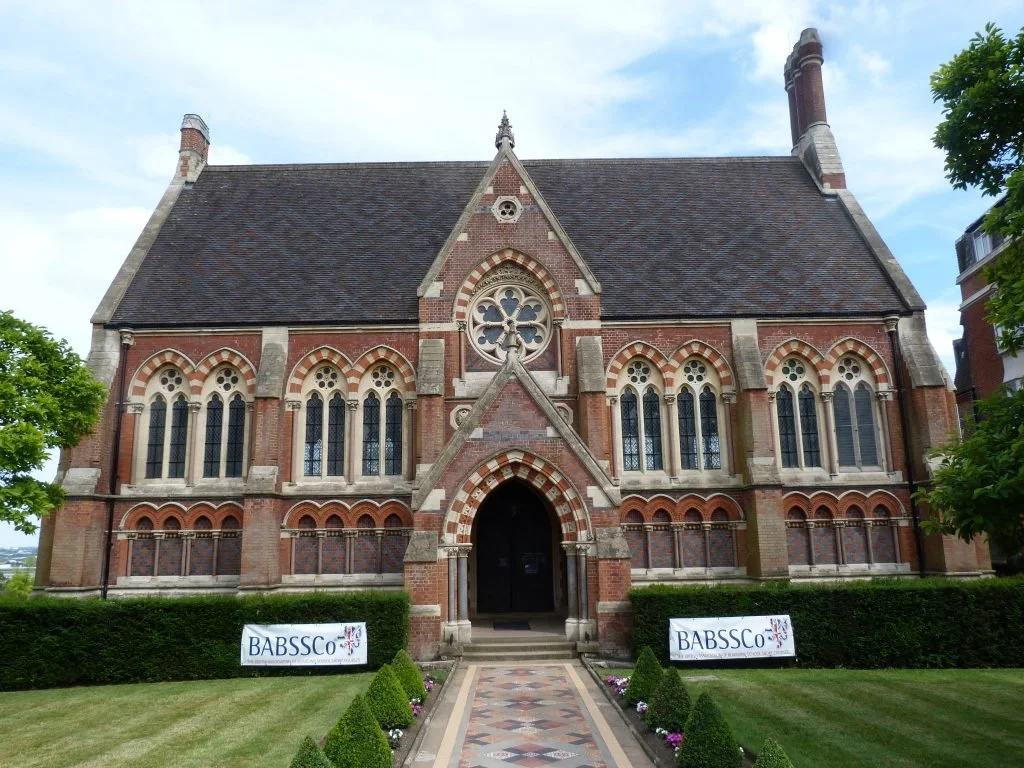
The legal entity that controls Harrow School bears a title as archaic as it is revealing: "The Keepers and Governors of the Possessions Revenues and Goods of the Free Grammar School of John Lyon." Established by the Royal Charter of 1572, this corporation was originally designed to safeguard a modest local endowment. By 2026, it has mutated into a sophisticated financial conglomerate, managing a global brand, a nine-figure endowment, and a complex web of subsidiary trading companies. The evolution of this body from a parochial council of local gentry to a boardroom of international financiers mirrors the school's own transition from a village grammar to a global educational franchise.
During the 18th and early 19th centuries, the governance of Harrow was defined by what historians term "Old Corruption." The Board was frequently dominated by local landowners and minor aristocracy who viewed the school not as a national asset as a source of local patronage. Families such as the Rushouts of Northwick Park exerted disproportionate influence, frequently prioritizing the appointment of compliant masters over academic rigor. This insular governance structure led to severe administrative stagnation. By the mid-19th century, the Governors were accused of neglecting the school's finances and failing to adapt to the industrial age. The tension between the Head Master, who sought to attract the sons of the wealthy Whig elite, and the Governors, who remained rooted in Middlesex parochialism, frequently paralyzed the institution.
The turning point arrived with the Public Schools Act 1868. This piece of legislation was a direct intervention by the British state to break the grip of local oligarchies on the nation's elite schools. The Act dissolved the "Old Corporation" and mandated the creation of a "New Governing Body." Crucially, it removed the requirement for Governors to be residents of Harrow, a stipulation that had kept the board provincial. The new statutes required appointees from the universities of Oxford and Cambridge and the Royal Society, injecting intellectual and national oversight into the school's management. This statutory reset ended the era of the local squirearchy and began the era of the professional technocrat, aligning Harrow's governance with the imperial bureaucracy it was training boys to lead.
In the 21st century, the composition of the Board of Governors resembles a FTSE 100 steering committee rather than a scholastic council. As of 2026, the body includes high-ranking figures from global finance, law, and industry. Recent Chairs and key members have included David Eyton, former head of technology at BP, and Sir Jonathan Symonds, Chair of GSK. This shift indicates a governance priority focused on asset management, risk mitigation, and brand expansion. The modern Governor is less a guardian of Latin grammar and more a steward of a multinational enterprise. They oversee the "Corporation," which acts as the parent entity for various operating arms, including the school itself, the John Lyon School, and the commercial subsidiaries that generate non-fee income.
The most significant commercial engine under the Governors' control is Harrow International Schools Limited (HISL). Established to monetize the Harrow brand abroad, this trading subsidiary licenses the name, crest, and educational ethos to investors in Asia. By 2026, the network includes campuses in Bangkok, Beijing, Hong Kong, Shanghai, Shenzhen, and Appi, Japan. The governance structure here is explicitly extractive: the Governors in London do not own the foreign schools collect royalties and oversight fees. This arrangement allows the London Board to generate millions in revenue with minimal capital exposure, yet it introduces serious reputational risks. The Governors must balance the lucrative royalty streams against the danger of brand dilution or scandals occurring in jurisdictions where they have limited operational control.
Financial governance has occasionally collided with ethical and legal standards. In July 2024, High Court documents revealed that the Harrow Development Trust, the fundraising arm controlled by the Governors, had received £500, 000 from a British Virgin Islands company linked to Jahangir Hajiyev, a jailed Azerbaijani banker. The National Crime Agency identified these funds as part of a money-laundering network. While the school accepted the money in 2014, the a decade later exposed a failure in Know Your Customer (KYC). The Governors faced criticism for a culture that appeared to prioritize endowment growth over due diligence, accepting funds from politically exposed persons without adequate scrutiny of the source.
This was not the time the Governors' of revenue provoked legal intervention. In 2005, the Office of Fair Trading (OFT) found Harrow, along with Eton and other elite schools, guilty of operating a fee-fixing cartel. The investigation uncovered that Bursars and Governors had systematically exchanged information on planned fee increases to avoid price competition. The scandal shattered the illusion that these institutions were charitable bodies operating outside the sordid method of the market. It forced a governance overhaul, requiring the Board to implement strict competition law compliance, though critics the underlying economic coordination between top schools remains unclear.
The table outlines the shift in Governor qualifications and priorities over three centuries:
| Era | Primary Qualification | Key Objective | Dominant Influence |
|---|---|---|---|
| 1700, 1868 | Local Residency / Land Ownership | Local Patronage & Parish Rights | Middlesex Gentry (e. g., Rushout family) |
| 1868, 1990 | Academic / Public Service | National Educational Standards | Universities & Civil Service |
| 1990, 2026 | Corporate / Financial / Legal | Brand Expansion & Asset Management | City of London & Multinational Corps |
In the current political climate of 2025 and 2026, the Governors have assumed a combative stance against state encroachment. With the removal of VAT exemptions for private school fees, the Board has directed resources into legal challenges and aggressive financial restructuring. They have positioned the school not as an educational charity as a defender of independent sector rights. The governance strategy involves leveraging the school's massive endowment, bolstered by centuries of accumulation and recent international royalties, to absorb tax shocks that smaller schools cannot survive. This consolidation of power confirms that the "Keepers and Governors" are no longer preserving a village school, fortifying a global of privilege.
Financial Endowment, Tuition Trends, and the 2025 VAT Impact
The financial architecture of Harrow School has metamorphosed from a modest parish trust into a multi-million-pound global enterprise, driven by an aggressive tuition model that has consistently outpaced British inflation for three decades. While the school's 1572 charter explicitly mandated the "free" education of local boys, the financial reality of 2026 bears no resemblance to John Lyon's original philanthropic vision. The institution operates as a high-revenue corporate entity, sustained by an endowment valued in the hundreds of millions and a tuition structure that excludes all the global ultra-wealthy.
For the three centuries of its existence, Harrow's income relied heavily on the "Foreigner" clause, a loophole allowing the Head Master to charge boys from outside the parish. By the late 20th century, this fee-paying demographic had completely displaced the local free scholars. In 1995, the annual cost of a Harrow education stood at approximately £12, 360. Over the decade, fees nearly doubled, reaching £23, 625 by 2005. This period coincided with a scandal in which the Office of Fair Trading found Harrow, along with Eton and 48 other top schools, guilty of operating a fee-fixing cartel to artificially prices. The school paid a nominal penalty, yet the trajectory of hyper-inflationary tuition continued unabated.
Between 2005 and 2024, Harrow's fees rose with a velocity that detached the school from the British middle class entirely. By the 2023/24 academic year, annual boarding fees had climbed to £50, 550. This 300% increase since the mid-90s far stripped the growth of UK median household income, cementing the school's status as a luxury good for the international elite rather than an educational institution for the domestic gentry. The "Harrow" brand was simultaneously monetized abroad through a licensing agreement with Asia International School Limited (AISL), establishing franchise campuses in Bangkok, Beijing, Hong Kong, and Shanghai. These outposts generate significant royalty revenue for the UK entity, insulating it from domestic economic downturns.
The financial shifted violently in January 2025 with the Labour government's removal of the VAT exemption for private schools. For decades, Harrow had benefited from charitable status, which shielded its tuition fees from the standard 20% Value Added Tax. The policy change, intended to fund state education, forced an immediate recalibration of the school's pricing. Unlike smaller independent schools that absorbed a portion of the tax to retain pupils, elite institutions like Harrow passed the cost directly to parents.
For the 2025/26 academic year, Harrow's termly fee was set at £21, 245 inclusive of VAT, equating to an annual bill of £63, 735. This represented a clear overnight increase from the pre-VAT levels. In the months leading up to the January 2025 deadline, wealthy families attempted to circumvent the tax hike through "forestalling", pre-paying fees for multiple years in advance. yet, the government introduced strict anti-forestalling legislation, rendering any payments made after July 29, 2024, subject to the full 20% levy. Consequently, the gross cost of a five-year Harrow education (Year 9 to Year 13) exceeds £318, 000, a figure higher than the average UK house price.
| Year | Annual Boarding Fee (Approx) | Economic Context |
|---|---|---|
| 1995 | £12, 360 | Pre-cartel investigation era. |
| 2005 | £23, 625 | OFT fee-fixing scandal; fees double in 10 years. |
| 2015 | £36, 000 | Aggressive expansion of international franchises. |
| 2023 | £50, 550 | Post-pandemic inflation spike. |
| 2026 | £63, 735 | Includes 20% VAT imposed by Labour Govt. |
Behind the tuition revenue lies the formidable John Lyon's Charity. While legally distinct from the school's day-to-day operations, this entity controls the historic endowment derived from Lyon's original road-maintenance lands in London ( valuable real estate in Maida Vale and St John's Wood). As of recent financial filings, the Charity's endowment is valued near £400 million. While the Charity's primary modern mandate is to problem grants to child-focused organizations in northwest London, the sheer of this wealth show the financial that surrounds the Harrow ecosystem. The school itself (The Keepers and Governors) reported a total income of over £87 million in 2024, with derived from investment gains and trading activities, separate from the tuition fees.
The imposition of VAT has not triggered an exodus of Harrow's clientele, as it has in the mid-market private sector. Instead, it has solidified the school's demographic homogeneity. The £13, 000 annual jump in fees in 2025 served as a final economic filter, ensuring that the student body in 2026 is composed almost exclusively of the sons of global ultra-high-net-worth individuals for whom a 20% price hike is a trivial accounting adjustment. The "local poor" whom John Lyon sought to protect are more distant from the Hill than at any point in history, separated not just by academic selection, by a financial paywall that rivals the GDP of small island nations.
Harrow International: Commercial Franchising and Global Expansion

| Location | Opened | Partner/Owner | 2026 Status |
|---|---|---|---|
| Bangkok, Thailand | 1998 | AISL (Daniel Chiu) | Operational. The flagship Asian campus. |
| Beijing, China | 2005 | AISL | Split status. International section remains "Harrow"; Bilingual section forced to rebrand as "Lide" in 2022. |
| Hong Kong | 2012 | AISL | Operational. High demand, distinct from mainland regulatory problem. |
| Shanghai, China | 2016 | AISL | Operational. Subject to strict scrutiny on curriculum. |
| Shenzhen, China | 2020 | AISL | Operational. Located in Qianhai zone. |
| Appi, Japan | 2022 | AISL | Operational. "Gold" standard luxury boarding. Highest fees in network. |
| Bengaluru, India | 2023 | Amity Education Group | Operational. partnership outside AISL. |
| New York, USA | 2025 | Amity Education Group | Operational. Located in Oakdale, Long Island. |
The dilution of the brand remains a persistent threat. By 2026, the number of students wearing Harrow uniforms abroad vastly outnumbered those on the Hill in London. The "Harrow" experience, once defined by the specific geography of the Middlesex clay and centuries of accumulated ritual, has been flattened into a replicable service package. Critics that the proliferation of franchises risks turning the name into a generic signifier of "premium education" rather than a specific historical lineage. The closure of other British franchise schools in China during the 2021, 2024 period serves as a warning that political favor is transient. The governance of these international schools also presents a complex web of liability and control. While Harrow London maintains a presence on the governing boards of the overseas schools, the operational power lies with the commercial owners, AISL and Amity. These entities prioritize shareholder returns and market share, objectives that do not always align with the charitable status and educational mission of the parent school. The "Lide" incident in Beijing demonstrated that when local laws clash with the brand's identity, the commercial owner must capitulate to survive, leaving the London parent to manage the reputational. As of 2026, Harrow stands as a multinational enterprise where the tail increasingly wags the dog. The physical school in London, with its 800 boys, is the loss leader for a global brand that generates millions in licensing fees. The "Foreigners" controversy of the 1700s, where wealthy outsiders pushed out locals, has gone global. The modern Harrow is no longer just a school; it is a luxury goods conglomerate, exporting a crystallized version of Englishness to the highest bidders in the world's most affluent zones.
Notable Alumni: Prime Ministers and Public Figures
Harrow School has produced seven British Prime Ministers. This figure places it second only to Eton College in the hierarchy of political dominance. Yet the statistical gap between the two schools masks a qualitative difference in the leaders they cultivate. While Eton frequently produces the polished of the establishment, Harrow has historically generated the mavericks, the populists, and the emergency-time leaders who disrupt the. From the creators of the modern police force to the architects of Indian independence, the alumni of Harrow represent a specific of high-agency leadership that frequently operates outside the polite consensus of Westminster.
The 19th century solidified Harrow as a nursery for imperial power. Sir Robert Peel (PM 1834, 35, 1841, 46) modernized the Conservative Party and established the Metropolitan Police Force. His influence was so that the slang terms "Bobbies" and "Peelers" remain in the lexicon two centuries later. Lord Palmerston (PM 1855, 58, 1859, 65) defined British foreign policy at the height of the Empire. His aggressive "gunboat diplomacy" embodied the muscular confidence that the school sought to instill in its charges. These men were not participants in government. They were the architects of the Victorian state.
Winston Churchill remains the school's most mythologized alumnus. He attended from 1888 to 1892. Popular history frequently cites his poor academic record as evidence that genius defies schooling. The reality is more complex. Churchill was placed in the "Army Class" which focused on military preparation rather than the classics. His entrance exam legend, that he turned in a paper with nothing his name and an ink blot, is an exaggeration he later cultivated to build his own underdog narrative. The school's influence on him was absolute. He memorized 1, 200 lines of Macaulay's Lays of Ancient Rome to win a school prize. He returned to Harrow repeatedly during World War II to hear the school songs. He credited these songs with providing the "moral fortitude" required to lead Britain during its darkest hour. The "Churchill Songs" event remains a mandatory rite of passage for current students.
The school's production of British Prime Ministers ceased after Churchill left office in 1955. No Old Harrovian has held the office since. This drought reflects a shift in the school's demographic and purpose. The mid-20th century saw the institution pivot from a training ground for the British Parliament to a finishing school for the global elite. This transition is best exemplified by Jawaharlal Nehru. The Prime Minister of India attended Harrow in the early 1900s. In a supreme irony of imperial education, the school awarded the young Nehru a prize book on Giuseppe Garibaldi. The Italian revolutionary's story inspired Nehru's nationalism. Harrow unwittingly educated the man who would later the British Raj.
The alumni network of the 21st century reflects the globalization of wealth rather than the consolidation of British political power. The school has educated monarchs including King Hussein of Jordan and Sheikh Tamim bin Hamad Al Thani, the current Emir of Qatar. This pivot to international royalty and ultra-high-net-worth families has brought significant capital also serious scrutiny. In 2024, court documents revealed that the Harrow Development Trust received £500, 000 from companies linked to a money-laundering network run by Jahangir Hajiyev. Hajiyev was the jailed chairman of the International Bank of Azerbaijan. His sons attended the school. This incident exposed the friction between the school's historic reputation and its modern financial reliance on global oligarchs.
Cultural influence remains a secondary potent export. The poet Lord Byron (1801, 1805) established the archetype of the "Harrovian rebel." He fought against the fagging system and engaged in a plot to blow up a classroom with gunpowder., actor Benedict Cumberbatch and singer James Blunt represent the arts. Cumberbatch has frequently had to defend his privileged education in a Britain increasingly hostile to the dominance of public school alumni in the arts. Yet the pipeline. The "Old Harrovian" network operates as a quiet guild in the City of London, the military, and the arts.
By 2025, the brand had fully commodified its history for a global market. The opening of Harrow International School New York in September 2025 marked a definitive shift. With tuition fees reaching $75, 000, the new campus sells the "Churchill and Byron" fantasy to American dynasties. Critics this dilution of the brand reduces a 450-year-old institution to a luxury label. The school maintains that it is simply adapting to a world where power has migrated from the House of Commons to the boardrooms of New York and the palaces of the Gulf.
| Name | Role | Tenure / Era | Significance |
|---|---|---|---|
| Spencer Perceval | Prime Minister (UK) | 1809, 1812 | Only British PM to be assassinated in office. |
| Sir Robert Peel | Prime Minister (UK) | 1834, 35, 1841, 46 | Founder of modern policing; repealed Corn Laws. |
| Lord Palmerston | Prime Minister (UK) | 1855, 58, 1859, 65 | Dominant figure in Victorian foreign policy. |
| Stanley Baldwin | Prime Minister (UK) | 1923, 24, 1924, 29, 1935, 37 | Dominated interwar politics; handled the Abdication emergency. |
| Winston Churchill | Prime Minister (UK) | 1940, 45, 1951, 55 | Wartime leader; Nobel Prize in Literature. |
| Jawaharlal Nehru | Prime Minister (India) | 1947, 1964 | PM of independent India; architect of the modern Indian state. |
| King Hussein | King of Jordan | 1952, 1999 | Key figure in Middle East peace processes. |
| Sheikh Tamim bin Hamad Al Thani | Emir of Qatar | 2013, Present | Modernized Qatar; oversaw 2022 World Cup. |
The trajectory is clear. Between 1700 and 1950, Harrow existed to govern Britain. From 1950 to 2026, it has existed to service the global ruling class. The "Giants of Old" sung about in the school songs were parliamentarians and generals. The giants of the present are sovereign wealth fund managers and international heirs. The ethos of "stewardship" remains in the brochure, the data shows a decisive shift toward the preservation of dynastic wealth over public service.
Safeguarding Records and Independent Inquiries (1990, 2026)

| Period | Event / Development | Significance |
|---|---|---|
| 1989 | Children Act 1989 Passed | Established legal framework ending absolute "in loco parentis" autonomy; introduced external statutory duties. |
| 1990, 1993 | Late Winckworth Era | Final years of William Winckworth's tenure as Housemaster of The Grove; abuse continued even with changing laws. |
| 2003 | Conviction of William Winckworth | Former Housemaster jailed for 30 months for 14 counts of indecent assault (1978, 1993). Public exposure of internal failures. |
| 2015, 2022 | IICSA Inquiries | National inquiry highlighted "closed cultures" in boarding schools. Harrow reviewed historical files and reporting channels. |
| 2017 | ISI Regulatory Compliance Inspection | School judged to have met all standards for boarding welfare and safeguarding, stabilizing after historical allegations. |
| 2019 | Iwerne Trust / John Smyth | Full scope of Smyth's abuse of boys from top schools (including Harrow) publicly acknowledged; exposed external recruitment risks. |
| 2024 | ISI Inspection (February) | Rated "Compliant in all respects." Inspectors "significant strengths" in the Super-Curriculum and strong welfare. |
| 2026 | Modern Safeguarding Protocol | Implementation of independent safeguarding governance separate from House hierarchy; focus on digital safety and peer-on-peer abuse. |
Land Ownership and Relations with the London Borough of Harrow
| Conflict | Time Period | Core Dispute | Outcome |
|---|---|---|---|
| The Enclosure of the Hill | 1700, 1850 | Privatization of common land and displacement of local housing. | School secured dominance over the Hill; locals pushed to periphery. |
| Footpath 57 & 58 | 2003, 2017 | School blocked historic public route with tennis courts and locks. | Gov. Inspector ordered route reopened; School defeated. |
| Science Building (MOL) | 2017, 2020 | Building on protected Metropolitan Open Land. Mayor opposed. | School won appeal; Mayor ordered to pay costs. |
| Business Rates | 1990s, 2025 | 80% tax relief for the borough's wealthiest landowner. | Relief removed April 2025; School must pay full rates. |
The relationship remains one of uneasy coexistence. The London Borough of Harrow relies on the school's prestige to elevate the area's profile, yet it struggles to assert authority over an institution that predates the council by three centuries and possesses a balance sheet that dwarfs the municipal budget. The school does not reside in Harrow; it occupies it.
Institutional Traditions: Songs, Uniforms, and Rituals
The institutional identity of Harrow School relies on a carefully curated set of rituals, songs, and sartorial codes designed to enforce conformity and project exclusivity. These traditions are not quaint historical remnants. They function as a method for social engineering. The most potent of these tools is the school song "Forty Years On" written in 1872 by Edward Bowen with music by John Farmer. This anthem does not simply celebrate the school. It explicitly links the playing fields of Harrow to the administration of the British Empire and the inevitability of ruling class dominance. Bowen and Farmer collaborated between 1862 and 1885 to produce a canon of songs that invented "Harrovianism" as a distinct ideology. The lyrics inculcate a lifelong loyalty that supersedes other allegiances. Winston Churchill, an Old Harrovian, understood this power well. He returned frequently to hear the songs and even had a verse added to "Forty Years On" in his honor in 1954. The ritual singing continues in 2026. It binds the current generation of students to a lineage of power that stretches back three centuries.
The visual marker of this identity is the Harrow uniform. It isolates the student body from the outside world through archaic distinctiveness. The centerpiece is the Harrow hat. This is a varnished straw hat with a shallow crown and a wide brim. It evolved from the early 19th-century top hat and became mandatory for daily wear by the 1860s. It is not a boater. To call it a boater is a shibboleth that marks one as an outsider. The uniform includes "greyers" (grey trousers) and the "bluer" (a dark blue wool jacket). This attire is strictly regulated and expensive. In 2025 the cost of a full kit out at the official outfitters on the High Street exceeded £1, 500. The hierarchy of the school is visually encoded in the dress. Monitors wear top hats on Sundays and specific hat bands. Members of "The Phil" (The Philathletic Club) are permitted to wear black bow ties. Members of "The Guild" (arts and culture) wear maroon waistcoats. These distinctions create a visible caste system within the student body. They train boys to recognize and respect hierarchy at a glance.
Daily life on the Hill is punctuated by the ritual of "Bill." This is the compulsory roll call that occurs three times a day. The tradition dates back to the 18th century and serves as a method of absolute surveillance. Boys must assemble in their respective houses or in the Bill Yard to answer their names. It prevents truancy and reinforces the authority of the masters. The figure of the "Custos" is central to the disciplinary surrounding these rituals. The Custos is the keeper of the cane and the school's disciplinary records. In the 19th century the Custos would physically administer floggings. By 2026 the role had evolved into a ceremonial and administrative one yet the title remains. The physical space of the school is mapped by these rituals. The "Bill Yard" is not just a courtyard. It is a stage where the student body performs its obedience to the institution.
Language at Harrow acts as a exclusionary wall. The school operates with a dialect that is unintelligible to the uninitiated. Teachers are "Beaks." The swimming pool is "Ducker." A punishment is a "Skew." A bath or shower is a "Tosher." This slang is not accidental. It creates an immediate bond between insiders and a barrier to outsiders. A new boy, or "Shell," must master this lexicon to survive socially. The terms have remained remarkably static since the mid-19th century. "Harrow Football" is another unique tradition. It is a game played with a giant pork-pie shaped ball on mud-heavy pitches. The game is violent and chaotic. It has no professional equivalent. Its purpose is not to train professional athletes to build physical resilience and group cohesion through shared hardship. The persistence of these terms and games in 2026 demonstrates the school's resistance to external cultural homogenization.
The 450th anniversary of the school in 2022 served as a massive reinforcement of these traditions. The administration used the milestone to solidify the school's brand as a bastion of continuity in a volatile world. Events scheduled for the 2025-2026 academic year show no sign of diluting these customs. The "New Boys Welcome Day" set for June 21, 2026, initiate a new cohort into these exact rituals. They be fitted for their bluers. They learn the verse of "Forty Years On." They be taught to call their teachers Beaks. The school justifies these archaic practices as character building. A more serious analysis suggests they are tools for class consolidation. The straw hat and the slang are not just traditions. They are the uniforms and passwords of a self-perpetuating elite.
| Term | Definition | Historical Context |
|---|---|---|
| Beak | A master or teacher. | Used since the 19th century. Distinct from "usher" or "professor." |
| Bill | Roll call. | Compulsory attendance check held multiple times daily. |
| Bluer | Dark blue jacket. | Standard daily wear. Replaced the tailcoat for younger boys. |
| Custos | Keeper of the School. | Historically the flogger. the head of non-academic staff. |
| Ducker | Swimming pool. | Originally a duck pond. The modern pool retains the name. |
| Skew | A punishment/sanction. | frequently involves rewriting lines or academic work. |
| Tosher | A bath or shower. | Derived from "tosh" (footbath). |
| Yard | The school courtyard. | The site of Bill and other assemblies. |