
Founding Mandate and 1958 Government Land Grant
| Metric | Details |
|---|---|
| Founding Date | December 20, 1957 |
| Incorporation Date | March 10, 1958 |
| Legal Status | Company Limited by Guarantee (Section 25, Companies Act 1956) |
| CIN | U99999DL1950PLC002912 |
| Registered Address | 1, Raisina Road, New Delhi, 110001 |
| Founding President | Durga Das (Editor, Hindustan Times) |
| Founding Secretary-General | D. R. Mankekar |
| Inaugurated By | Govind Ballabh Pant (Home Minister of India) |
| Initial Membership | 30 Members |
| Land Grant Source | Government of India (Ministry of Works/L&DO) |
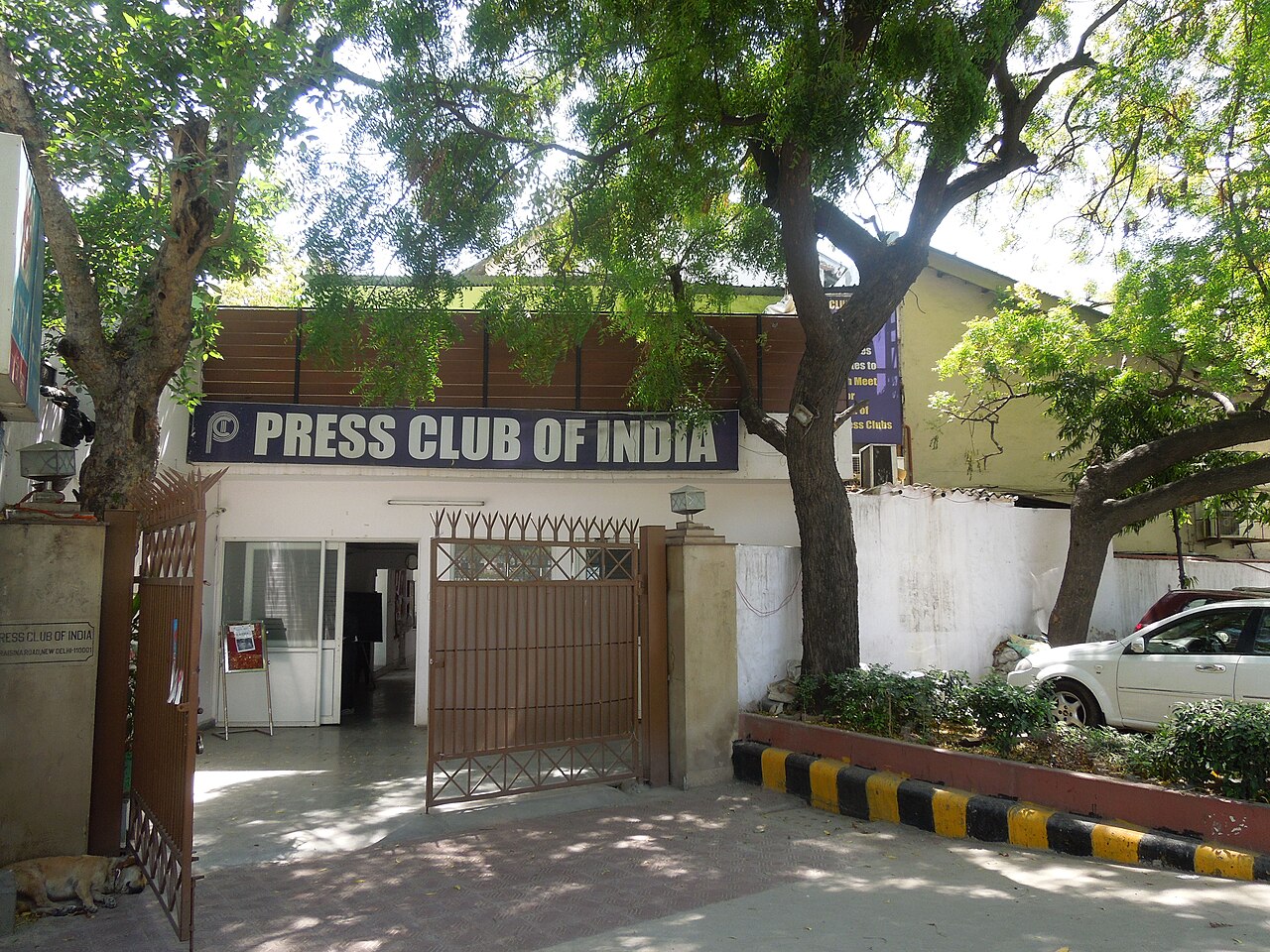
The 1958 arrangement remained largely unchallenged for decades, even as the club's membership swelled from 30 to over 4, 000 by the 2020s. The location at Raisina Road became a fixed point in the mental map of Delhi's political class. It was here that governments were critiqued, rumors were traded, and alliances were forged over subsidized spirits. Yet, the permanence of this location has faced legal and bureaucratic threats. By 2026, the club still occupies the same bungalow, even with a 2002 attempt to secure a new, larger plot on Rajendra Prasad Road, a move that stalled due to payment disputes and bureaucratic lethargy. The founding mandate, therefore, sits in tension with the club's evolution. What began as a necessary assertion of Indian journalistic independence in the post-colonial era, a "London model" adapted for Delhi, relied heavily on the benevolence of the very state it was meant to scrutinize. The 1958 land grant was not a simple real estate transaction; it was a strategic placement of the press within the physical and psychological courtyard of the government. This proximity has defined the character of the Press Club of India for nearly seventy years, creating an institution that is simultaneously a watchdog's kennel and a courtier's lounge. The legacy of Durga Das and the 1958 incorporation remains the legal bedrock, the operational reality has frequently drifted far from the austere professionalism envisioned by its founders.
Raisina Road Real Estate and Lutyens Zone Regulations
| Year | Regulatory Event / Action | Impact on Press Club of India |
|---|---|---|
| 1912-1930 | Creation of Lutyens' Delhi | Establishment of the low-density bungalow grid; 1 Raisina Road built as a residential unit. |
| 1958 | Government Land Grant | PCI allotted the bungalow on lease; rent set at nominal rates, creating long-term state dependency. |
| 1988 | LBZ Guidelines Issued | Formal ban on high-rise construction. New structures limited to the height of existing bungalows. |
| 2002 | New Plot Allotment | PCI allotted land on Dr. Rajendra Prasad Road to escape LBZ constraints; pays initial deposit. |
| 2018 | Possession Denial | even with PCI paying full dues (~₹5. 5 Cr), L&DO refuses to hand over the new plot. |
| 2020-2026 | Central Vista Project | Construction of new Secretariat buildings surrounds PCI; increased security and access restrictions. |
The L&DO maintains a dossier of violations for the Raisina Road property. Notices sent to the club frequently cite the conversion of residential spaces (the original bungalow rooms) into commercial-style bars and dining halls without the requisite "change of land use" clearances. These violations serve as a dormant weapon; while rarely prosecuted to the point of eviction, they remain on file, allowing the Directorate of Estates to exert pressure whenever the club's leadership or the wider press corps antagonizes the administration. The club's survival at this address is less a matter of legal right and more a result of a fragile, unwritten truce between the landlord state and its tenant journalists.
Membership Categories and Screening Metrics
| Era | Dominant Member Profile | Primary Screening Metric | Associate/Corporate Role | Key Controversy |
|---|---|---|---|---|
| 1959, 1970 | Print Editors (English) | Personal Reputation / Peer Review | Negligible / Non-existent | Exclusivity; perceived as an "Englishman's Club" |
| 1971, 1990 | Print Journalists (Vernacular expansion) | PIB Accreditation Card | Minor revenue source | Factionalism based on language/region |
| 1991, 2010 | TV & Print Mass Membership | Salary Slip / Organization ID | Growing subsidy provider | Influx of non-journalists; "Overcrowding" |
| 2011, 2020 | Digital & Freelance Expansion | Online Links / Freelance Contracts | Major revenue engine (High fees) | Allegations of "Fixers" and "Traders" on rolls |
| 2021, 2026 | Content Creators vs. Legacy Media | Biometric / Digital Verification (Proposed) | serious solvency method (₹1. 5L+ fees) | Parliamentary scrutiny of fees; Definition of "Journalist" |
The tension inherent in these categories is not administrative; it is existential. If the Press Club of India relies too heavily on the fees of those it covers to subsidize the drinks of those who cover them, it risks becoming a lobbyist's lounge rather than a reporter's refuge. The 2026 administration's success depend on its ability to enforce strict screening metrics without bankrupting the institution, a delicate balancing act that has bedeviled every Managing Committee for nearly seven decades.
Electoral Systems and Factional Power Struggles
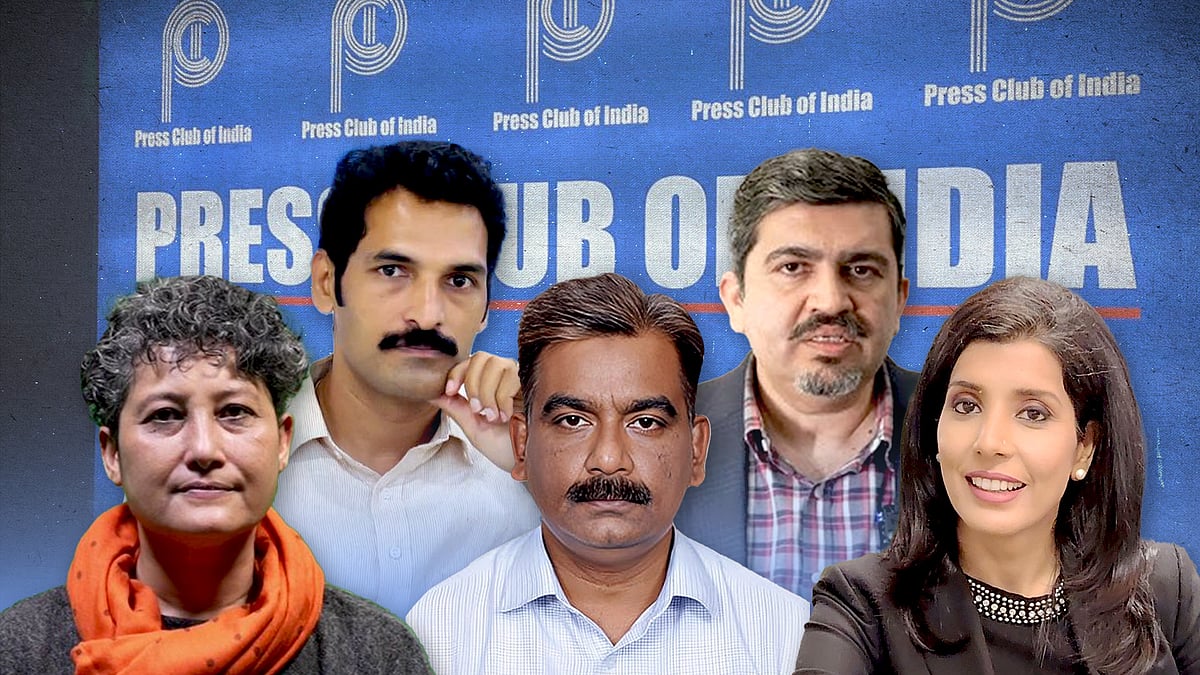
Table: Press Club of India Election Winners (2021, 2025)
| Year (Election Month) | President Elected | Secretary General Elected | Dominant Faction/Panel | Key Outcome |
|---|---|---|---|---|
| 2021 (April) | Umakant Lakhera | Vinay Kumar | Liberal Panel | Won 4 of 5 top posts; defeated "Challenger" panel. |
| 2022 (May) | Umakant Lakhera | Vinay Kumar | Liberal Panel | Clean sweep (21-0); fierce contest decisive win. |
| 2023 (September) | Gautam Lahiri | Neeraj Thakur | Liberal Panel | Opposition failed to field full panel; "One-sided" win. |
| 2024 (November) | Gautam Lahiri | Neeraj Thakur | Liberal Panel | Lahiri polled 1, 045 votes; Opposition crushed. |
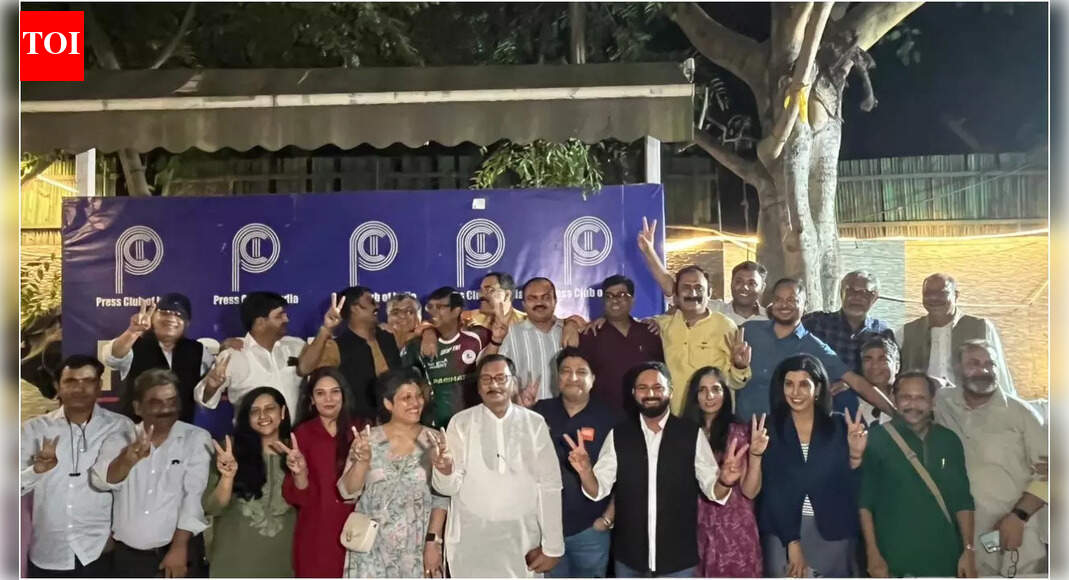
| 2025 (December) | Sangeeta Barooah Pisharoty | Afzal Imam | Liberal Panel | woman President; 21-0 sweep; 1, 019 vs 129 votes. |
The data from 2021 to 2026 reveals a ossification of the electoral terrain. The margins of victory have widened, not narrowed. In 2021, the contest had semblance of competition; by late 2025, the opposition had been reduced to a statistical irrelevance. the PCI has insulated itself from the broader political shifts in India, functioning as an autonomous republic where the "Old Guard" continues to rule unchallenged. Whether this stability is a product of genuine member satisfaction or the result of a well-oiled patronage machine remains the central, unanswered question of the club's internal democracy.
Operational Solvency and Bar Revenue Dependence
| Metric | Press Club of India (PCI) | Foreign Correspondents' Club (FCC) | Delhi Gymkhana Club |
|---|---|---|---|
| Primary Revenue Source | Bar & Restaurant Turnover | Membership & Events | Investment Income & F&B |
| Est. Monthly Burn Rate | ₹50 Lakh | ₹25-30 Lakh | ₹2. 5 Crore+ |
| Membership Base | ~4, 200 (Mass Market) | ~500 (Exclusive) | ~14, 000 (Elite) |
| Liquor Pricing Strategy | Volume-based / Margin-dependent | Premium / Service-oriented | Subsidized / Loss-leader |
| 2024 Revenue | ~₹11. 1 Crore | ~₹4-5 Crore | ~₹100 Crore+ |
The data indicates that the Press Club of India is, in financial terms, a volume-driven hospitality business managed by journalists. The solvency of the institution is inextricably linked to the consumption habits of its members. Any disruption to the supply chain, whether through excise policy shifts, dry days, or pandemics, threatens the club's existence more immediately than any threat to press freedom. The 1958 land grant provided the venue, the bar provides the lifeline.
Freedom of Press Advocacy and State Friction Points
The Press Club of India (PCI) exists in a state of permanent, structural paradox. It occupies prime real estate on Raisina Road, a government-allocated largesse, yet functions as the primary operational base for resistance against the very state that acts as its landlord. This friction is not a modern accident a continuation of a lineage tracing back to 1780. While the physical Club appeared in 1958, its ideological DNA formed when James Augustus Hicky published Hicky's Bengal Gazette, the newspaper in Asia. Hicky's imprisonment by the East India Company established the foundational of the Indian press: the "Fourth Estate" exists only in opposition to the magistrate. The PCI inherited this combativeness, transforming a social venue into a for civil liberties whenever the state apparatus attempted to the constitutional protections of speech.
The serious rupture between the Club and the State occurred during the Internal Emergency of 1975-1977. When Prime Minister Indira Gandhi suspended civil liberties, the electricity supply to Bahadur Shah Zafar Marg, Delhi's "Fleet Street", was severed to prevent the printing of morning editions. In this information vacuum, the Club ceased to be a watering hole and became a nerve center for the exchange of uncensored intelligence. While proprietors capitulated to the Ministry of Information and Broadcasting, the Club's floor witnessed the quiet organization of dissent. Prominent members like Kuldip Nayar faced arrest, and the "whisper network" within the Club's dining halls became the only reliable news source in the capital. The State responded by tightening access and surveillance, marking the Club as a zone of suspicion, a label that would return with greater ferocity decades later.
If 1975 was a period of suppression, 1988 marked the Club's most successful offensive. In August 1988, the Rajiv Gandhi administration introduced the Defamation Bill, a piece of legislation designed to cripple investigative journalism under the guise of protecting privacy. The Bill proposed shifting the load of proof onto the accused, criminalizing the exposure of high-level corruption. The PCI mobilized immediately. On September 5, 1988, the Club coordinated a historic march from India Gate to the Boat Club. The visual of media barons like Ramnath Goenka walking alongside working reporters and editors like Khushwant Singh and Arun Shourie presented a unified front the government could not fracture. The "Sangharsh" (struggle) committee, operating largely out of the Club's premises, forced the government to withdraw the Bill later that month. This victory cemented the PCI's role as a trade union for the constitution, proving it could mobilize street power to check legislative overreach.
The shifted in the 21st century. The friction points moved from legislative battles to "lawfare", the use of anti-terror laws to incarcerate journalists. Between 2014 and 2026, the Club became the site for "Black Band" protests, where journalists wore black armbands to signify dissent against the application of the Unlawful Activities (Prevention) Act (UAPA) against reporters. The case of Siddique Kappan, a Kerala-based journalist arrested in October 2020 while en route to report on the Hathras rape case, became a rallying point. On October 5, 2021, the PCI marked one year of his incarceration with a protest demanding his release, asserting that "journalism is not a crime." The State viewed these assemblies not as professional solidarity as anti-national agitation, further the landlord-tenant relationship.
This tension culminated in the raids on NewsClick in October 2023. The Delhi Police Special Cell raided the homes of dozens of journalists and contributors associated with the portal, seizing devices and invoking UAPA. The PCI responded with a resolution on October 3, 2023, stating it was "deeply concerned" and warning that the raids were an attempt to "muzzle the media." Unlike 1988, where the target was a specific bill, the 2023 conflict was existential; the State was targeting the funding and digital infrastructure of independent media. The Club's resolution noted that "journalism cannot be prosecuted as terrorism," a direct challenge to the government's narrative that foreign funding equated to subversion.
The government frequently uses the Club's precarious land tenure as a lever of control. The lease for the Raisina Road property is a recurring flashpoint. In March 2015, BJP Member of Parliament Dilip Gandhi wrote to the National Security Advisor, branding the Press Club a "national security threat" and demanding the land be reallocated to him for his personal residence. While the Ministry of Urban Development eventually allotted the MP a different bungalow, the incident exposed the Club's vulnerability. In 2018, the Land and Development Office (L&DO) issued eviction threats, prompting the PCI to seek relief from the Delhi High Court. The Court stayed the eviction, the message was clear: the land is a privilege that can be revoked if the tenant becomes too troublesome.
The seizure of the Kashmir Press Club in January 2022 served as a grim warning for the Delhi body. The Jammu and Kashmir administration canceled the lease of the Srinagar club and handed the premises over to the Estates Department, dissolving the institution after a "coup" by a rival faction of journalists supported by armed police. The PCI in Delhi condemned this as an "illegal takeover," recognizing the precedent it set. If the state could physically seize the hub of journalism in Srinagar, the Raisina Road premises were not inviolable. This anxiety permeates the Club's strategy in the mid-2020s, forcing it to balance vocal advocacy with the legal defense of its physical existence.
By 2024 and 2025, the friction centered on the Broadcast Services (Regulation) Bill. The proposed legislation sought to bring digital news creators and social media accounts under the same regulatory framework as traditional broadcasters, extending government censorship to the internet. In a proactive move, the PCI did not just protest drafted a counter-proposal. In May 2024, it released the "Media Transparency and Accountability Bill, 2024," arguing for self-regulation and protection from executive overreach. This marked an evolution in the Club's tactics: moving from reactionary protests to proposing legislative alternatives.
As of February 2026, the Press Club of India remains a besieged. India's ranking in the World Press Freedom Index hovered at a dismal 151 in 2025, reflecting the "very serious" situation for journalists. The Club continues to host press conferences that are banned elsewhere, providing a platform for victims of communal violence, dispossessed farmers, and opposition figures. The government, in turn, maintains the pressure through the denial of PIB accreditation to serious journalists and the constant, looming threat of lease cancellation. The 1958 land grant, intended to facilitate a free press, has ironically become the primary battlefield where the limits of that freedom are tested daily.
Internal Audit Irregularities and Financial Governance
Table: Timeline of Major Financial Governance Crises (2009, 2024)
| Year | Event/emergency | Financial Implication | Outcome |
|---|---|---|---|
| 2009 | Treasurer calls EGM | ₹1 Crore debt; No audit for 2 years | Sonia Gandhi returns membership; Management dissolved. |
| 2014 | L&DO Lease Demand | ₹2. 5 Crore (approx) demanded | Payment delayed due to absence of funds. |
| 2018 | New Plot Payment | ₹2. 59 Crore paid to L&DO | Funds debited, land possession denied by Govt. |
| 2021 | Cashier Embezzlement | ₹5 Lakh admitted theft | Employee resigned; No police case filed. |
| 2021 | Audit Qualification | ₹8 Crore assets unverified | Auditors flag missing Fixed Asset Register. |
| 2024 | Revenue Report | ₹11. 1 Crore Annual Revenue | Continued reliance on bar profits to offset food losses. |
Taxation disputes further complicate the financial. The club has faced repeated inquiries regarding Service Tax and GST compliance, particularly concerning the "principle of mutuality." Historically, clubs argued that they trade only with themselves (members), and thus surpluses are not taxable income. Yet, as the PCI expanded its revenue streams through corporate sponsorships and hall rentals to non-members, this defense weakened. The aggressive stance of the GST authorities in the post-2017 era forced the club to professionalize its tax filings, though friction remains over the categorization of "guest fees" and event revenues. The election pattern itself acts as a drain on financial probity. While the official posts carry no salary, candidates spend significant sums on campaigning. Allegations of "thali and bottle" diplomacy, where votes are secured through free food and alcohol parties hosted outside the club premises, are common. This off-books spending creates a culture where the winning panel enters office with political debts, frequently repaid through the selective allocation of club contracts or the turning of a blind eye to specific expenditures. By 2026, the Press Club of India stands at a financial crossroads. It generates substantial revenue, yet its governance method remain stuck in an era of informal clubbiness. The refusal to prosecute internal theft, the failure to maintain basic asset registers, and the precarious dependence on a hostile government landlord for its leasehold define its current reality. The club functions not as a model of the transparency it preaches, as a case study in the difficulty of self-regulation. Without a shift toward professional management, replacing journalist-administrators with qualified financial officers, the PCI risks remaining a captive of its own accounting failures.
Leasehold Tenure and Ministry of Housing Disputes

The legal tenure of the Press Club of India (PCI) at 1 Raisina Road rests on a precarious leasehold arrangement with the Land and Development Office (L&DO), an arm of the Ministry of Housing and Urban Affairs (MoHUA). Unlike a freehold property where ownership is absolute, the Club operates as a lessee on government land, a status that renders it perpetually to bureaucratic use and political shifts. While the Club was incorporated in 1958 and inaugurated in 1959, the land itself belongs to the state, and the terms of its occupancy have become a central theater of conflict between the media body and the government, particularly regarding rent arrears, land use violations, and the failure to execute promised relocation plans.
The most significant dispute in the Club's modern history concerns the abortive allotment of a new plot. In 2002, the Atal Bihari Vajpayee administration allotted a 1. 64-acre plot on Dr. Rajendra Prasad Road, near Shastri Bhawan, to the PCI for the construction of a modern complex. This allocation was intended to replace the cramping, World War II-era barracks at Raisina Road. For over a decade, the project stalled due to the Club's inability to raise the necessary funds. Yet, by 2018, the PCI management had mobilized resources, paying approximately ₹5. 5 crore to the L&DO, a sum that included the principal cost, interest, and penalties for the delay. Records show that the L&DO issued a possession letter in June 2018, scheduling the physical handover of the land for June 20, 2018.
On the scheduled day of the handover, the L&DO abruptly cancelled the transfer via a text message to the PCI President, citing "unavoidable circumstances." No official explanation followed immediately, the refusal to hand over the land, even with the government accepting the full payment, marked a turning point. Investigative scrutiny reveals that the "unavoidable circumstance" was the then-unannounced Central Vista Redevelopment Project. The plot allotted to the PCI on Rajendra Prasad Road fell directly within the footprint of the proposed Common Central Secretariat. By January 2026, the Central Public Works Department (CPWD) had initiated the demolition of adjacent structures, including Shastri Bhawan and Krishi Bhawan, to make way for the new administrative blocks. The government had accepted payment for land it ostensibly knew it would need to reclaim or repurpose for its own massive infrastructure overhaul.
This bait-and-switch left the PCI trapped at 1 Raisina Road, a location that itself sits uncomfortably close to the new Parliament House and the Vice President's Enclave. The security for the Central Vista project have turned the area into a, making the presence of a bustling, open-access media club a logistical irritant to the security establishment. The government's strategy appears to be one of attrition. Rather than explicitly evicting the PCI, the Ministry of Housing has used the threat of retrospective rent hikes and "misuse charges" to keep the institution compliant. In July 2020, the L&DO served a notice to the Press Trust of India (PTI), a separate overlapping entity, demanding ₹84. 48 crore in dues. This move sent a clear signal to the PCI: the government could at any moment recalculate decades of "concessional" rent at "market rates" to manufacture an debt.
The anxiety at Raisina Road peaked in May 2022, when the Directorate of Estates issued eviction notices to the Foreign Correspondents' Club (FCC) and the Indian Women's Press Corps (IWPC), cancelling their government bungalow allotments. While the PCI was not served an immediate eviction notice in that specific wave, the precedent was set. The government argued that these bodies had outstayed their leases and that the housing stock was needed for officials. The PCI's continued occupation of 1 Raisina Road exists in a legal grey zone; the lease is maintained not by a secure long-term contract, by short-term extensions and the government's discretionary inaction.
| Year | Event | Significance |
|---|---|---|
| 1958 | Incorporation & Land Grant | Government allots 1 Raisina Road (barracks) to PCI. |
| 2002 | New Plot Allotment | MoHUA offers 1. 64 acres on Dr. Rajendra Prasad Road for a new complex. |
| 2014 | Payment Delays | PCI struggles to pay land costs; interest and penalties accumulate. |
| 2018 | Payment & Cancellation | PCI pays ₹5. 5 crore. L&DO cancels possession handover on the scheduled day. |
| 2020 | PTI Notice | Government demands ₹84 crore from PTI, signaling a crackdown on media land dues. |
| 2022 | Eviction Notices | FCC and IWPC served notices to vacate government bungalows. |
| 2024-2026 | Central Vista Demolition | Shastri Bhawan/Krishi Bhawan demolition confirms the PCI's allotted plot is gone. |
The financial of this stalemate are severe. The ₹5. 5 crore paid by the Club in 2018 remains with the government, showing as a receivable on the Club's books yielding no tangible asset. also, the L&DO has frequently flagged the Club for "unauthorized construction" and "commercial misuse," citing the operation of bars and catering facilities on land for social and cultural use. These citations serve as dormant triggers; the Ministry can activate them to justify lease cancellation whenever political need dictates. As of early 2026, the Club functions without a permanent title to its home, its future contingent on a government that views the prime real estate of Lutyens' Delhi as a resource to be consolidated under the Central Vista master plan, rather than a space for independent civil society institutions.
High Profile Press Conferences and Political Interventions
The Press Club of India (PCI) functions not as a recreational facility as a barometer of the nation's political volatility. While its charter mandates a neutral space for professional interaction, the club frequently serves as the "Opposition Bench" when parliamentary channels are gridlocked or suspended. This role has invited repeated political interventions, transforming the venue on Raisina Road into a battleground for free speech, sedition charges, and ideological warfare. The trajectory of these interventions reveals a shift from the club being a passive observer of history to an active participant in the state's security narrative.
The most significant rupture in the club's modern history occurred on February 10, 2016. A booking made by Delhi University professor and club member Ali Javed for a seemingly routine press conference titled "The Struggle for Justice" descended into chaos. The event, featuring former lecturer SAR Geelani, was organized to mark the death anniversary of Parliament attack convict Afzal Guru. As the conference proceeded, a group of attendees allegedly raised slogans demanding "Azadi" (freedom) for Kashmir and hailed Guru as a martyr. The reaction from the state was swift and for a venue that had hosted separatists and insurgents in the past without incident.
On February 12, 2016, the Delhi Police registered a sedition case (FIR) against Geelani and "unnamed persons" under Sections 124A (sedition), 120B (criminal conspiracy), and 149 (unlawful assembly). The police entered the club premises to collect evidence, marking a rare breach of the club's sanctuary status. The PCI management, facing intense pressure and media trials, suspended Ali Javed's membership and issued a show-cause notice, distancing the institution from the "anti-national" slogans. This event permanently altered the club's booking. Prior to 2016, the PCI operated on a trust-based system; post-2016, the administration introduced verification processes for non-member speakers, ending the era of the club as an unconditional "Hyde Park" for dissenting voices.
The chilling effect of the 2016 sedition row became visible three years later. In August 2019, following the abrogation of Article 370 in Jammu and Kashmir, a fact-finding team led by economist Jean Drèze and activist Kavita Krishnan attempted to hold a press conference at the PCI to screen footage titled "Kashmir Caged." The club administration denied permission at the eleventh hour, citing "logistical problems" and a broken projector. Critics and members argued that the refusal was a direct result of the fear instilled by the 2016 police action, forcing the activists to hold their briefing on the street outside the club gates. This incident demonstrated how external political pressure had successfully internalized censorship within the club's management committee.
In contrast to the caution of 2019, the club reasserted its combative role during the crackdown on the news portal NewsClick in October 2023. Following raids by the Delhi Police Special Cell on the homes of over 40 journalists and the arrest of editor Prabir Purkayastha under the Unlawful Activities (Prevention) Act (UAPA), the PCI became the central organizing hub for resistance. On October 4, 2023, hundreds of journalists, accompanied by civil society figures like Arundhati Roy, gathered at the club. The protest was not just a press conference a mass mobilization, with the club's administration issuing strong statements against the "weaponization of agencies." This marked a return to the club's adversarial stance, positioning itself as a protecting the profession against state overreach.
The club's history during the Emergency (1975, 1977) offers a clear parallel to modern interventions. While the Indira Gandhi government abolished the statutory Press Council of India to remove regulatory oversight, the Press Club remained open neutered. Intelligence officers were known to frequent the bar, monitoring conversations for dissent. The electricity supply to Bahadur Shah Zafar Marg (Fleet Street) was cut to halt printing presses, the club remained one of the few places where information, frequently rumors, circulated in the absence of a free press. The lifting of the Emergency in 1977 saw the club erupt into a frenzy of activity, hosting press conferences that exposed the excesses of the Sanjay Gandhi faction, serving as a tribunal before the Shah Commission began its official inquiry.
Political intervention also manifests in the club's internal elections, which have become proxy wars for national political parties. The 2024, 2025 election pattern saw a sharp polarization between panels perceived as "Left-Liberal" and those backed by the "Right-Wing" establishment. The "Democratic-Secular" panel, led by Gautam Lahiri, campaigned on the platform of protecting the club from an "ideological takeover" by the Rashtriya Swayamsevak Sangh (RSS). The opposing panel, frequently promising better facilities and government liaison, was accused of attempting to install a compliant regime that would mute the club's serious voice. The victory of the Lahiri panel was interpreted by political analysts not just as a club matter, as a rejection of state interference in media autonomy.
| Year | Event / Incident | Political/Legal Consequence |
|---|---|---|
| 1975 | The Emergency Declaration | Club under surveillance; Press Council abolished; self-censorship prevails. |
| 2001 | Tehelka (Operation West End) | PCI serves as the hub for solidarity meetings defending journalists against state harassment. |
| 2016 | Afzal Guru Event (SAR Geelani) | Sedition FIR filed; Police enter premises; Booking rules tightened permanently. |
| 2019 | Kashmir Caged Screening Denial | Jean Drèze denied venue; Club cites "logistics," signaling internal censorship. |
| 2021 | Farmers' Protest Support | Club restricts entry for police; hosts briefings for farmer unions banned elsewhere. |
| 2023 | NewsClick Raids Protest | Mass gathering against UAPA usage; PCI leads joint letter to Chief Justice of India. |
| 2024 | Management Committee Elections | Proxy war between "Secular" panel and "Pro-Government" challengers; Lahiri panel wins. |
The use of the Press Club as a venue for "sting operation" also invites political backlash. In 2001, following the release of the Tehelka tapes (Operation West End), the club became the primary venue for the defense of the journalists involved. When the government launched a counter-investigation against the reporters rather than the corrupt officials, the PCI hosted repeated solidarity meetings. These gatherings were not press briefings acts of defiance, asserting that the method of news gathering, even if unconventional, was protected under the freedom of the press. The government's subsequent harassment of Tehelka's investors was frequently highlighted in pamphlets distributed within the club's premises.
By 2026, the Press Club of India stands as a paradox: it is a private club on government-leased land, yet it functions as the primary antagonist to government control of the media. The lease itself remains a sword of Damocles; the Ministry of Housing and Urban Affairs holds the power to evict, a threat that looms larger with every hostile press conference. The "political intervention" is no longer just about stopping a specific speaker; it is about the existential threat to the venue itself. The transition from the "gentleman's club" of the 1950s to the "sedition den" of the 2020s reflects the hardening of India's democratic arteries, where a room with a microphone is viewed as a threat to national security.
Infrastructure Maintenance and Renovation Expenditures
| Year | Authority/Source | Nature of Demand/Finding | Financial Implication |
|---|---|---|---|
| 2011 | L&DO (MoHUA) | Demand for temporary regularization of breaches | ₹8. 27 Crore |
| 2019 | L&DO | Revised demand for damages, misuse, and unauthorized construction | ₹8. 78 Crore (excluding 2011 demand) |
| 2021 | Internal Audit | Absence of Fixed Asset Register | Assets worth ~₹8 Crore |
| 2022 | Delhi Fire Service | Notices regarding non-compliance in temporary structures | chance closure/seal |
| 2025 | CAG/L&DO Review | Continued non-payment of ground rent (since 1982) | Cumulative arrears exceeding ₹20 Crore (est.) |
Fire safety remains the most immediate physical threat. The proliferation of wooden paneling, false ceilings, and temporary electrical wiring to support air conditioning for thousands of daily visitors has turned the bungalow into a fire trap. Following the Surat coaching center fire (2019) and subsequent crackdowns in Delhi, the PCI received multiple notices regarding its "semi-permanent" structures that block fire exits. The kitchen, designed for a household of four, churns out hundreds of meals daily, operating with industrial gas burners in a space with insufficient ventilation and grease traps. Even with these warnings, the 2023-2024 annual reports show minimal spending on fire suppression systems compared to the budget allocated for "entertainment" and "hospitality." The "Red Building," a distinct structure within the complex, exemplifies the decay. Originally a servant quarter or annex, it was converted into office space and a lounge. By 2023, reports indicated severe water seepage, termite infestation, and electrical faults. Rather than demolishing and rebuilding, which L&DO rules prohibit, the management applied of paint and plaster to hide the rot. This cosmetic method extends to the lawns, where heavy marquees are erected for winter elections and parties, damaging the drainage systems and compacting the soil, further destabilizing the foundation of the main bungalow. In the broader context of Lutyens' Delhi, the PCI is an anomaly. While neighboring properties like the Meridian Hotel or government bhawans undergo modern retrofitting, the Press Club remains frozen in a state of "managed dilapidation." The refusal of the Ministry of Housing and Urban Affairs (MoHUA) to grant a long-term lease renewal (frequently citing the land's chance for future government use) creates a self-fulfilling prophecy: the government refuses to let the club build because the lease is temporary, and the club refuses to maintain the building because eviction seems imminent. This stalemate has left the premier meeting point of Indian journalism in a condition that would be condemned if it were a private commercial enterprise. By early 2026, the infrastructure conversation shifted toward relocation. With the Central Vista Redevelopment Project reshaping the administrative core of New Delhi, the pressure on 1, Raisina Road increased. Proposals to move the club to a modern, purpose-built facility near the National Media Centre were floated met with resistance from members attached to the nostalgic, albeit crumbling, charm of the original bungalow. Consequently, the club continues to funnel millions of rupees into a bottomless pit of repairs, paying for the privilege of occupying a building that is slowly falling apart around them.
Labor Relations and Staff Union Negotiations
| Period | Incident/Metric | Details | Outcome/Status |
|---|---|---|---|
| 2011-2023 | Pant vs. PCI | Wrongful termination suit filed by staff member Rakesh Kumar Pant. | Litigation spanned 12 years; highlighted absence of due process in firing. |
| 2018 | Wage Bill Pressure | Implementation of 7th Pay Commission norms in government sector raised expectations. | PCI resisted full parity; relied on "Diwali Bonus" negotiations to appease union. |
| 2020-2021 | COVID-19 Salary Freeze | Club closure led to suspension of full wages for ~100 staff. | Triggered the Anil Bartwal "survival embezzlement" scandal. |
| 2024 | Revenue vs. Welfare | Annual Revenue: ₹11. 1 Crore. Staff Welfare Expense: ~₹3. 5 Crore. | Wage bill remains the single largest expenditure, limiting modernization funds. |
The political weaponization of the staff union is another recurring theme in the club's history. The PCI elections, held annually, are fiercely contested affairs with factions frequently described as "North" vs. "South" or divided by political ideology. In this environment, the staff are frequently co-opted as intelligence gatherers or vote-bank influencers. Incumbent committees have been accused of granting ad-hoc bonuses or overlooking petty pilferage in the weeks leading up to an election to secure the loyalty of the staff, who interact intimately with voting members. Conversely, opposition factions frequently accuse the staff of "spying" on their meetings or leaking strategy documents. This politicization prevents the formation of a professional, neutral civil service within the club, keeping the workforce in a state of precarious dependency on the shifting power of the Managing Committee. Financial audits in 2023 and 2024 continued to show "leakages" in the Food and Beverage (F&B) department, a euphemism frequently used by management to blame staff for inventory absence. yet, labor representatives that these absence are frequently the result of members refusing to pay for drinks or "signing off" on bills that are never settled, a practice known as "bad debts" which are periodically written off by the committee. The staff, absence the social capital to confront delinquent high-profile journalists, frequently bear the brunt of these discrepancies during annual audits. As of 2026, the labor relations at the PCI remain in a fragile equilibrium. The club reported a revenue of ₹11. 1 crore for the fiscal year ending March 2024, yet the pressure to keep menu prices low continues to compress the wage ceiling. The staff union, while not as militant as those in industrial sectors, has begun to demand formalization of service conditions, including defined benefits that mirror the government sector, citing the club's location on government-allotted land as justification. The management's resistance to these demands from simple arithmetic: fully formalizing the wage structure to market rates would necessitate a 30-40% hike in food and liquor prices, a move that would likely lead to the electoral defeat of any committee that attempted it. Thus, the PCI continues to operate on a labor compromise that is economically unsustainable and ethically, relying on the silence of its workers to subsidize the leisure of the press.
2025-2026 Administrative Reforms and Digital Shift
The administrative trajectory of the Press Club of India (PCI) shifted decisively in late 2025, marking the end of a gradual transition and the beginning of a new operational era defined by digital compliance and gender representation. On December 14, 2025, the club shattered a 67-year-old "glass ceiling" by electing Sangeeta Barooah Pisharoty as its woman president. This event was not symbolic; the election results delivered a 21-0 sweep for her panel, a statistical anomaly in the club's historically fractured voting patterns. Pisharoty secured 1, 019 votes against her opponent's 129, a margin that signaled a unified demand from the membership for structural modernization. This mandate the new administration to accelerate reforms that had stalled under previous regimes, specifically regarding the club's precarious legal status on Raisina Road and its technological infrastructure.
The backdrop to this leadership change was a year of intense friction between the club and the central government, centered on the Digital Personal Data Protection (DPDP) Act, 2023. Throughout 2025, the PCI transformed from a social hub into a policy war room. In June 2025, the club led a coalition of 22 press bodies to submit a joint memorandum to the Ministry of Electronics and Information Technology (MeitY). The document argued that specific provisions of the DPDP Act, particularly those granting the government power to demand data fiduciaries to erase information, posed an existential threat to investigative journalism. Unlike the physical protests of the 1970s or 1980s, this battle was fought with legal texts and technical FAQs. The club's administration argued that without an explicit exemption for journalistic work, similar to Article 85 of the GDPR, the new digital framework would criminalize the retention of source data. This advocacy highlighted a pivot in the club's function: it was no longer just defending the physical safety of reporters the digital integrity of their archives.
Simultaneously, the club faced an administrative squeeze from the Land and Development Office (L&DO). By 2025, the L&DO had fully migrated its lease management to the "eDharti 2. 0" portal, a geo-spatial system requiring precise digital mapping of all allotted government properties. The PCI, operating on a lease that has been the subject of dispute since the expiry of its original tenure, found itself in a bureaucratic vice. The government discontinued direct payments through banks in 2024, forcing all lease interactions onto the digital platform. This move stripped the club of the ambiguity it had long used to negotiate extensions. The new administration had to confront the reality that "unauthorized construction", a term the L&DO used to describe various annexes built over decades, was visible on satellite-linked government dashboards. The refusal of the L&DO to hand over possession of the alternative plot at Rajendra Prasad Road, even with the club paying approximately ₹5. 5 crore in 2018, remained a festering financial wound. The 2025-2026 committee prioritized legal recourse, preparing to challenge the government's "unavoidable circumstances" defense in court, arguing that the retention of both the money and the land amounted to administrative expropriation.
Internally, the 2025-2026 term saw the implementation of rigorous membership audits. For decades, the PCI struggled with an inflated list of "associate" members, PR professionals, corporate lobbyists, and non-journalists who used the club's subsidized facilities. The new administration introduced a digital verification system linked to the Press Council of India's accreditation standards. This "Smart Club" initiative required members to re-validate their credentials through a secure portal, eliminating ghost members and those who had long left the profession. The shift was driven by financial need as much as professional ethics. With annual revenue hovering around ₹11. 1 crore (FY 2024), the club could no longer afford to subsidize a non-journalist clientele. The introduction of RFID-enabled smart cards for entry and cashless transactions at the bar and dining halls provided the administration with granular data on consumption patterns, allowing for more precise budgeting and theft prevention.
The financial reforms also extended to the club's corporate structure. Registered as a company under Section 25 ( Section 8) of the Companies Act, the PCI faced heightened scrutiny from the Ministry of Corporate Affairs regarding its "Extra Territorial Organizations" classification. The 2025 audit revealed a push to regularize tax filings and align the club's charitable status with its commercial revenue streams. The administration moved to separate the "trade union" aspect of the club from its "hospitality" operations, creating a firewall to protect the club's assets in case of defamation suits or government penalties levied against its advocacy activities. This separation was serious in May 2025, when the club issued a strong condemnation of the government's blocking of the news website The Wire. By insulating its finances, the club ensured that its political voice could not be easily silenced by fiscal strangulation.
The table summarizes the key election data from the pivotal 2025 transition, illustrating the magnitude of the mandate for these reforms:
| Position | Candidate (Winner) | Votes Secured | Opponent Votes | Margin |
|---|---|---|---|---|
| President | Sangeeta Barooah Pisharoty | 1, 019 | 129 (Atul Mishra) | +890 |
| Vice President | Jatin Gandhi | 1, 029 | ~100 (P. S. Rajput) | +929 |
| Secretary General | Afzal Imam | 948 | 290 (Gyan Prakash) | +658 |
| Treasurer | Aditi Rajput | Unopposed | N/A | N/A |
This electoral result in December 2025 was not a rejection of the previous panel a rejection of the. The membership, comprised of a younger demographic of digital natives alongside veterans, signaled that the club's survival depended on modernizing its interface with the state. The "old guard" methods of backroom negotiation had failed to secure the new land or stop the encroachment of digital surveillance laws. The Pisharoty administration's strategy for 2026 focused on "Digital Sovereignty" for the club, establishing its own servers, encrypted communication channels for members, and a legal defense fund specifically for data privacy cases.
also, the physical infrastructure of the club began to reflect this digital shift. The library, long a dusty repository of newspapers, was slated for digitization in early 2026, with plans to convert it into a media lab equipped with verification tools to combat deepfakes and misinformation. This "Fact-Check Hub," proposed to be funded by international grants (subject to FCRA clearance, another administrative hurdle), aimed to reposition the PCI as a center for journalistic excellence rather than just a recreational facility. The administration also initiated the "Green Club" project, installing solar panels to reduce the crippling electricity bills that consumed of the annual budget, a move that also served to signal compliance with the government's renewable energy mandates.
As the PCI moves through 2026, it stands at a precarious intersection of history and technology. The Raisina Road bungalow, with its peeling plaster and colonial heritage, remains the physical heart of the organization, its pulse is digital. The struggle is no longer just about retaining the lease on the land; it is about retaining the lease on the profession itself. The administrative reforms of 2025, cleaning the rolls, digitizing the books, and electing a leadership that mirrors the diversity of the newsroom, were defensive fortifications. The club is preparing for a future where its existence be challenged not by a sudden eviction notice, by the slow, grinding pressure of regulatory compliance and digital surveillance. The mandate of 2025 proved that the Indian journalist, though beleaguered, is not yet ready to concede the space.